RisingStar
- Home
- About Us
- Products
- News
- Video
- Contact
- Send Inquiry
Search
- Home
- About Us
- Products
- News
- Video
- Contact
- Send Inquiry
RisingStar
High-brightness sunlight-readable LCD displays are essential components in modern outdoor industrial systems where visibility under direct sunlight is critical. These screens, often rated at 5,000 to 10,000 nits of brightness, surpass the capabilities of standard indoor LCDs (typically 200–500 nits) and are engineered to remain legible even under intense solar irradiance. According to industry data from Display Daily and E Ink Holdings, the global market for high-brightness displays grew by 8.7% year-over-year in 2023, driven primarily by demand in transportation, defense, energy, and public infrastructure sectors.
These displays employ advanced technologies such as high-efficiency LED backlights, anti-glare coatings, and reflective or transflective liquid crystal layers that combine transmission and reflection modes. For example, Transflective LCDs—commonly used in handheld field devices like rugged tablets and smart meters—use ambient light during daylight and switch to backlight mode at night, improving power efficiency by up to 40% compared to full-transmissive designs. This dual-mode functionality is key in battery-powered applications like UAVs, military field radios, and remote monitoring units.
Manufacturers like Sharp, LG Display, and BOE Technology have developed proprietary solutions such as "Sunlight Readable" (SR) technology and "Auto Brightness Control" (ABC), which dynamically adjust luminance based on ambient light sensors. In real-world case studies, such as those conducted by Siemens for smart grid control panels deployed in desert environments, SR-rated displays maintained 95% readability at 8,000 nits under 100,000 lux of sunlight, significantly outperforming standard LCDs that became unreadable beyond 2,000 nits.
Compliance with international standards like MIL-STD-810G (for environmental resilience), ISO 16750 (automotive durability), and IEC 60068 (climatic testing) ensures reliability across extreme temperatures (-30°C to +70°C), humidity (up to 95% RH), and mechanical shocks. Additionally, features like IP65 ingress protection, hardened Gorilla Glass, and wide viewing angles (≥170°) enhance their suitability for harsh environments including offshore drilling rigs, construction sites, and mobile command centers.
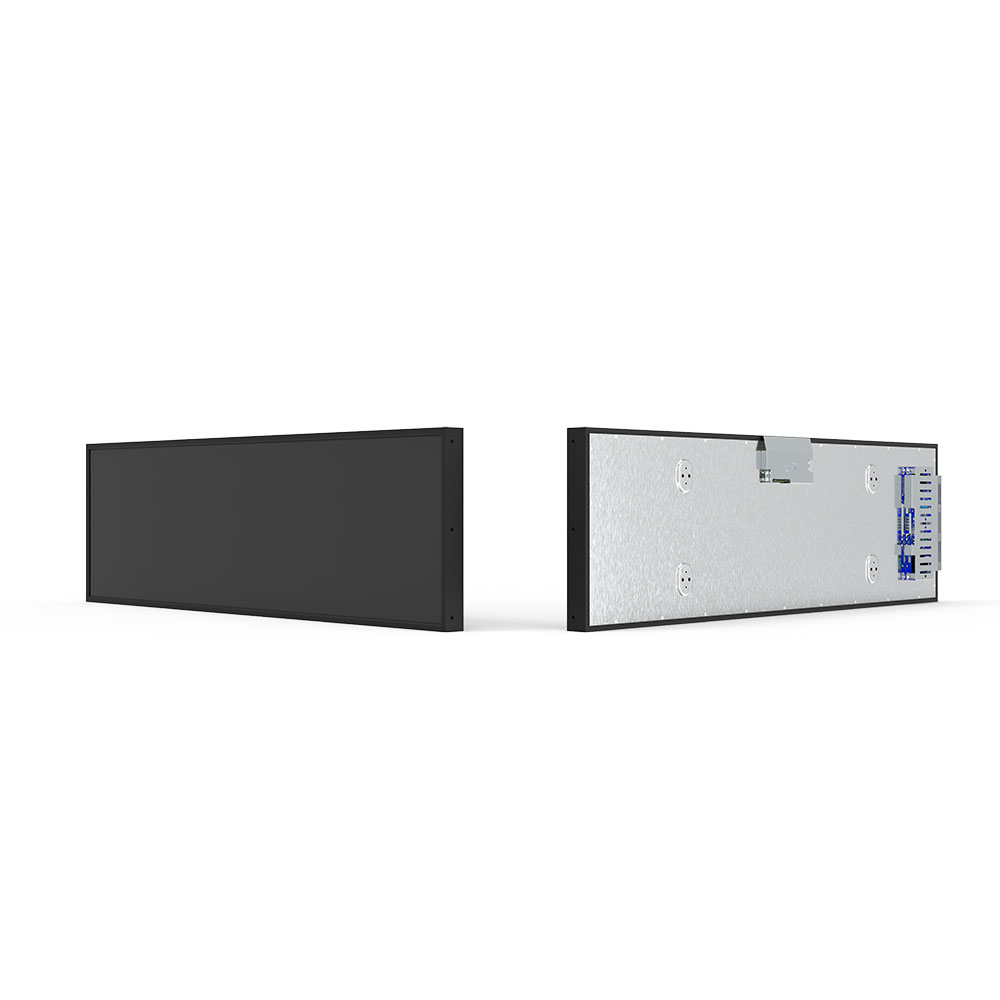
From a technical perspective, optimizing contrast ratio (often ≥1000:1) and color accuracy (Delta E< 3) under variable lighting conditions remains a challenge. Recent advancements in quantum dot (QD) enhancement layers and local dimming algorithms have improved both visual fidelity and power consumption. A study published in the Journal of Display Technology (IEEE Xplore, 2022) demonstrated that QD-enhanced sunlight-readable LCDs achieved 25% higher color gamut coverage while maintaining peak brightness stability over 10,000 hours of operation.
As IoT and edge computing expand into outdoor deployments, high-brightness sunlight-readable LCDs will continue to be indispensable. Their integration with touchscreens, voice interfaces, and AI-based ambient intelligence further underscores their evolving role—from simple displays to intelligent human-machine interfaces in mission-critical settings.