RisingStar
- Home
- About Us
- Products
- News
- Video
- Contact
- Send Inquiry
Search
- Home
- About Us
- Products
- News
- Video
- Contact
- Send Inquiry
RisingStar
In the modern digital age, where real-time data access and operational visibility are critical across industries such as defense, transportation, medical diagnostics, and industrial automation, high-brightness sunlight-readable LCD screens have emerged as indispensable components. These specialized displays ensure clear readability under direct sunlight—conditions that conventional LCDs fail to meet due to insufficient luminance and contrast degradation. The engineering behind these screens is not just about increasing brightness; it involves a multidisciplinary approach combining optics, materials science, power efficiency, and environmental resilience.
The core challenge in designing a sunlight-readable display lies in overcoming ambient light interference. Standard LCD panels typically offer 200–300 cd/m² (candela per square meter) of brightness, which is adequate indoors but insufficient outdoors when sunlight intensity can exceed 10,000 lux—a level that easily overwhelms standard backlighting systems. High-brightness sunlight-readable LCDs must deliver at least 5,000 cd/m², with premium models reaching 10,000–15,000 cd/m². This is achieved through advanced backlight technologies like LED arrays with optimized optical diffusion layers, local dimming control, and high-efficiency phosphor coatings.
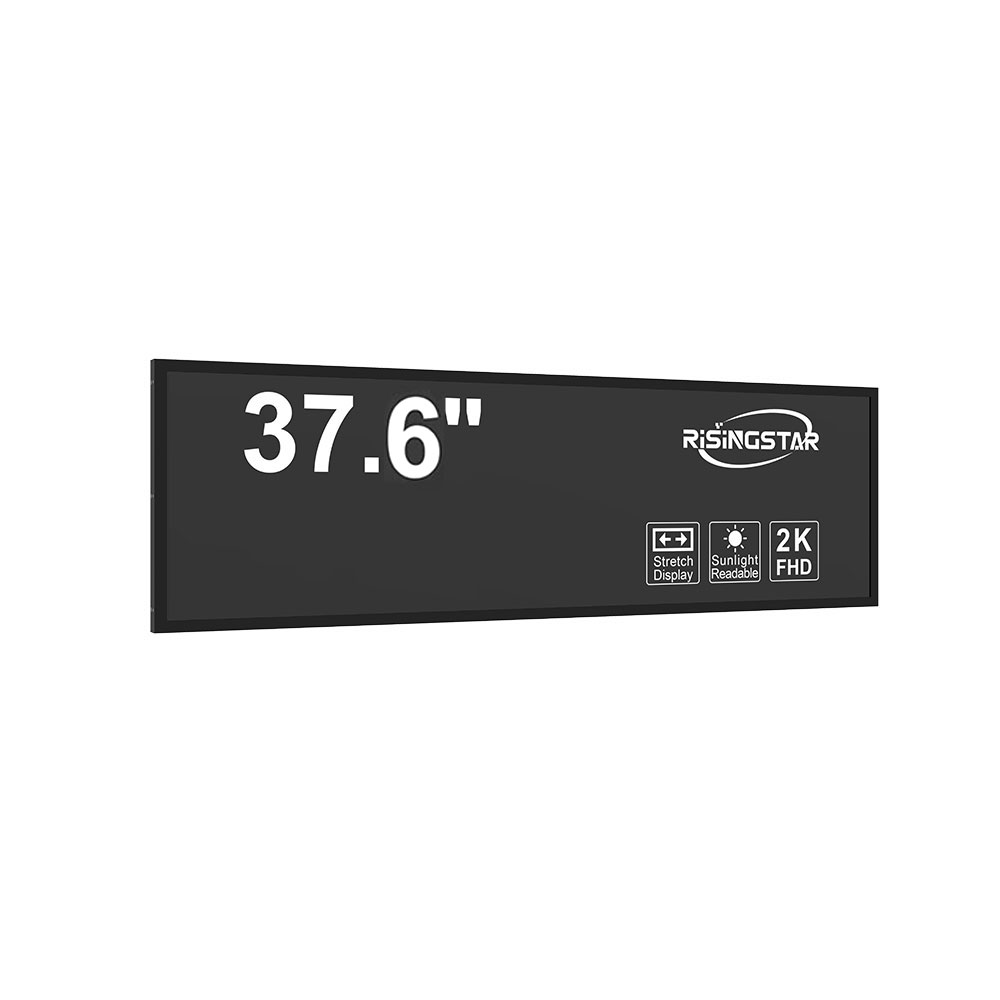
One of the most significant innovations in this domain is the use of transflective liquid crystal technology. Unlike traditional transmissive LCDs that rely solely on backlighting or reflective displays that depend entirely on ambient light, transflective LCDs combine both principles. In bright conditions, they utilize ambient light reflected from a rear mirror-like layer within the panel, reducing power consumption while maintaining clarity. In low-light environments, they switch to active backlighting—ensuring consistent performance regardless of lighting conditions. This dual-mode operation makes them ideal for military field devices, outdoor kiosks, and vehicular dashboards exposed to extreme lighting variations.
Manufacturers also employ anti-glare and polarization techniques to enhance contrast ratios and reduce visual fatigue. Anti-reflective coatings (ARCs), often made from nanostructured silicon dioxide or magnesium fluoride layers, minimize surface reflection by refracting incident light away from the viewer’s eye. Combined with polarized filters, these coatings prevent glare-induced distortion, especially during direct sun exposure. For example, a study published in the Journal of Display Technology (2021) demonstrated that multi-layer AR coatings reduced specular reflectance from 8% to less than 1%, significantly improving user experience in outdoor applications.
Another key advancement is the integration of dynamic brightness adjustment algorithms. Modern high-brightness LCDs incorporate ambient light sensors (ALS) and machine learning-based adaptive brightness controls that continuously adjust screen output based on environmental light levels. These systems do not only improve energy efficiency but also extend display lifespan by preventing unnecessary overdrive. A case study conducted by Sharp Corporation in collaboration with automotive OEMs showed that adaptive brightness reduced average power consumption by up to 35% without compromising readability—a crucial factor in electric vehicles where battery life directly impacts range.
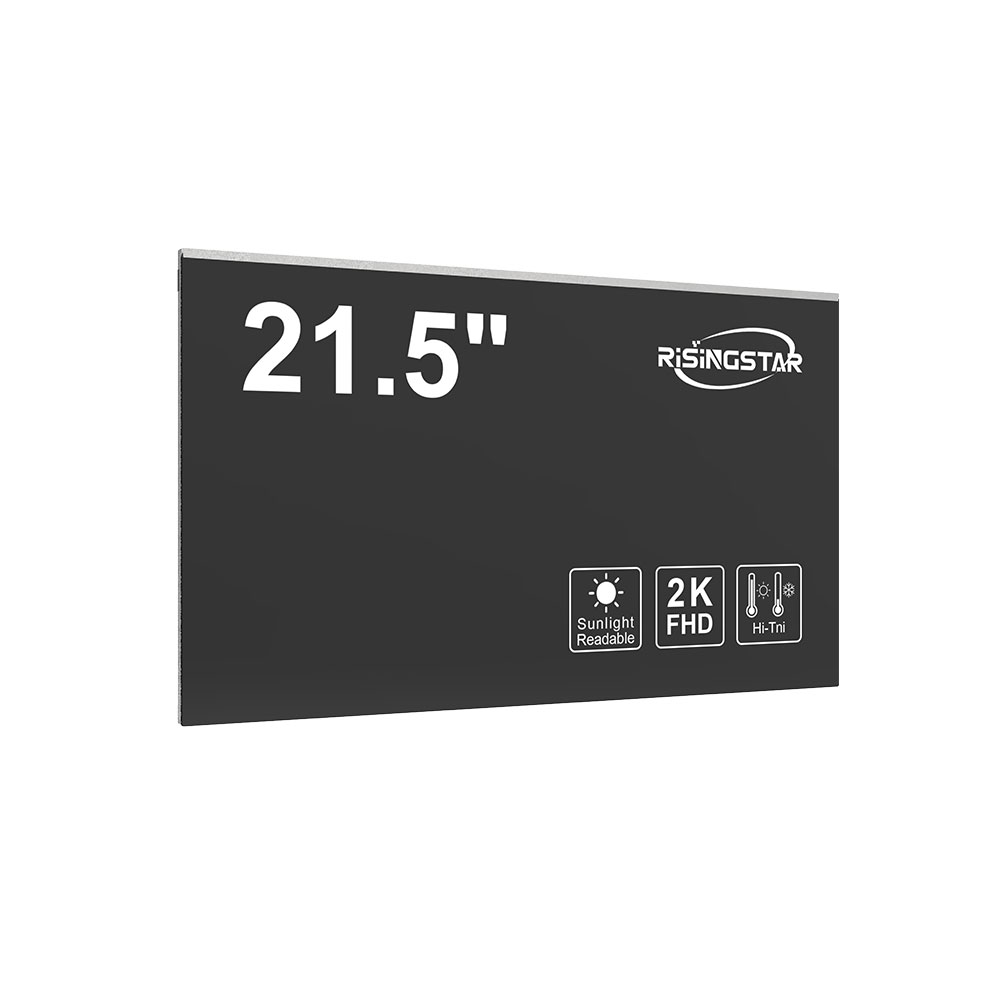
Thermal management remains a critical design consideration. High-brightness LEDs generate substantial heat, which can degrade pixel uniformity, accelerate aging of organic materials, and cause thermal runaway in poorly designed systems. To mitigate this, manufacturers utilize thermally conductive substrates such as aluminum nitride (AlN) or copper-clad laminates, along with passive heat sinks and active cooling solutions like micro-fans integrated into the display housing. According to IEEE Transactions on Components, Packaging and Manufacturing Technology (2022), well-engineered thermal solutions can maintain operating temperatures below 60°C even in desert climates (up to 70°C ambient), ensuring long-term reliability.
Environmental durability is equally important. Military-grade sunlight-readable LCDs are often rated IP67 or higher, meaning they are dust-tight and waterproof up to 1 meter depth for 30 minutes. They undergo rigorous testing per MIL-STD-810G standards for shock, vibration, humidity, and temperature extremes (-40°C to +70°C). Such robustness ensures continuous operation in harsh environments—from battlefield command centers to offshore oil rigs. For instance, the U.S. Department of Defense has mandated the use of Class III sunlight-readable displays in all new tactical communication units since 2020, citing improved situational awareness and reduced operator error in combat scenarios.
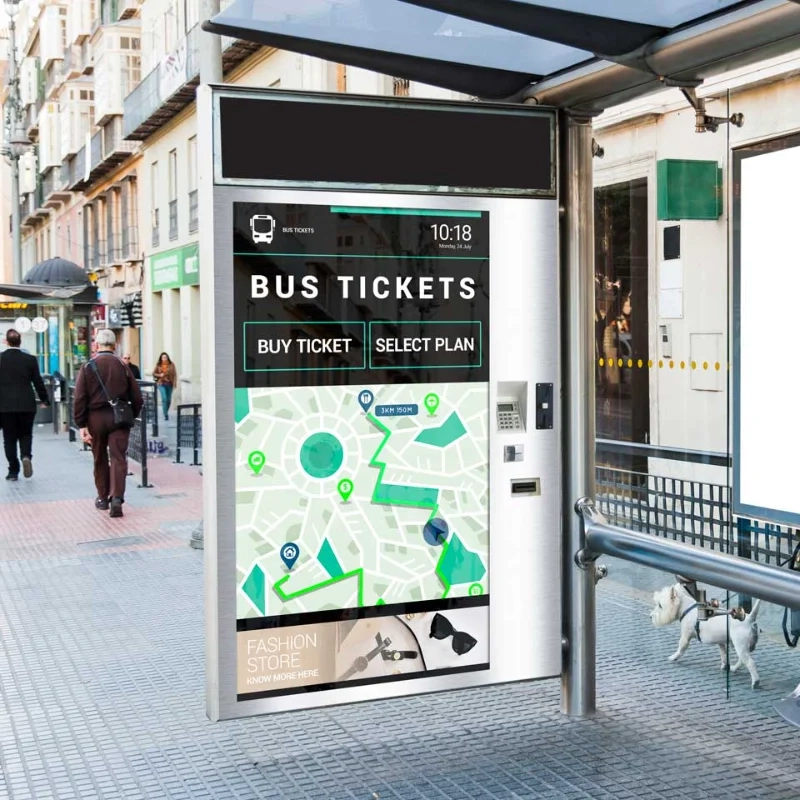
From an application perspective, the demand for high-brightness sunlight-readable LCDs continues to grow exponentially. In aviation, pilots rely on HUDs (Heads-Up Displays) equipped with such screens for navigation, weather alerts, and flight path visualization—even under full sun glare. In agriculture, drone operators and farmers use handheld tablets with sunlight-readable displays to monitor crop health, soil moisture, and irrigation schedules in open fields. Similarly, public transit systems in cities like Tokyo, London, and New York now deploy outdoor digital signage powered by these displays, enabling clear messaging for passengers regardless of time of day.
Cost-effectiveness remains a barrier for widespread adoption, particularly in consumer markets. While high-end military and industrial-grade panels cost between $200–$500 USD per unit, consumer-grade alternatives are still limited in terms of true sunlight readability. However, recent breakthroughs in mini-LED and micro-LED backlights promise to bridge this gap. Mini-LED arrays offer better uniformity and higher peak brightness than traditional edge-lit LEDs, while micro-LED technology—though currently expensive—offers superior luminance, faster response times, and longer lifespans. Analysts at Omdia predict that by 2026, micro-LED-based sunlight-readable displays will be commercially viable for mid-range applications, potentially disrupting the market.
Moreover, software integration plays a pivotal role in maximizing display utility. Operating systems like Android Automotive OS and Linux-based embedded platforms support automatic screen calibration, color correction, and adaptive UI scaling for different lighting conditions. This enables developers to create applications that dynamically optimize text size, contrast, and icon visibility based on ambient light input—an essential feature for accessibility and usability in diverse global markets.
Looking ahead, the future of high-brightness sunlight-readable LCDs lies in hybrid technologies that merge OLED, QLED, and micro-LED advancements with intelligent optics. Researchers at the University of Cambridge and Samsung Display have recently demonstrated a prototype that uses quantum dot-enhanced backlighting combined with AI-driven contrast enhancement algorithms, achieving 12,000 cd/m² brightness with minimal power draw. Such innovations point toward a future where sunlight-readable displays are not just functional but also energy-efficient, visually immersive, and seamlessly integrated into smart ecosystems.
In conclusion, high-brightness sunlight-readable LCD screens represent a convergence of cutting-edge engineering, rigorous testing protocols, and deep understanding of human visual perception. Their development reflects the industry’s commitment to delivering reliable, durable, and intuitive interfaces for users who operate beyond the confines of indoor comfort zones. Whether deployed in military operations, autonomous vehicles, or public infrastructure, these displays are no longer optional—they are foundational to modern outdoor digital interaction.