RisingStar
- Home
- About Us
- Products
- News
- Video
- Contact
- Send Inquiry
Search
- Home
- About Us
- Products
- News
- Video
- Contact
- Send Inquiry
RisingStar
High-brightness sunlight-readable LCD screens have become essential in modern outdoor display solutions, particularly in industries such as transportation, military, industrial automation, and public information systems. Unlike standard LCDs that struggle under direct sunlight, these specialized displays maintain visibility even in extreme lighting conditions—up to 10,000 lux or more—ensuring consistent performance across diverse environments.
The core innovation lies in a combination of high luminance output (typically 5,000 to 10,000 nits), anti-glare coatings, advanced polarizer designs, and optimized backlighting systems. For instance, the use of LED-based backlights with high-efficiency drivers allows for precise control over brightness levels while minimizing power consumption. Additionally, some manufacturers integrate ambient light sensors to dynamically adjust screen brightness based on real-time environmental conditions—a feature known as auto-brightness adjustment, which enhances both energy efficiency and user experience.
A key technical differentiator is the implementation of transflective liquid crystal technology. Unlike traditional transmissive LCDs, transflective panels combine reflective and transmissive layers, enabling them to reflect ambient light when it’s bright (like in daylight) and emit light when ambient light is low (such as at night). This dual-mode operation significantly improves readability without requiring excessive power, making it ideal for solar-powered or battery-operated devices.
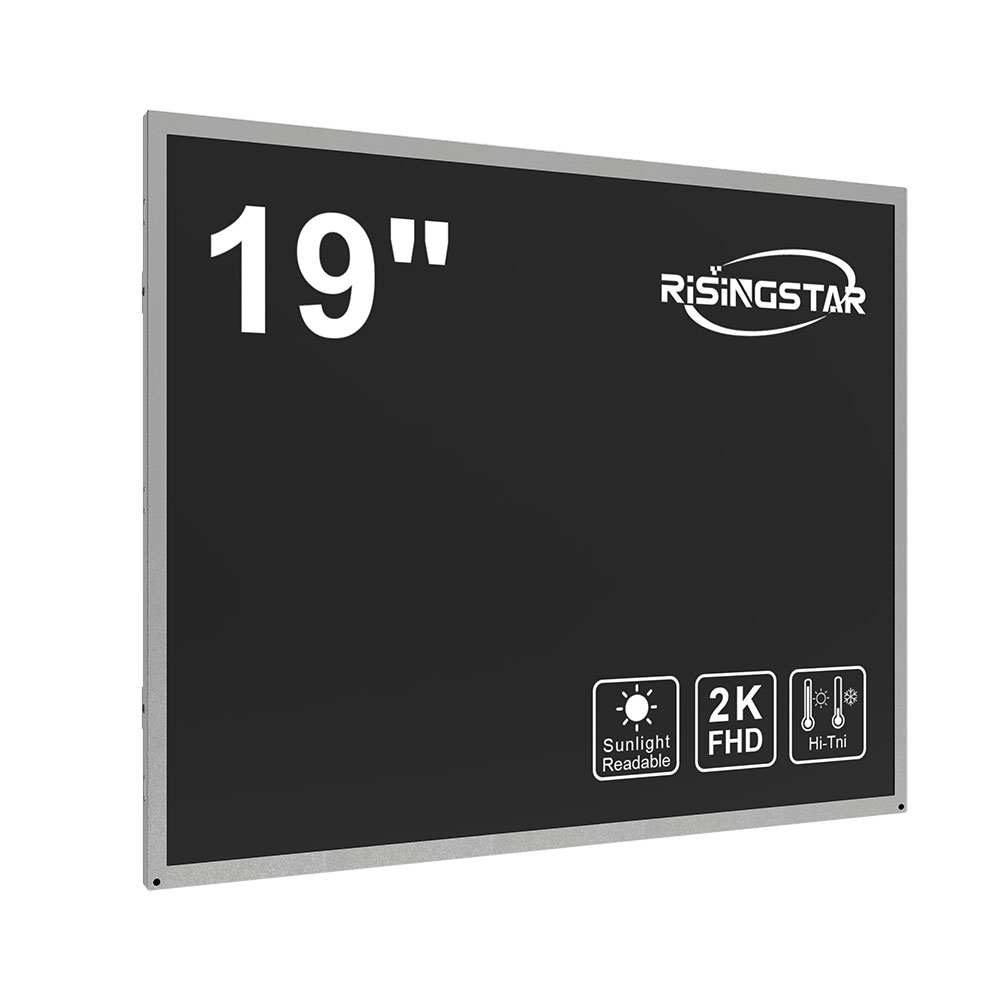
Case studies from the U.S. Department of Defense and European rail transit operators demonstrate how these screens are used in ruggedized vehicles and field-deployable equipment. In one notable example, a military-grade tablet using a 7-inch sunlight-readable LCD maintained full functionality during desert operations where ambient light exceeded 8,000 lux. The screen retained contrast ratios above 1000:1, preventing visual fatigue for users who must interpret critical data quickly.
Moreover, modern high-brightness displays often comply with MIL-STD-810G standards for shock, vibration, and temperature resistance—making them suitable for harsh environments like construction sites, offshore platforms, and Arctic research stations. Some models also support wide viewing angles (up to 178°), ensuring clarity from multiple positions, which is vital in crowded public spaces like airports or train stations.
Manufacturers like ELO Touch Systems, LG Display, and Sharp have developed proprietary technologies such as “Sunlight Readable” and “Outdoor LCD” series that leverage advanced optical films, edge-lit LED arrays, and color calibration algorithms tailored for outdoor use. These innovations are backed by extensive testing protocols aligned with ISO 9241-301, which defines usability criteria for outdoor digital signage.
In conclusion, high-brightness sunlight-readable LCDs represent a convergence of materials science, human factors engineering, and real-world application demands. As mobile and IoT-based outdoor systems grow in complexity—from autonomous vehicles to smart city infrastructure—the need for robust, readable displays will only intensify. Investing in this technology ensures not only operational continuity but also improved safety, accessibility, and user satisfaction in demanding environments.