RisingStar
- Home
- About Us
- Products
- News
- Video
- Contact
- Send Inquiry
Search
- Home
- About Us
- Products
- News
- Video
- Contact
- Send Inquiry
RisingStar
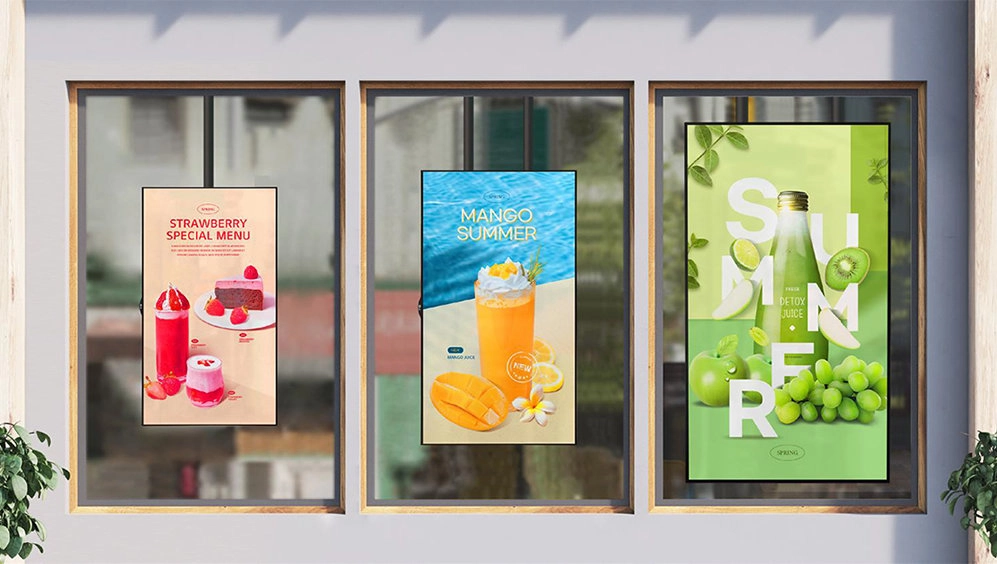
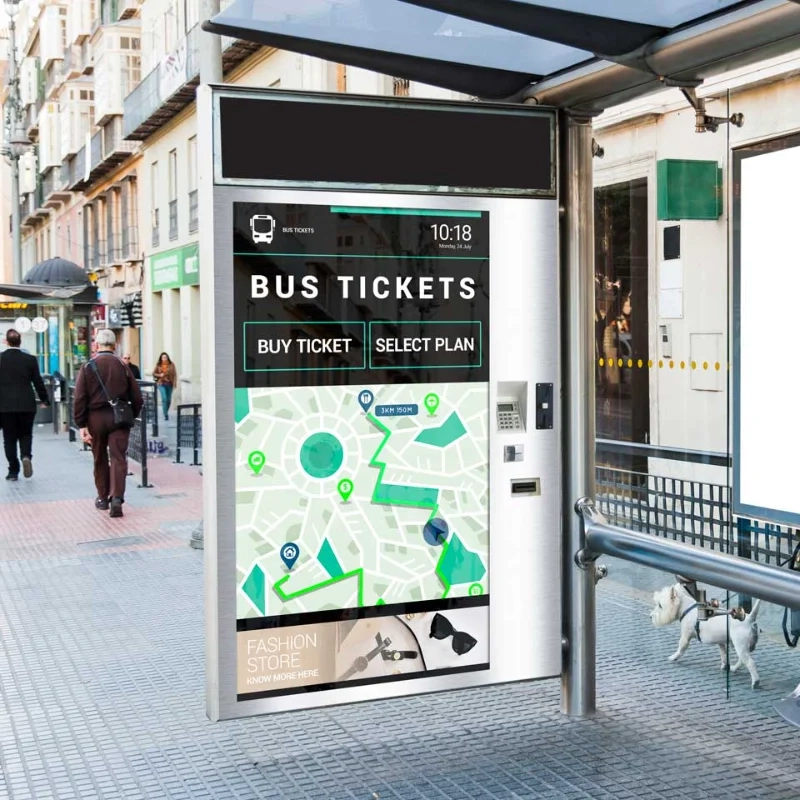
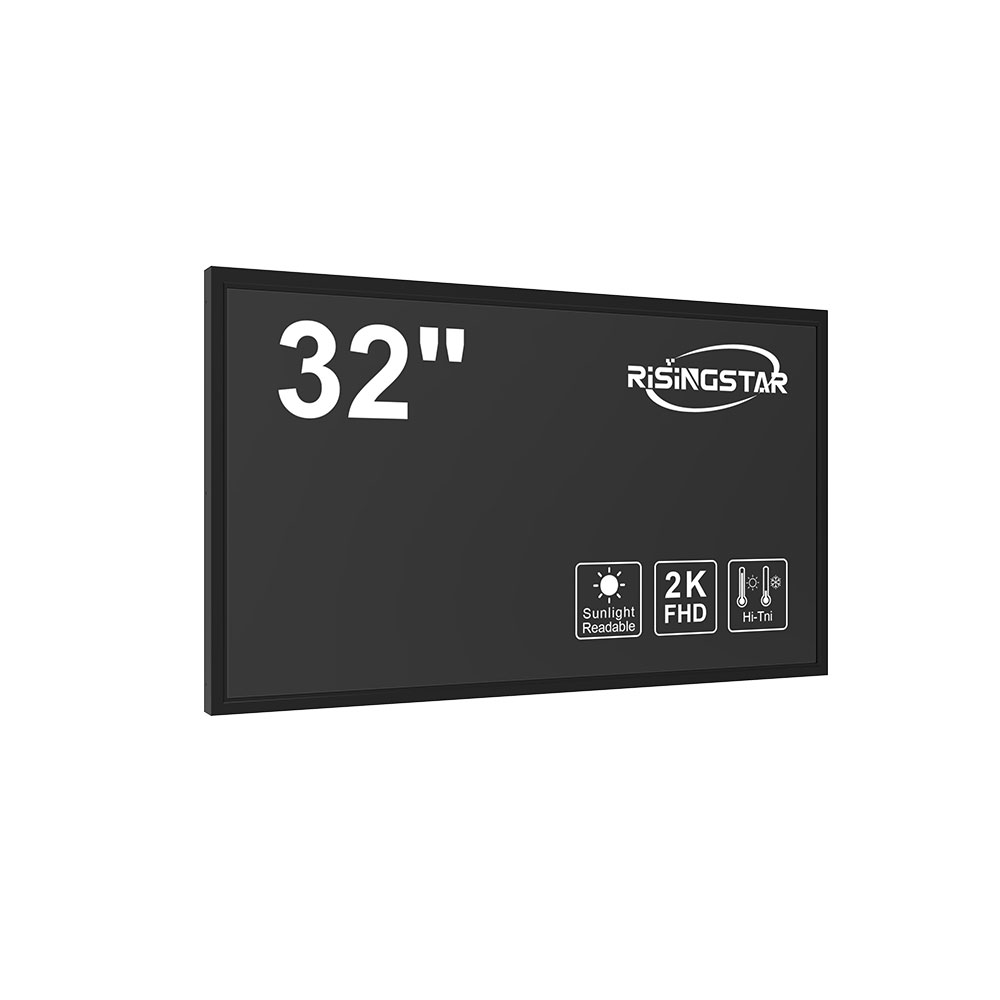
Sunlight-readable LCD displays are critical components in outdoor and high-ambient-light environments such as military vehicles, industrial control panels, transportation systems, and public information kiosks. These screens must maintain visibility under direct sunlight—often exceeding 100,000 lux—while delivering consistent image quality, low power consumption, and long-term reliability. Achieving this requires a deep understanding of both display technologies and environmental engineering principles.
The foundation of any sunlight-readable LCD lies in its brightness capability. Standard consumer-grade LCDs typically offer 250–350 cd/m² (candelas per square meter), which is insufficient for bright daylight conditions. In contrast, high-brightness sunlight-readable LCDs commonly exceed 5,000 cd/m²—some reaching up to 10,000 cd/m² or more. This performance is achieved through advanced backlighting solutions, such as LED arrays with optimized optical diffusion layers and high-efficiency drivers. For example, the U.S. Department of Defense has adopted specifications like MIL-STD-3009 for military-grade displays that mandate minimum brightness levels under extreme lighting conditions.
Another key factor is anti-reflection (AR) coating technology. Reflections from ambient light significantly degrade screen readability. To combat this, manufacturers apply multi-layer AR coatings using materials like magnesium fluoride or silicon dioxide. These coatings reduce surface reflectance from ~4% (uncoated glass) to less than 0.5%, dramatically improving contrast ratio even in direct sunlight. Additionally, some designs incorporate micro-louvered diffusers or polarized filters to further suppress specular reflections.
Contrast enhancement also plays a crucial role. Sunlight-readable displays often use dynamic contrast algorithms that adjust local dimming based on content. For instance, when displaying text on a dark background, the system boosts luminance in the foreground while reducing backlight intensity in adjacent areas—a technique known as local area dimming. This not only improves visibility but also conserves power, especially important in battery-powered devices like handheld tactical computers or field data loggers.
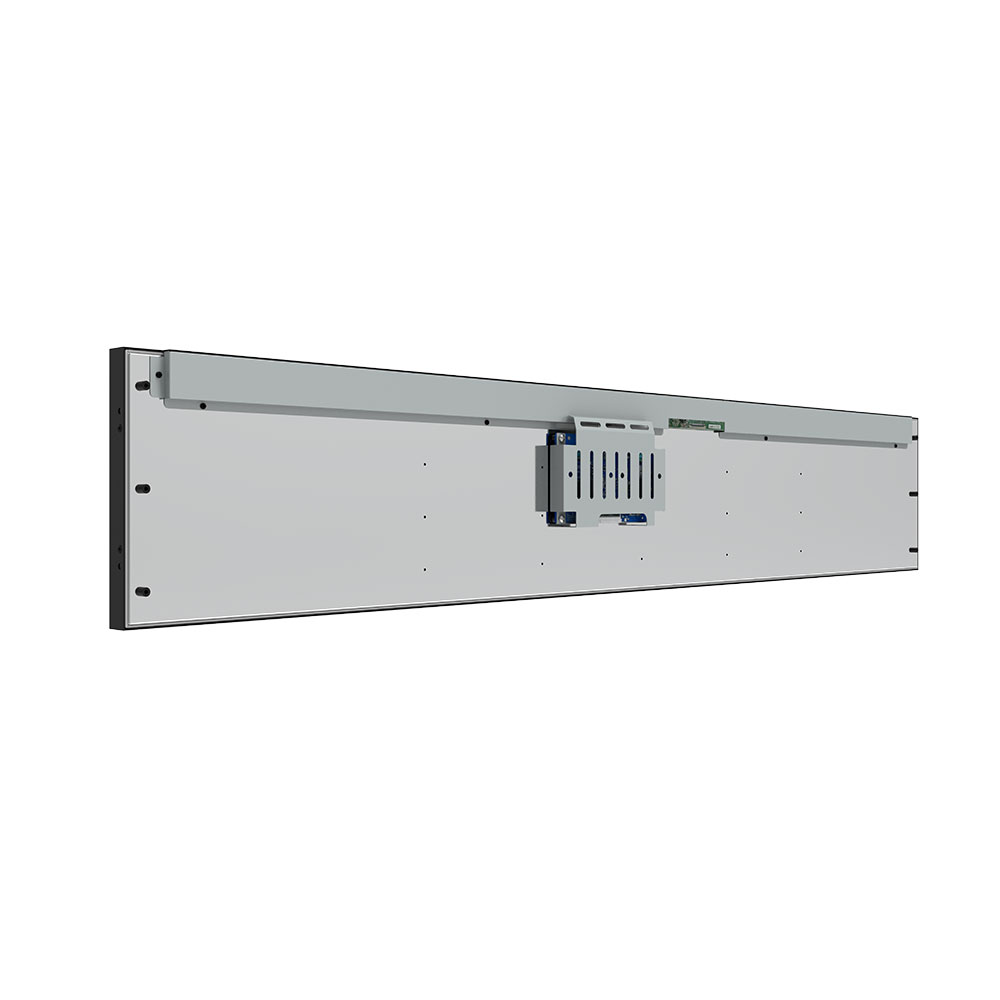
Manufacturers also implement ruggedized housing and thermal management strategies. Heat buildup can cause LCD degradation over time, particularly in hot climates. Therefore, effective heat dissipation via aluminum heatsinks, passive cooling fins, or active fans (in larger systems) is essential. The International Electrotechnical Commission (IEC) standard IEC 60068-2 sets environmental testing protocols for temperature, humidity, vibration, and shock resistance—key benchmarks for qualifying sunlight-readable displays for harsh environments.
Case studies highlight real-world applications. For example, in the aerospace industry, companies like Rockwell Collins and Honeywell have developed cockpit displays with 7,000+ cd/m² brightness, meeting FAA regulations for daytime readability. Similarly, in the automotive sector, Tesla’s in-car infotainment systems utilize high-brightness LCDs with adaptive brightness control to ensure driver visibility during both dawn and noon driving conditions.
Finally, future trends point toward OLED-based sunlight-readable displays, though current OLEDs still face challenges in achieving sufficient brightness for full-sun operation without excessive power draw. Researchers at Samsung Display and LG Display are actively developing high-efficiency blue phosphors and transparent conductive oxides to improve OLED performance under sunlight.
In summary, designing a reliable sunlight-readable LCD demands expertise across optics, thermal management, electronics, and material science. Engineers must balance brightness, contrast, power efficiency, durability, and cost—making it one of the most demanding segments in modern display engineering.