RisingStar
- Home
- About Us
- Products
- News
- Video
- Contact
- Send Inquiry
Search
- Home
- About Us
- Products
- News
- Video
- Contact
- Send Inquiry
RisingStar
High-brightness sunlight-readable LCD screens are essential components in modern outdoor display systems, especially in environments where ambient light levels exceed 10,000 lux—such as military vehicles, industrial control panels, transportation signage, and public information kiosks. These displays are engineered to maintain visibility under direct sunlight, ensuring operational clarity and user safety even in harsh conditions.
The core technology behind these screens involves advanced backlighting solutions, high-luminance LED arrays (typically 5,000 to 10,000 nits), anti-reflective coatings, and optimized liquid crystal cell design. Unlike standard LCDs that struggle with glare and contrast loss in bright daylight, sunlight-readable displays use a combination of hardware and software enhancements to boost brightness while minimizing power consumption. For instance, adaptive brightness control algorithms dynamically adjust luminance based on real-time ambient light sensors, reducing energy usage without compromising readability.
Manufacturers like LG Display, Sharp, and Samsung have pioneered innovations such as “Sunlight Readable” or “Outdoor Mode” technologies that integrate polarized filters, wide viewing angles, and enhanced contrast ratios (often >1000:1). In military applications, MIL-STD-810G compliance ensures durability against shock, vibration, temperature extremes (-30°C to +70°C), and humidity. Industrial-grade units often meet IP65/IP67 ratings for dust and water resistance, making them suitable for marine, mining, and construction environments.
Case studies from the defense sector illustrate the impact of high-brightness displays. For example, the U.S. Army’s Future Fighting Vehicle program adopted 7-inch sunlight-readable LCDs with 7,000-nit peak brightness, enabling operators to read critical data during daytime operations without eye strain or misinterpretation. Similarly, London Underground installed 42-inch outdoor digital signage using 5,000-nit LCD panels, improving passenger communication during peak hours despite strong sunlight exposure.
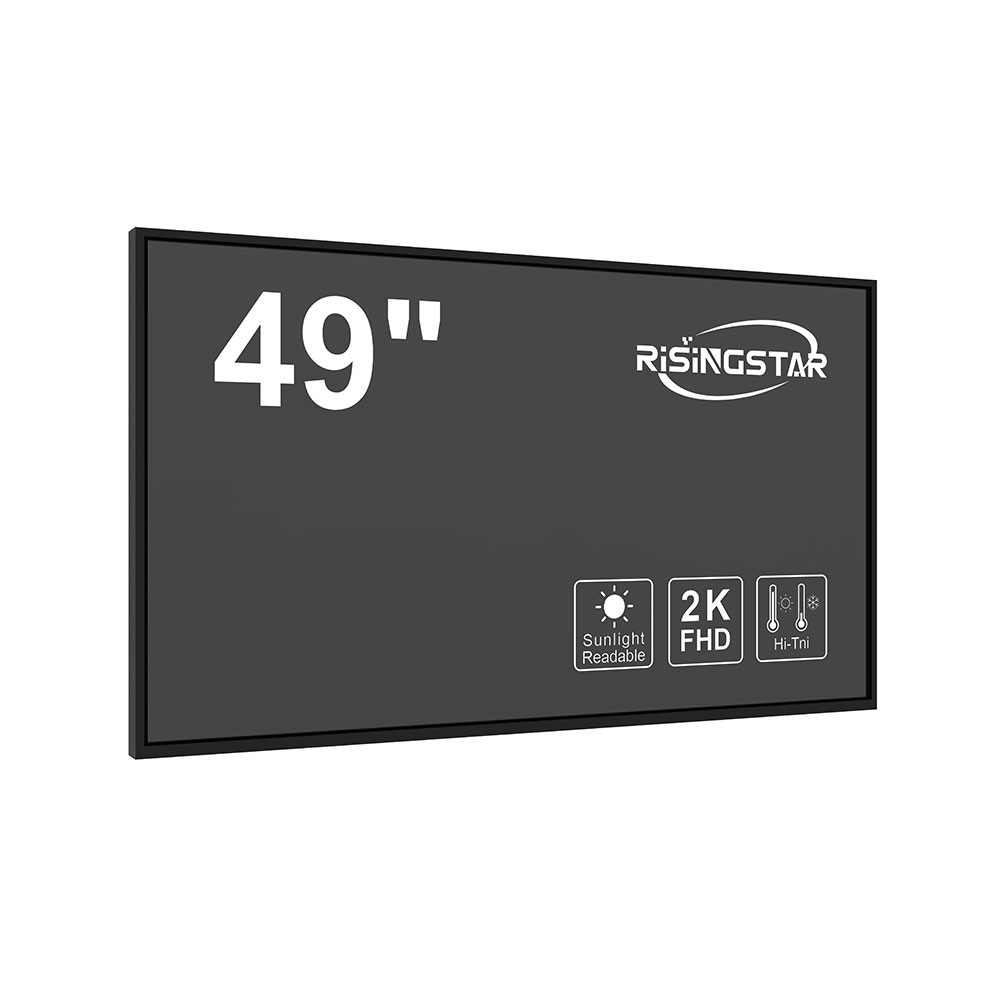
From an engineering perspective, key performance indicators include luminance uniformity (±5% tolerance), color accuracy (ΔE< 3), and response time (<20 ms). Standards such as ISO 9241-3 and EN 62368-1 guide design for usability and electrical safety. Furthermore, manufacturers now leverage OLED-on-LCD hybrid architectures to achieve both high brightness and deep blacks, offering superior visual quality over traditional TN or IPS panels.
These advancements reflect not only technical maturity but also growing demand across industries—from smart city infrastructure to autonomous vehicle dashboards. As solar radiation intensity increases globally due to climate change, the need for reliable, high-brightness outdoor displays becomes more urgent. OEMs must prioritize robust design, thermal management, and long-term reliability when selecting or developing such screens for mission-critical applications.