 RisingStar
- Home
- About Us
- Products
- News
- Video
- Contact
- Send Inquiry
Search
- Home
- About Us
- Products
- News
- Video
- Contact
- Send Inquiry
RisingStar
High-brightness sunlight-readable LCD displays are critical components in modern outdoor electronic systems where visibility under direct sunlight is non-negotiable. From military field operations to public transportation, industrial control panels, and automotive infotainment, these screens must maintain clarity, contrast, and color accuracy even when exposed to ambient light intensities exceeding 100,000 lux. This article explores the engineering principles, technological advancements, real-world applications, and industry standards behind high-brightness sunlight-readable LCDs—providing a comprehensive resource for engineers, product designers, and procurement specialists.
The core challenge in designing such displays lies in overcoming the inherent limitations of standard LCD technology. Conventional liquid crystal displays rely on backlighting to illuminate pixels, but when ambient light exceeds 5,000 lux (a typical indoor lighting level), the display becomes washed out and unreadable. In bright daylight, especially near midday, solar irradiance can reach 100,000 lux or more—a condition that demands specialized solutions. High-brightness sunlight-readable LCDs address this by combining advanced optical design, optimized materials, and intelligent power management.
One key innovation is the use of high-luminance LED backlights, typically rated at 5,000 to 10,000 nits or higher. For comparison, consumer-grade LCDs usually emit around 300–500 nits. Military-grade displays often exceed 7,000 nits, with some models reaching 10,000 nits for extreme environments. These luminance levels ensure sufficient brightness to dominate ambient light while maintaining energy efficiency—a crucial factor in battery-powered devices like drones or handheld tactical gear.
Another essential feature is the implementation of anti-reflective coatings and polarization filters. Standard LCD panels suffer from surface reflections caused by glass interfaces, which can reduce effective contrast by up to 50%. Sunlight-readable displays incorporate multi-layer anti-reflective (AR) coatings made from magnesium fluoride or silicon dioxide, reducing reflection to less than 1% across visible wavelengths. Some designs also integrate polarized films that minimize glare without compromising pixel response time or viewing angles—a balance vital for user comfort in prolonged outdoor usage.
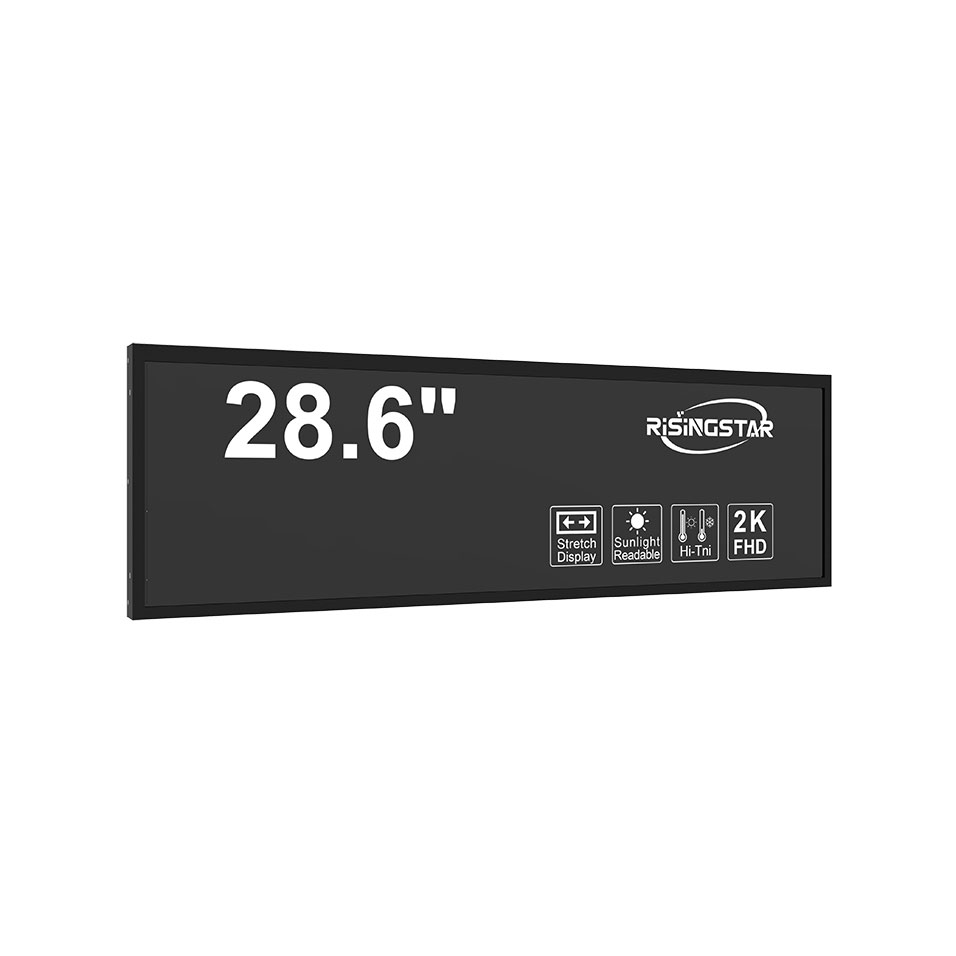
A significant breakthrough in recent years involves the adoption of transflective LCD technology. Unlike traditional transmissive LCDs (which rely solely on backlighting) or reflective ones (which depend on ambient light), transflective displays combine both modes. They include microstructured reflectors behind the pixel array that bounce ambient light back through the liquid crystals, enhancing brightness in daylight conditions. At night, they switch to full backlight mode. This dual-mode operation improves power efficiency by up to 40% compared to all-backlit solutions—an advantage in mobile or remote applications where energy conservation is paramount.
Additionally, manufacturers have embraced advanced pixel architectures such as in-cell touch integration and high-density subpixel layouts. In-cell touch eliminates the need for a separate touch sensor layer, reducing thickness and improving optical transmission. High-resolution panels (e.g., 1920x1080 or higher) enable sharper text rendering and detailed graphics, critical in medical devices, aviation heads-up displays (HUDs), and digital signage. The combination of high resolution and strong contrast ratios (>1000:1) ensures legibility across various environmental conditions.
Real-world case studies highlight the importance of these technologies. For example, the U.S. Army’s AN/PSQ-16 Laser Range Finder incorporates a 7-inch sunlight-readable display operating at 7,500 nits. It uses transflective technology and an AR-coated cover glass, allowing soldiers to read target data in full sunlight without squinting or adjusting position. Similarly, in the maritime sector, companies like Garmin and Raymarine equip marine GPS units with 5,000-nit displays that remain usable during sun glint on water surfaces—a common issue in open-sea navigation.
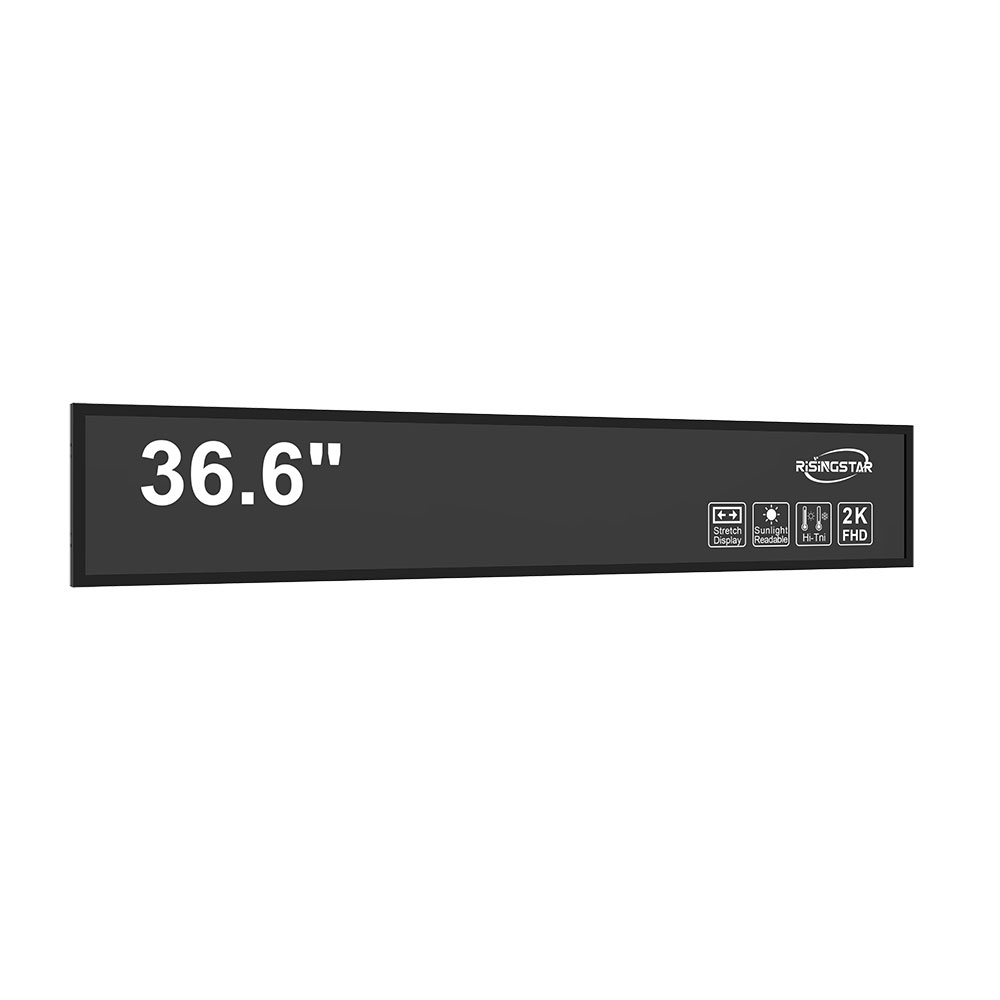
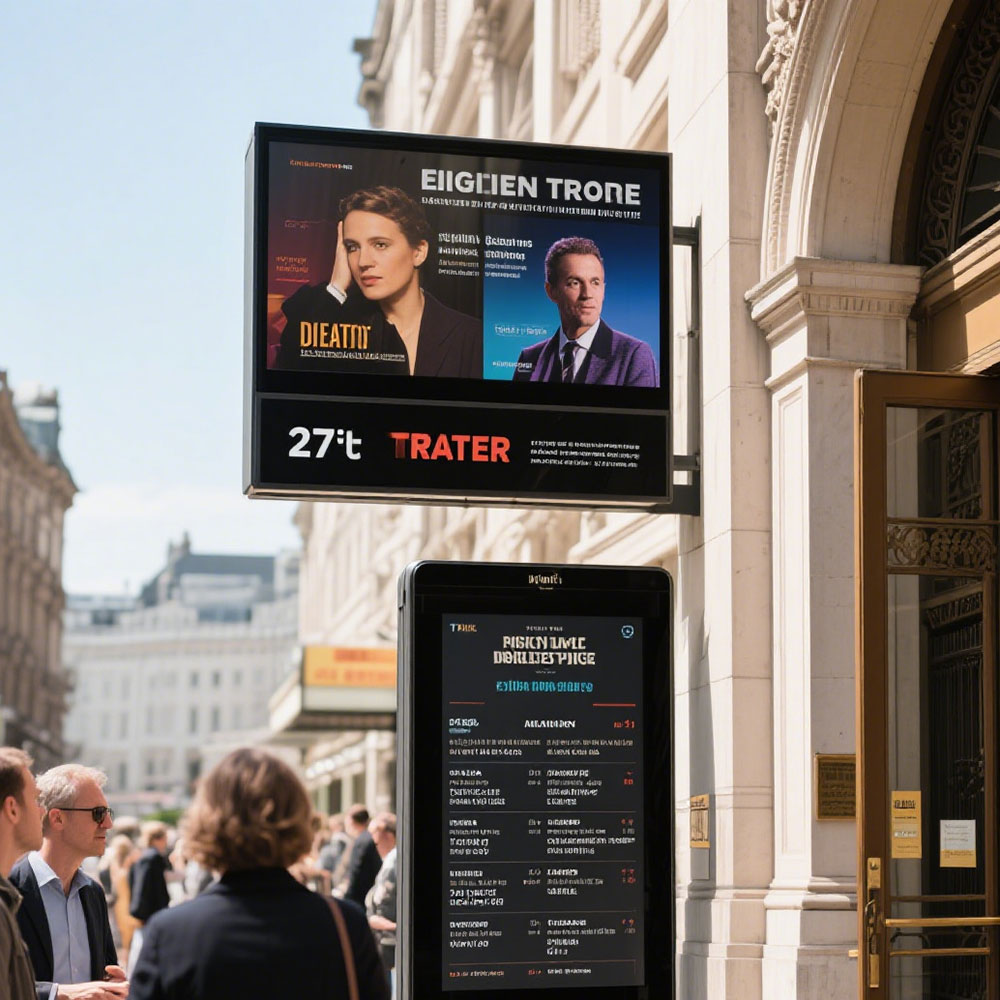
Industries such as automotive and transportation also benefit significantly. Modern electric vehicles (EVs) increasingly deploy large central dashboards using high-brightness LCDs to maintain readability under intense solar exposure. Tesla Model S, for instance, utilizes a 17-inch 2200x1300 display with adaptive brightness controls that dynamically adjust based on ambient light sensors—a feature now considered standard in premium EVs. Public transit systems, including buses and trains, adopt similar displays for route information, ticketing, and emergency alerts, ensuring passengers can access critical data regardless of weather or time of day.
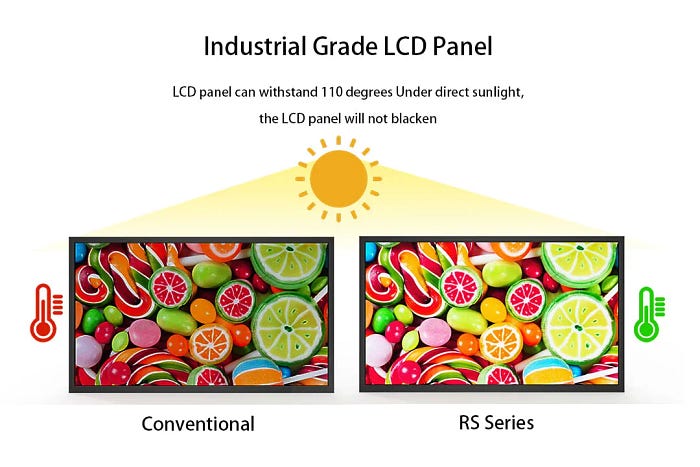
From a manufacturing standpoint, compliance with international standards is essential. The MIL-STD-810 series, particularly Test Method 501.5 (Sunlight Exposure), sets rigorous benchmarks for durability and performance under simulated outdoor conditions. Displays must withstand temperature cycling from -40°C to +70°C, UV radiation, humidity, and mechanical shock—all while maintaining functionality. Other relevant standards include EN 60068 (Environmental Testing) and ISO 16750 (Road Vehicles – Environmental Conditions and Testing). These frameworks guide material selection, thermal management, and long-term reliability testing.
Power efficiency remains a top concern, especially for portable and embedded systems. Engineers employ techniques such as local dimming, where individual backlight zones are controlled independently based on content density. A white background on a dark screen reduces power consumption by up to 30%, making it ideal for apps showing maps, charts, or low-contrast UI elements. Additionally, newer OLED-based sunlight-readable displays offer better contrast and faster response times, though their higher cost and shorter lifespan limit adoption in mass-market products.
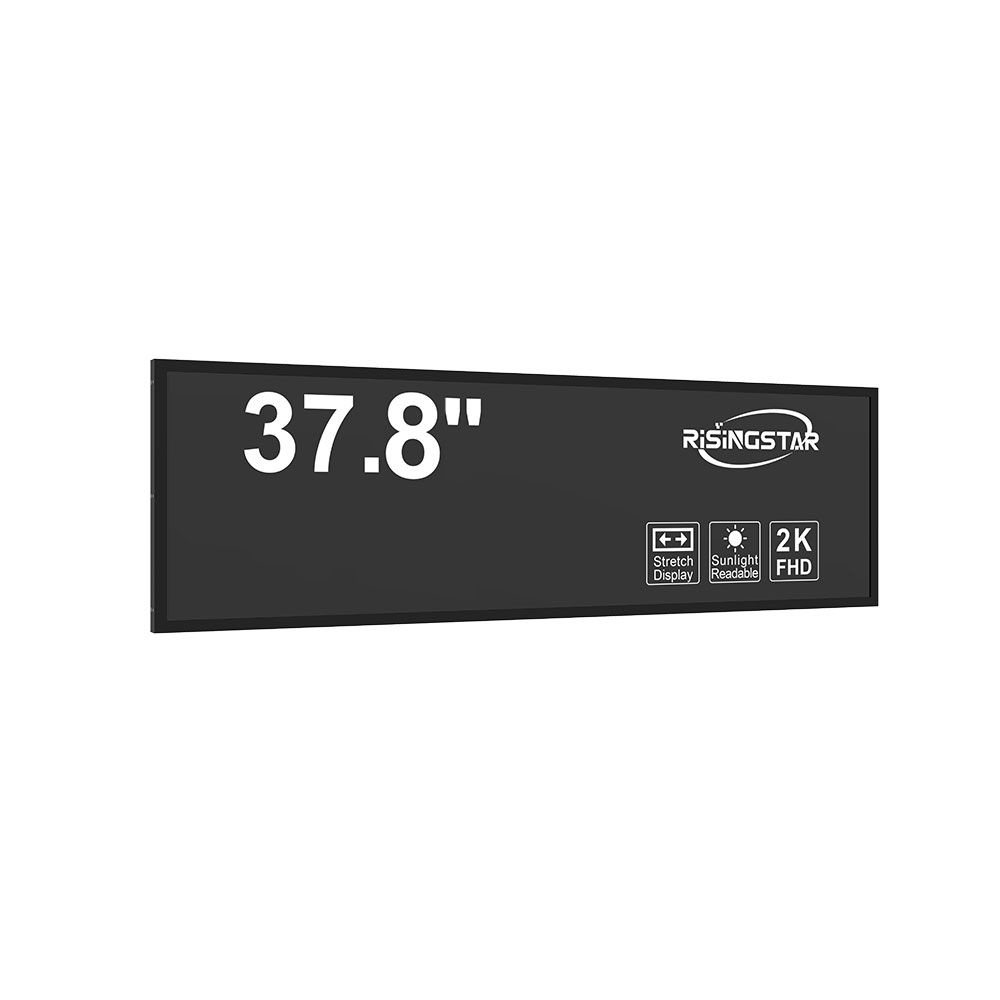
In terms of future trends, researchers are exploring quantum dot-enhanced backlighting and micro-LED arrays to push brightness limits further while minimizing heat generation and power draw. Quantum dots improve color gamut and luminance uniformity, enabling displays that not only meet but exceed current standards. Meanwhile, micro-LED technology promises self-emissive pixels with ultra-high brightness (>10,000 nits), minimal power consumption, and no risk of burn-in—a game-changer for next-generation outdoor displays.
Ultimately, the success of high-brightness sunlight-readable LCDs hinges on a holistic design approach that integrates hardware, software, and environmental adaptability. As global demand grows for robust, reliable outdoor electronics—from agricultural monitoring tools to smart city infrastructure—these displays will play an increasingly pivotal role. Whether deployed in harsh climates or everyday urban settings, they represent a convergence of engineering excellence, user-centric design, and technological foresight.