 RisingStar
- Home
- About Us
- Products
- News
- Video
- Contact
- Send Inquiry
Search
- Home
- About Us
- Products
- News
- Video
- Contact
- Send Inquiry
RisingStar
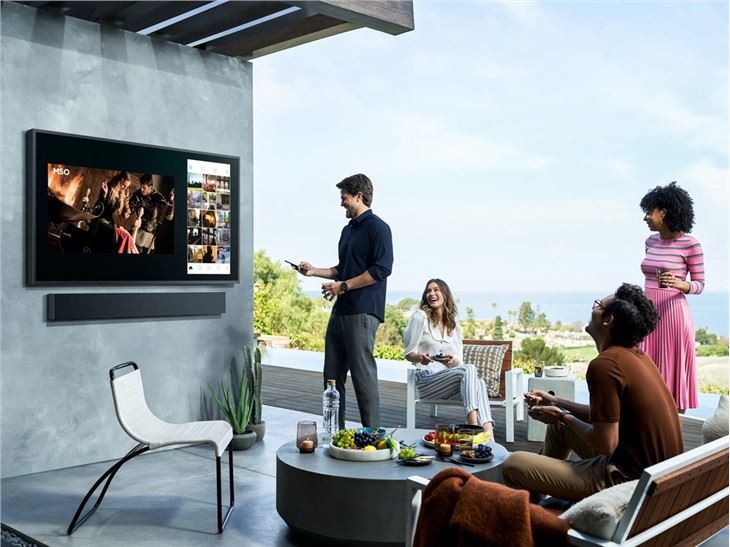
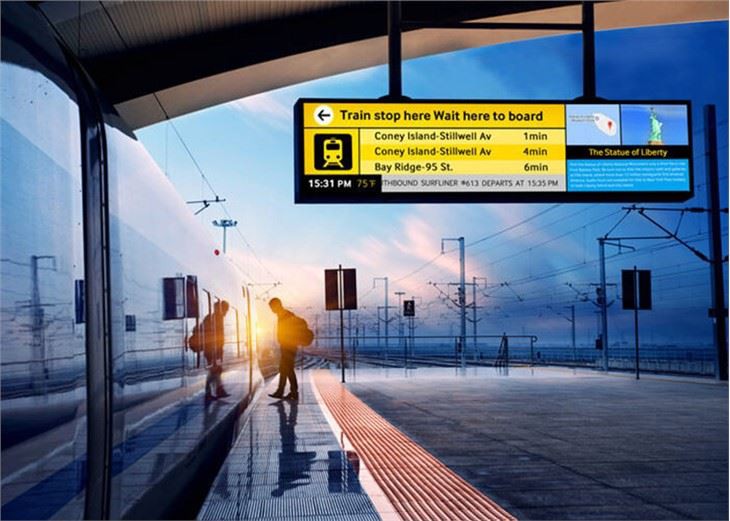
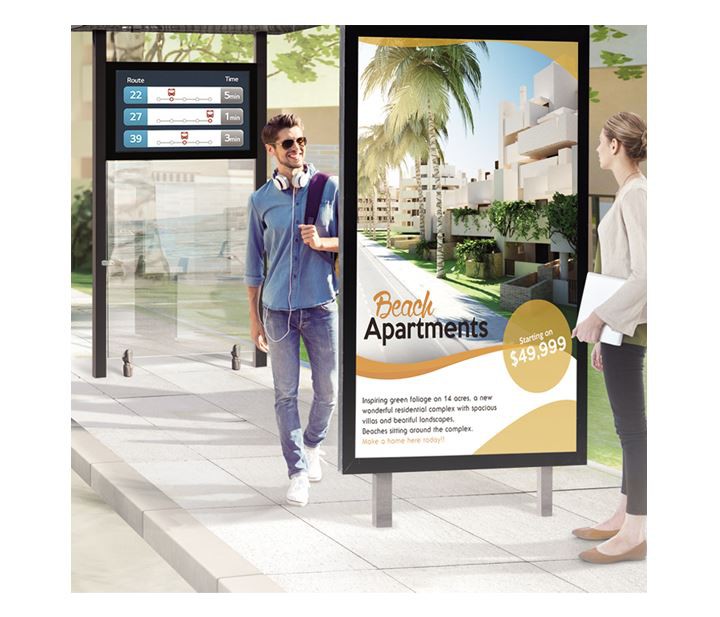
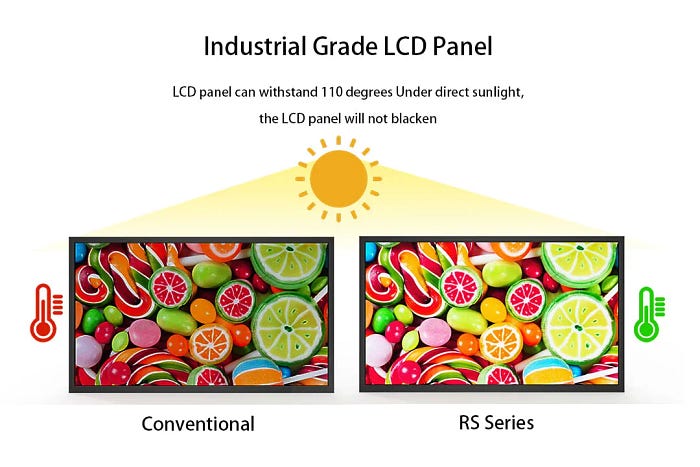
Selecting the appropriate high-brightness sunlight-readable LCD (Liquid Crystal Display) is critical for ensuring optimal visibility and performance in demanding outdoor environments such as military field operations, industrial control systems, transportation dashboards, and public information kiosks. Unlike standard indoor displays, these screens must perform reliably under extreme lighting conditions—especially direct sunlight exposure that can exceed 100,000 lux, which often renders conventional LCDs unusable.
The core challenge lies in achieving sufficient brightness while maintaining power efficiency, durability, and visual clarity. Industry standards such as MIL-STD-810G for environmental ruggedness and ISO 9241-3 for usability are commonly referenced when evaluating outdoor display solutions. A typical high-brightness sunlight-readable LCD operates at 5,000 to 10,000 nits of peak brightness—far above the average 250–500 nits of consumer-grade screens. This range ensures readability even in full sun, especially when combined with advanced anti-glare coatings, polarized filters, and reflective or transflective technologies.
For example, in military applications like vehicle-mounted command systems or handheld tactical devices, manufacturers often integrate active matrix TFT-LCD panels with local dimming features and ambient light sensors. These systems dynamically adjust brightness based on real-time lighting conditions, reducing power consumption by up to 40% without compromising visibility—a crucial factor for battery-powered devices. According to a 2023 report by MarketsandMarkets, the global outdoor display market is projected to grow at a CAGR of 7.2% through 2028, driven by increasing demand for reliable human-machine interfaces in harsh environments.
Another key consideration is the use of transflective technology, where the display combines both transmissive (for low-light conditions) and reflective (for bright environments) modes. This hybrid approach allows the screen to function effectively across all lighting scenarios—from nighttime operation in submarines to daytime use in open-air construction sites. For instance, Hitachi’s transflective LCD modules have been deployed in marine navigation systems due to their ability to maintain contrast ratios above 1000:1 even under direct sunlight.
Environmental resilience is equally vital. High-brightness sunlight-readable LCDs must withstand temperature extremes from -30°C to +70°C, humidity levels up to 95%, and mechanical shock/vibration per IEC 60068-2 standards. Materials such as Gorilla Glass 5 or Corning’s ultra-thin glass are frequently used for front-surface protection, offering superior scratch resistance and optical clarity.
In summary, selecting a high-brightness sunlight-readable LCD involves balancing luminance, energy efficiency, environmental robustness, and ergonomic design. By aligning technical specifications with real-world operational needs—such as those defined in IEEE 1617 for embedded displays—and leveraging proven materials and architectures, engineers and procurement teams can ensure mission-critical visibility in any outdoor setting.