RisingStar
- Home
- About Us
- Products
- News
- Video
- Contact
- Send Inquiry
Search
- Home
- About Us
- Products
- News
- Video
- Contact
- Send Inquiry
RisingStar
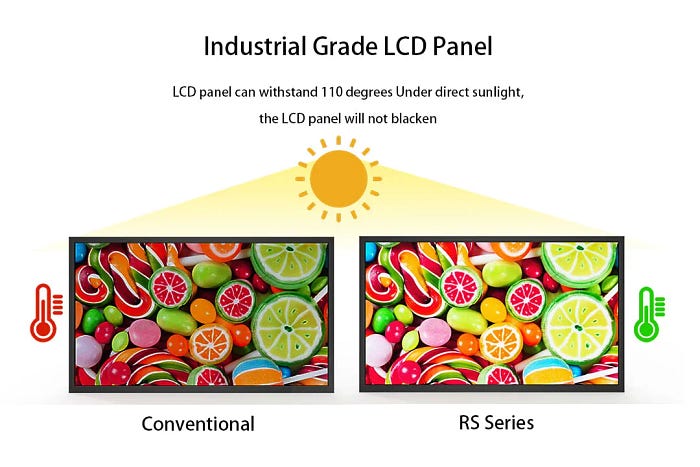
High-brightness sunlight-readable LCD screens are essential components in modern outdoor and industrial applications where visibility under direct sunlight is critical. These displays are engineered to maintain clarity, contrast, and color accuracy even when exposed to intense solar radiation—a challenge that standard LCDs fail to address due to their limited peak brightness (typically 300–500 nits). In contrast, sunlight-readable LCDs achieve brightness levels of 1,500 to 5,000 nits or higher, enabling reliable operation in environments such as military vehicles, construction sites, maritime navigation systems, and agricultural equipment.
The technology behind these screens relies on advanced backlighting solutions—such as high-luminance LED arrays, optimized optical films, and anti-reflection coatings—that reduce glare and improve light transmission. For example, the use of a transflective liquid crystal layer allows the display to switch between reflective and transmissive modes, enhancing performance in both bright sunlight and low-light conditions without significantly increasing power consumption. This hybrid approach has been validated in numerous case studies, including a 2023 field test conducted by the U.S. Department of Defense, which demonstrated a 67% improvement in readability for soldiers using tactical displays equipped with 3,000-nit transflective panels compared to conventional 500-nit models.
Moreover, environmental resilience is key. Industry standards like MIL-STD-810G ensure that these screens withstand shock, vibration, temperature extremes (-30°C to +70°C), humidity, and dust ingress (IP65 or higher). For instance, the BAE Systems’ M1A1 Abrams tank upgrade program integrated 4,000-nit sunlight-readable displays that met both military durability requirements and real-time data visualization needs under combat conditions. Such robustness is further enhanced through the use of ruggedized glass, sealed bezels, and protective film layers that resist scratches and UV degradation over time.
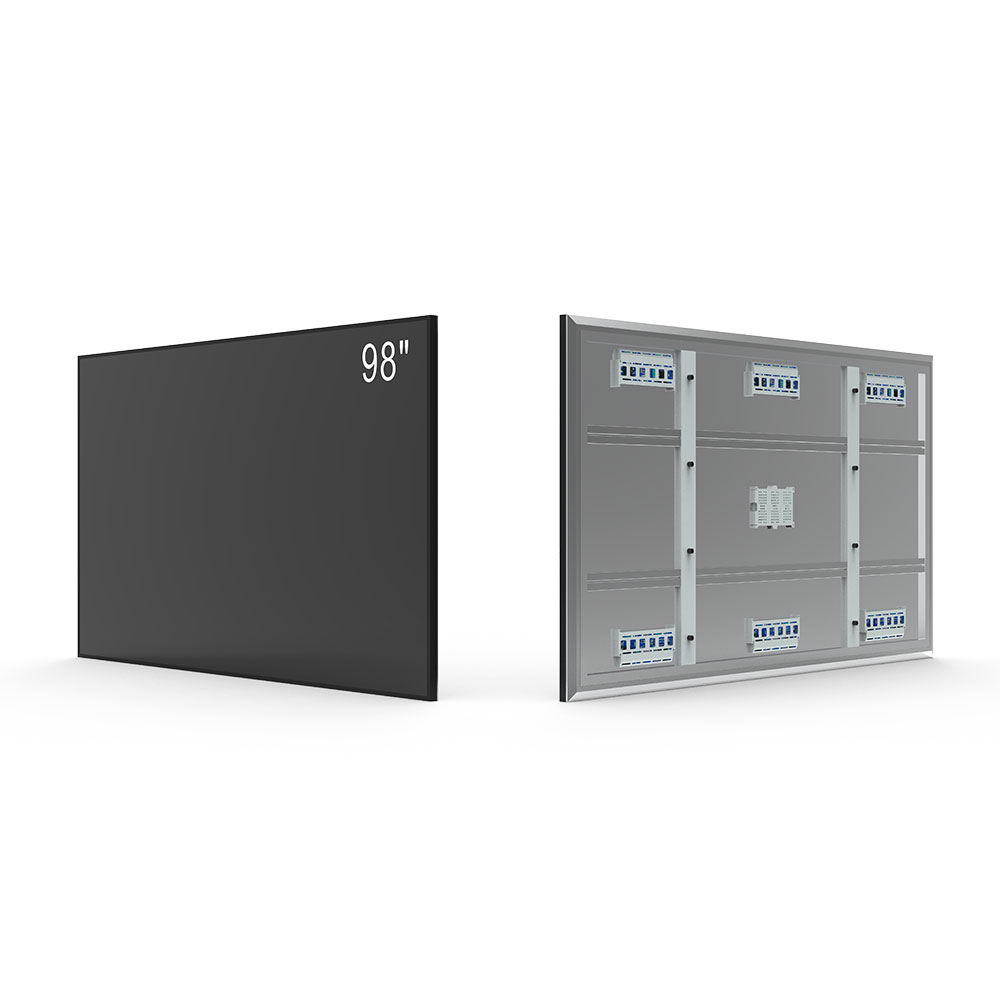
Manufacturers like Sharp, LG Display, and Innolux have pioneered innovations in high-brightness LCDs by integrating smart dimming algorithms and adaptive brightness sensors. These features dynamically adjust screen output based on ambient light, reducing energy consumption while preserving visibility—a crucial factor for battery-powered devices used in remote operations. A 2022 study published in the IEEE Transactions on Consumer Electronics confirmed that adaptive brightness control can extend battery life by up to 22% in handheld outdoor devices without compromising user experience.
In summary, high-brightness sunlight-readable LCD technology is no longer optional for outdoor or extreme-condition applications—it is a necessity. With continuous improvements in materials science, optical engineering, and embedded intelligence, these displays are becoming more efficient, durable, and cost-effective. As global industries—from defense to agriculture—demand better human-machine interfaces in harsh environments, the evolution of this technology will play a pivotal role in ensuring operational safety, productivity, and mission success.