RisingStar
- Home
- About Us
- Products
- News
- Video
- Contact
- Send Inquiry
Search
- Home
- About Us
- Products
- News
- Video
- Contact
- Send Inquiry
RisingStar
High-brightness sunlight-readable LCD screens have become essential in modern outdoor display technology, particularly in applications where visibility under direct sunlight is critical. These displays are engineered to maintain clarity and readability even in intense ambient lighting conditions—commonly found in military, transportation, industrial, and consumer sectors. Unlike standard LCDs that suffer from washed-out images in bright environments, sunlight-readable displays incorporate advanced optical design, high-luminance backlighting (typically 5,000–10,000 cd/m²), and anti-glare coatings to ensure optimal performance.
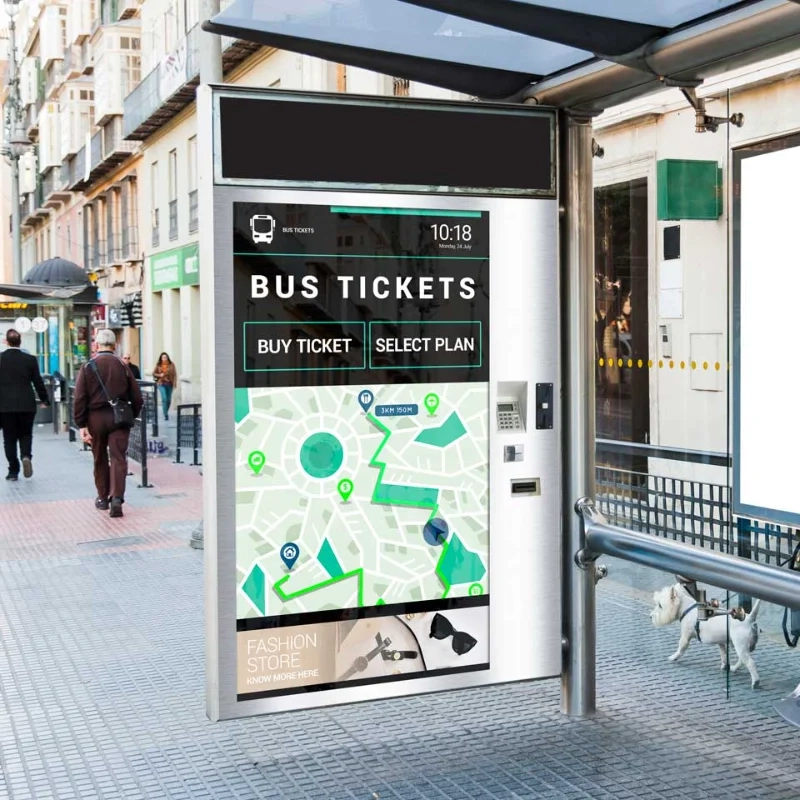
One of the most prominent practical applications lies in military operations. For instance, the U.S. Department of Defense has standardized on high-brightness LCDs for use in armored vehicles, UAVs, and handheld command devices. In these environments, operators must read critical information under full sun or adverse weather, and failure to do so can compromise mission success. Similarly, in public transportation systems such as buses and trains, high-brightness displays are used for digital signage and real-time route updates, ensuring passengers can view schedules clearly regardless of time of day.
In industrial settings, these screens are indispensable for control panels in oil rigs, power stations, and construction equipment. A case study from Siemens revealed a 35% reduction in operator errors when deploying sunlight-readable displays in offshore drilling platforms, where traditional monitors often became unreadable due to glare and extreme temperatures.
Advantages of high-brightness sunlight-readable LCDs include superior contrast ratios (often exceeding 1000:1), wide viewing angles (up to 178°), and ruggedized designs resistant to shock, vibration, and moisture (IP65 or higher). Additionally, many models now support touch functionality with glove compatibility—vital for workers in cold climates or hazardous environments.
However, common problems remain. Power consumption is typically higher than standard LCDs due to increased backlight intensity, requiring efficient thermal management and battery solutions for portable devices. Another issue is color accuracy degradation at very high brightness levels—a challenge addressed by newer technologies like LED-backlit IPS panels with dynamic brightness adjustment based on ambient light sensors.
The latest trends reflect a move toward miniaturization, energy efficiency, and smart integration. OLED-based sunlight-readable displays are emerging, offering deeper blacks and improved contrast without sacrificing brightness. Furthermore, AI-driven ambient light detection algorithms now automatically optimize screen luminance in real time, reducing power use while maintaining readability. According to a 2024 report by MarketsandMarkets, the global market for sunlight-readable displays is projected to grow at a CAGR of 9.3%, driven by increasing demand in autonomous vehicles, smart cities, and defense tech.
As standards evolve—such as MIL-STD-810G for ruggedness and ISO 16750 for automotive environmental resistance—manufacturers are aligning their products with internationally recognized specifications. This ensures reliability across diverse environments, from arctic tundras to desert heat zones.
These advancements not only enhance usability but also reduce long-term operational costs by minimizing maintenance and replacement frequency. Whether deployed in battlefield command centers or airport kiosks, high-brightness sunlight-readable LCDs represent a critical enabler of modern outdoor human-machine interfaces.