RisingStar
- Home
- About Us
- Products
- News
- Video
- Contact
- Send Inquiry
Search
- Home
- About Us
- Products
- News
- Video
- Contact
- Send Inquiry
RisingStar
High-brightness, sunlight-readable LCD displays are essential in modern outdoor and transit environments where visibility under direct sunlight is critical. These specialized screens are engineered to deliver crisp, clear visuals even in the most challenging lighting conditions—such as bright daylight, glare, or rapid ambient light changes—making them ideal for applications ranging from public transportation systems to retail and energy infrastructure.
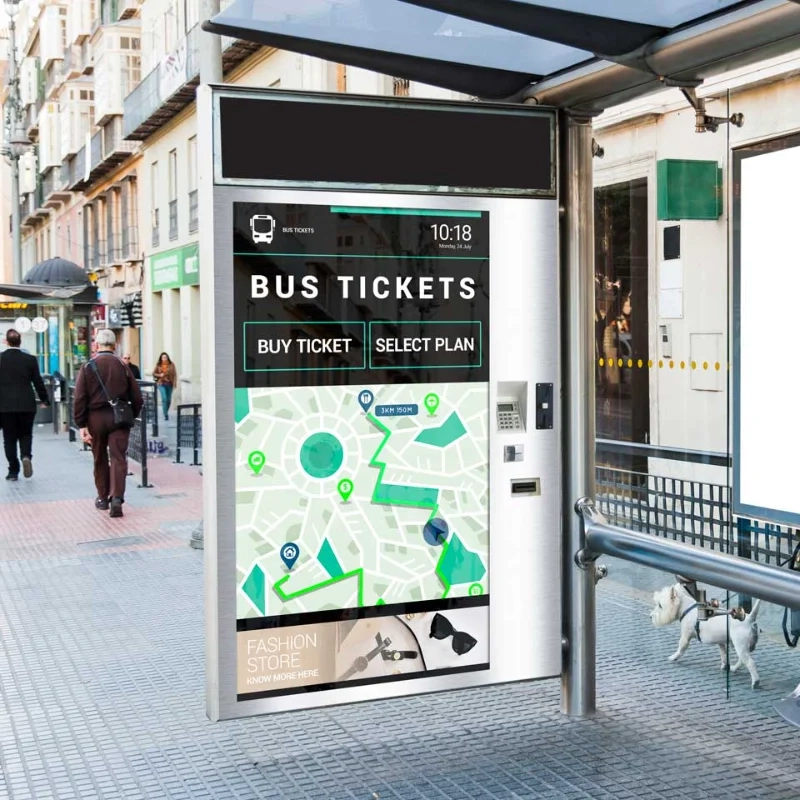
In railway stations, buses, trains, subways, and intercity rail networks, passenger information displays (PIDs) must operate reliably in all weather and lighting conditions. Standard LCDs often fail under strong sunlight due to low peak brightness (typically 300–500 nits), while high-brightness sunlight-readable displays typically exceed 5,000 nits, with some models reaching up to 10,000 nits. This level of luminance ensures that passengers can read departure times, route maps, and safety notices clearly—even on a sunny afternoon. Technologies such as anti-glare coatings, advanced LED backlighting, and dynamic contrast enhancement (e.g., adaptive brightness control) contribute to this performance.
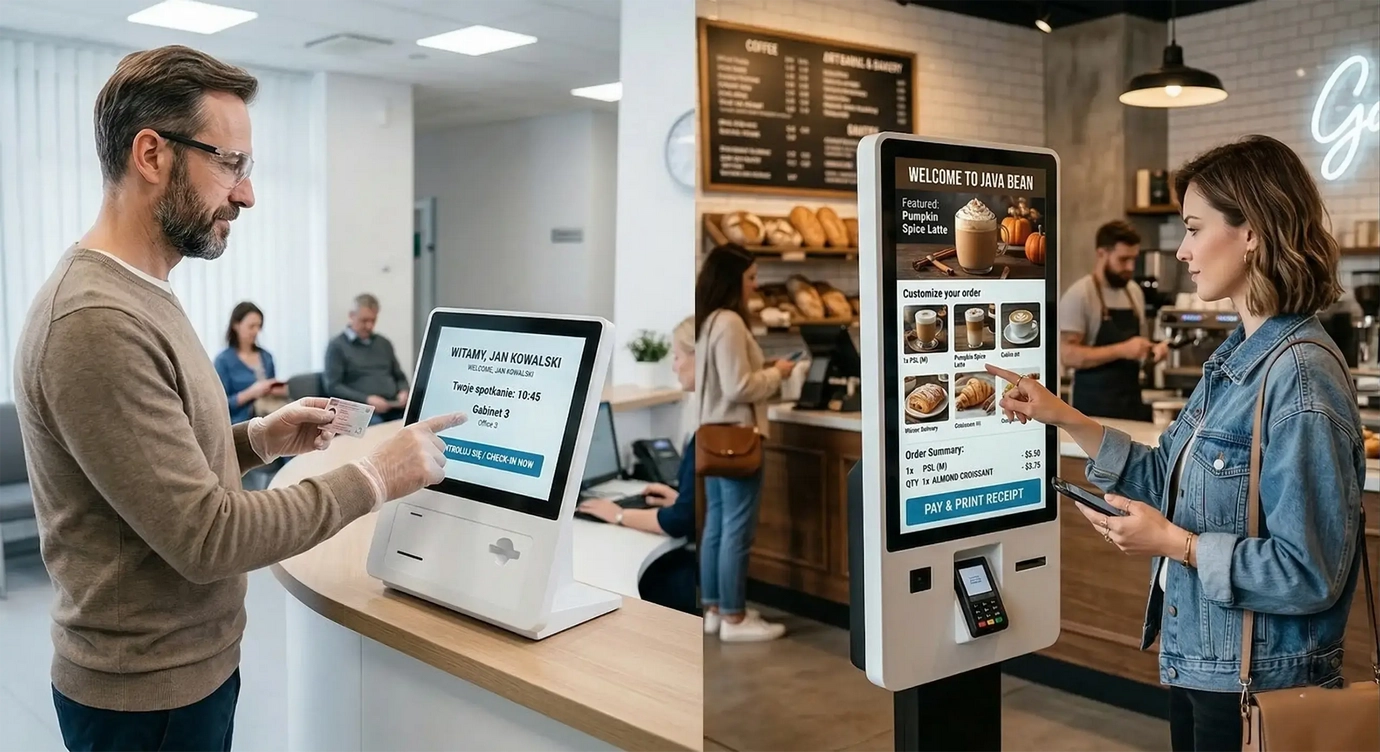
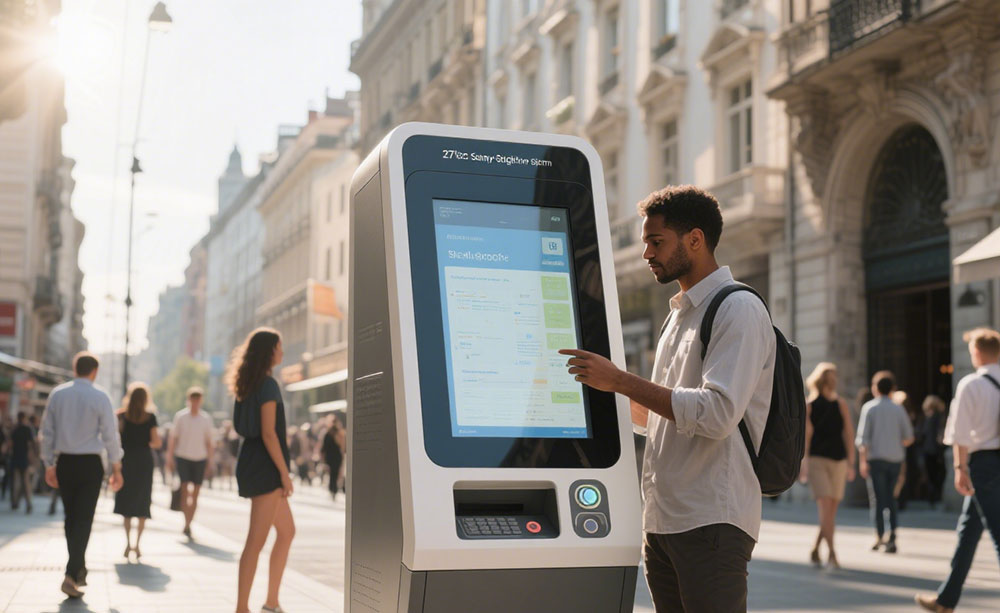
EV charging kiosks and gas pumps also benefit from these displays. In automotive fueling and charging environments, users need immediate access to real-time pricing, charging status, and payment prompts. High-brightness LCDs prevent "white-out" effects common in standard displays when exposed to sunlight, improving user experience and reducing operational errors. For instance, case studies from Siemens and ChargePoint show that deploying 7,000-nit sunlight-readable displays reduced customer complaints by over 40% in outdoor charging stations across North America and Europe.
Outdoor digital signage—including billboards, transit advertising panels, and smart city installations—relies on consistent image quality regardless of time of day. Unlike indoor displays, which may use ambient light sensors to dim, outdoor units must maintain uniform brightness and color accuracy. Industry standards such as IEC 60068-2-1 (cold resistance) and IP65 (dust and water protection) ensure durability. Leading manufacturers like LG Display, Sharp, and Samsung offer ruggedized modules with wide operating temperature ranges (-30°C to +70°C), making them suitable for both arctic and desert climates.
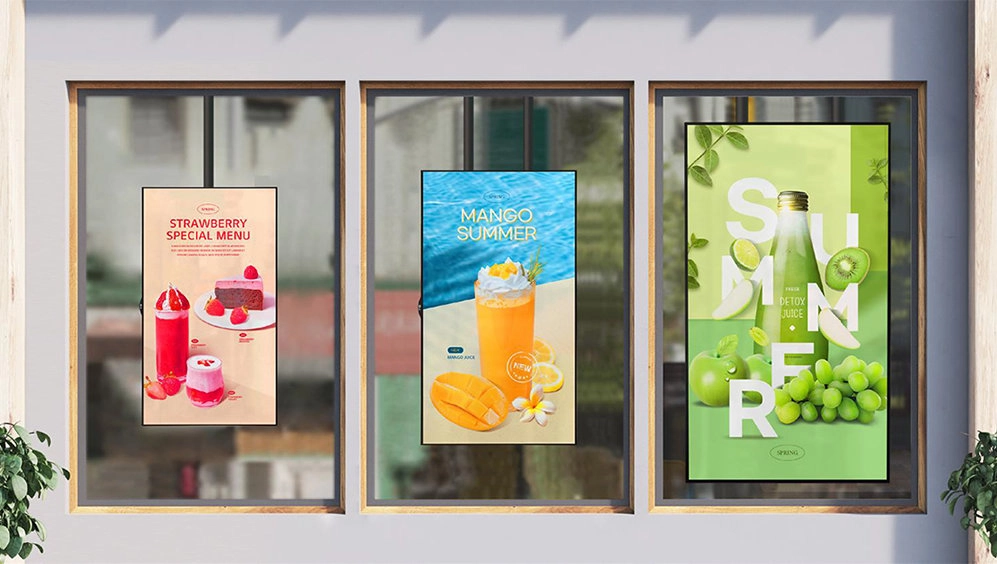
In retail and real estate sectors, digital signage powered by high-brightness LCDs enables dynamic content updates and eye-catching promotions. Retailers using 5,000-nit displays report increased foot traffic by up to 25% compared to static signs, according to a 2023 Nielsen study. Similarly, real estate firms leveraging outdoor digital signage on property listings see higher engagement rates due to clearer imagery and animation capabilities.
For outdoor TVs—used in stadiums, parks, and corporate campuses—sunlight readability is equally important. These displays often integrate intelligent features like automatic brightness adjustment based on environmental sensors and touch-screen functionality for interactive content. The global market for sunlight-readable displays is projected to grow at a CAGR of 7.8% through 2030, driven by increasing demand in smart cities, autonomous vehicles, and green energy infrastructure.
To maximize lifespan and reliability, designers must consider not only brightness but also power efficiency, thermal management, and long-term color stability. OLED-based solutions are emerging but still face challenges in extreme heat and prolonged sun exposure. Therefore, current best practices favor high-brightness LED-backlit LCDs with advanced optical films and polarization filters for optimal performance in demanding environments.