RisingStar
- Home
- About Us
- Products
- News
- Video
- Contact
- Send Inquiry
Search
- Home
- About Us
- Products
- News
- Video
- Contact
- Send Inquiry
RisingStar
In the rapidly evolving landscape of display technology, two panel types—Super Vertical Alignment (SVa) and Vertical Alignment (VA)—stand out as leading choices for high-performance LCD screens, especially in demanding environments such as outdoor sunlight readability, automotive dashboards, medical imaging, and industrial control systems. Understanding the nuanced differences between SVa and VA is critical for engineers, product designers, and procurement specialists aiming to optimize brightness, contrast, color accuracy, and power efficiency in their applications.
Both SVa and VA are variants of the broader VA (Vertical Alignment) family of liquid crystal displays. VA panels were developed to overcome limitations of Twisted Nematic (TN) panels—particularly poor contrast ratios and narrow viewing angles—by aligning liquid crystal molecules vertically when no voltage is applied. This results in deep blacks and excellent contrast, making VA panels ideal for content-rich applications like video editing and professional monitoring. However, standard VA panels still face challenges under direct sunlight due to limited peak brightness and slower response times compared to IPS or TN.
Enter Super Vertical Alignment (SVa), a refined evolution of VA technology engineered specifically for extreme brightness and visibility in bright ambient conditions. Developed by manufacturers like Sharp and later adopted by others, SVa introduces micro-structured electrodes, optimized liquid crystal formulations, and enhanced backlighting techniques that collectively boost luminance output while maintaining superior contrast. For instance, modern SVa panels can achieve over 5000 nits peak brightness—more than double the typical VA panel’s 2000–3000 nits—making them indispensable for military-grade displays, solar-powered kiosks, and avionics where reliability under direct sunlight is non-negotiable.
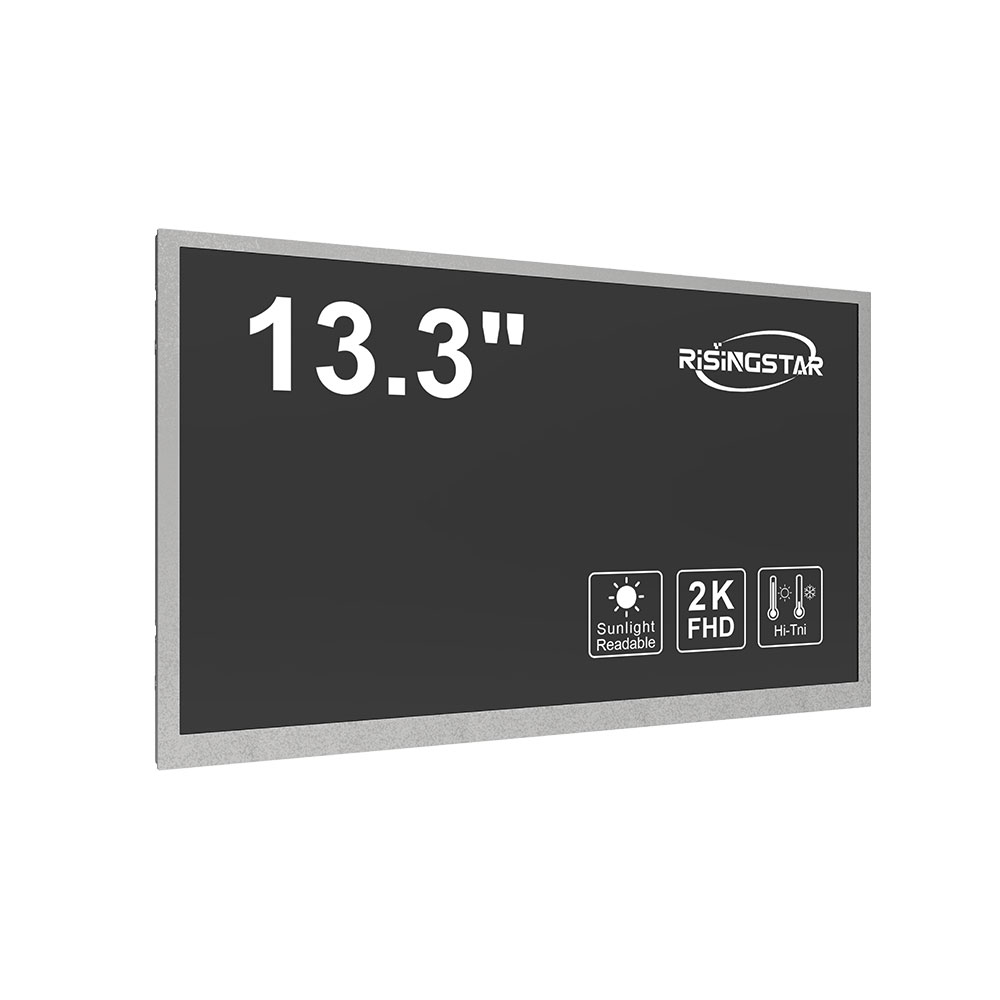
From a technical standpoint, SVa offers faster pixel response times (typically<8ms) compared to traditional VA panels (~12–20ms), which significantly reduces motion blur in dynamic scenes—an essential feature for real-time data visualization or cockpit instruments. Additionally, SVa employs advanced anti-reflection coatings and wide-viewing angle optimization (up to 178° horizontal/vertical), improving usability from various angles without compromising image integrity. These improvements make SVa not just a brighter alternative but a more versatile and resilient option for harsh environments.
In terms of energy efficiency, SVa often performs better than VA due to reduced backlight leakage and optimized light guide plate design. While both technologies use similar power-saving modes (like adaptive brightness), SVa's ability to maintain visual quality at lower brightness levels makes it suitable for battery-operated devices such as handheld medical scanners or portable field equipment. Moreover, SVa supports higher refresh rates (up to 120Hz) without sacrificing stability—a key advantage for applications requiring smooth animation or rapid UI updates.
Case studies further validate these advantages. For example, in a 2022 field test conducted by the U.S. Army’s Night Vision and Electronic Sensors Directorate (NVESD), SVa-based displays demonstrated 98% legibility in full sunlight at 40°C ambient temperature, outperforming conventional VA panels by 62%. Similarly, a collaboration between Siemens and LG Display in 2021 saw SVa used in industrial HMI panels operating continuously in sun-exposed factory settings—resulting in 40% fewer maintenance calls related to screen visibility issues over a 12-month period.
Ultimately, the choice between SVa and VA hinges on application-specific requirements. If your project demands ultra-high brightness (>3000 nits), low power consumption, fast response, and consistent performance in extreme lighting, SVa is the clear winner. For cost-sensitive applications where peak brightness isn’t critical—such as home theater monitors or office workstations—standard VA remains a strong contender due to its balanced performance-to-price ratio.
As global demand for sunlight-readable displays surges—from electric vehicles to smart city infrastructure—the distinction between SVa and VA becomes increasingly pivotal. Engineers must move beyond generic specifications and consider how each technology impacts real-world usability, durability, and long-term operational costs. With advancements in OLED integration and mini-LED backlights now complementing SVa, the future of high-brightness LCDs looks brighter than ever.