RisingStar
- Home
- About Us
- Products
- News
- Video
- Contact
- Send Inquiry
Search
- Home
- About Us
- Products
- News
- Video
- Contact
- Send Inquiry
RisingStar
High-brightness sunlight-readable LCD screens are essential components in industrial equipment used across aerospace, defense, transportation, and outdoor automation sectors. These displays must function reliably under extreme lighting conditions—such as direct sunlight exceeding 100,000 lux—without compromising visibility or durability. As global equipment manufacturers and distributors seek to expand their offerings into harsh environments, understanding the technical specifications, materials, and real-world performance of these displays is critical for product differentiation and customer satisfaction.
The core challenge in designing sunlight-readable LCDs lies in balancing brightness, contrast, power efficiency, and thermal management. Standard consumer-grade LCDs typically peak at 300–500 nits, which becomes insufficient when exposed to bright ambient light. In contrast, high-brightness sunlight-readable LCDs operate between 3,000 and 10,000 nits, often using active matrix technology (TFT-LCD) with advanced backlighting systems such as LED arrays and diffusers engineered for uniform luminance. According to a 2023 report by Display Supply Chain Consultants (DSCC), over 68% of industrial-grade LCDs now exceed 5,000 nits, reflecting increased demand from OEMs seeking robust display solutions.
Key technologies include polarized glass coatings that reduce glare, anti-reflective (AR) layers that minimize specular reflection, and dynamic brightness control algorithms that adjust output based on ambient light sensors. Some models integrate passive cooling methods like heat pipes or thermally conductive adhesives, ensuring stable operation from -40°C to +70°C—a range required by MIL-STD-810G and IEC 60068 standards. Case studies from companies like Candescent Technologies and EIZO demonstrate successful deployment in military vehicles, railway signaling systems, and solar-powered monitoring stations in desert climates.
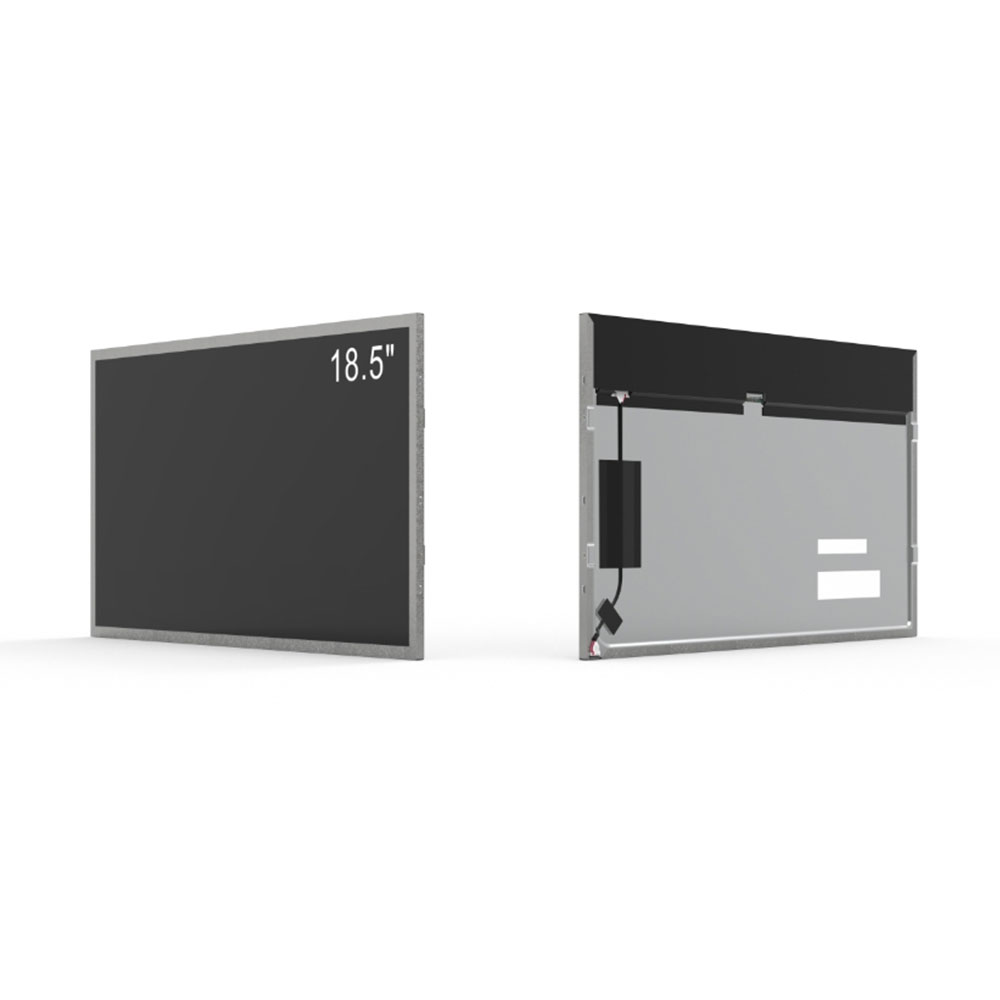
From an engineering perspective, selecting the right LCD involves evaluating not only raw brightness but also viewing angles, response time (critical for motion graphics), color accuracy (especially in medical or inspection tools), and long-term reliability under vibration and humidity. For overseas distributors, this means prioritizing suppliers who provide full documentation—including test reports, environmental certifications, and sample availability—to reduce integration risks and accelerate time-to-market.
Furthermore, recent trends show increasing adoption of OLED-based sunlight-readable displays for applications requiring higher contrast ratios and deeper blacks. While OLEDs have traditionally struggled in high ambient light due to lower peak brightness, new microLED hybrid technologies now offer up to 15,000 nits while maintaining low power consumption—a significant advantage for battery-powered field devices. This innovation aligns with the growing trend of IoT-enabled industrial equipment, where compact, readable, and energy-efficient displays are paramount.
In summary, high-brightness sunlight-readable LCD screens represent a convergence of optical engineering, material science, and system integration. For international equipment manufacturers and distributors, partnering with suppliers who combine technical depth, global compliance, and proven field performance ensures competitive edge and operational resilience in demanding environments worldwide.