Risingstar
- Ev
- Hakkımızda
- Ürünler
- Haberler
- Video
- İletişim
- Soruşturma gönder
Arama
- Ev
- Hakkımızda
- Ürünler
- Haberler
- Video
- İletişim
- Soruşturma gönder
Risingstar
Every transit infrastructure project presents a paradox. Modern stations demand high-density digital signage — real-time timetables, wayfinding maps, carriage occupancy data, emergency routes — yet the physical spaces available for mounting these screens were engineered decades ago, long before flat-panel displays existed.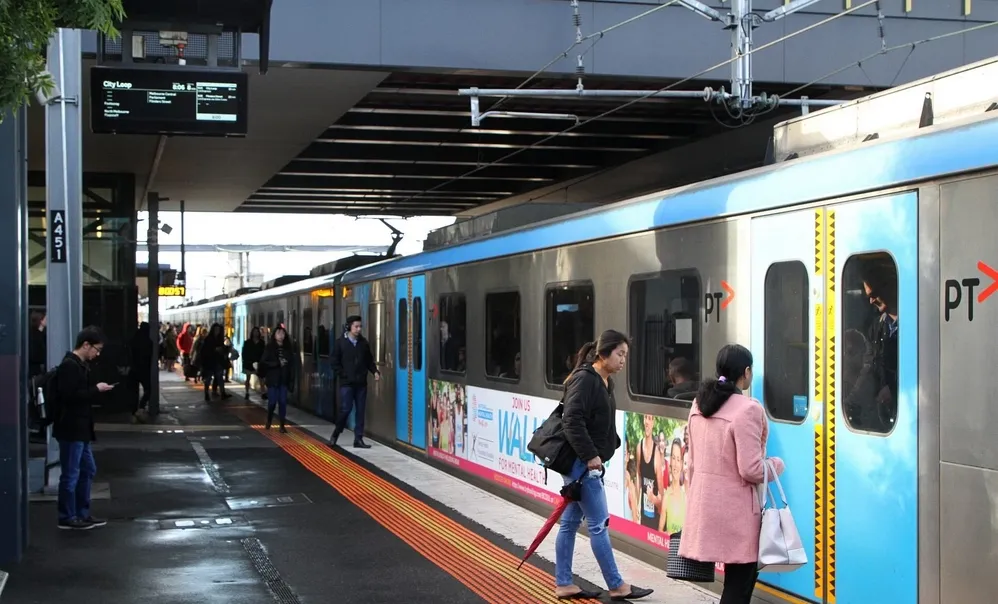
A standard widescreen monitor mounted in a pedestrian transfer tunnel becomes a head-strike hazard. A display bolted to a structural column on a crowded platform protrudes into the passenger flow envelope. The result? System integrators are forced to either compromise on display placement or abandon digital signage altogether in the very locations where passengers need information most.
This is the core reason why passenger information LCD displays in transit applications increasingly depart from standard form factors. The display must conform to the architecture — not the other way around.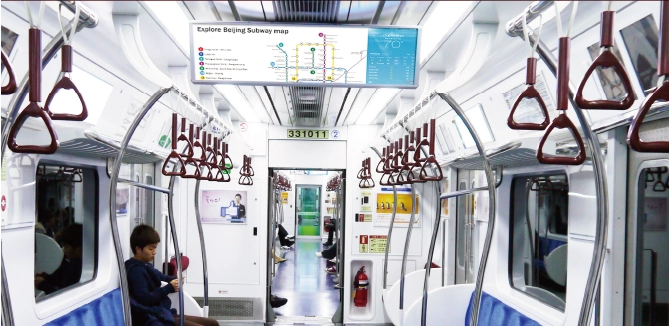
When a standard panel does not fit, integrators face two fundamental paths. Understanding the tradeoffs between them is critical to project budgeting and timeline management.
A fully custom display is designed from the ground up — new photomask, new glass substrate dimensions, new tooling. This approach delivers a panel purpose-built for the exact spatial envelope.
The catch: tooling investment for a custom photomask display starts at several hundred thousand dollars and can exceed one million USD for complex specifications. Lead times stretch to 6–12 months. For programs producing fewer than 5,000 units per year, the per-unit amortized cost becomes prohibitive.
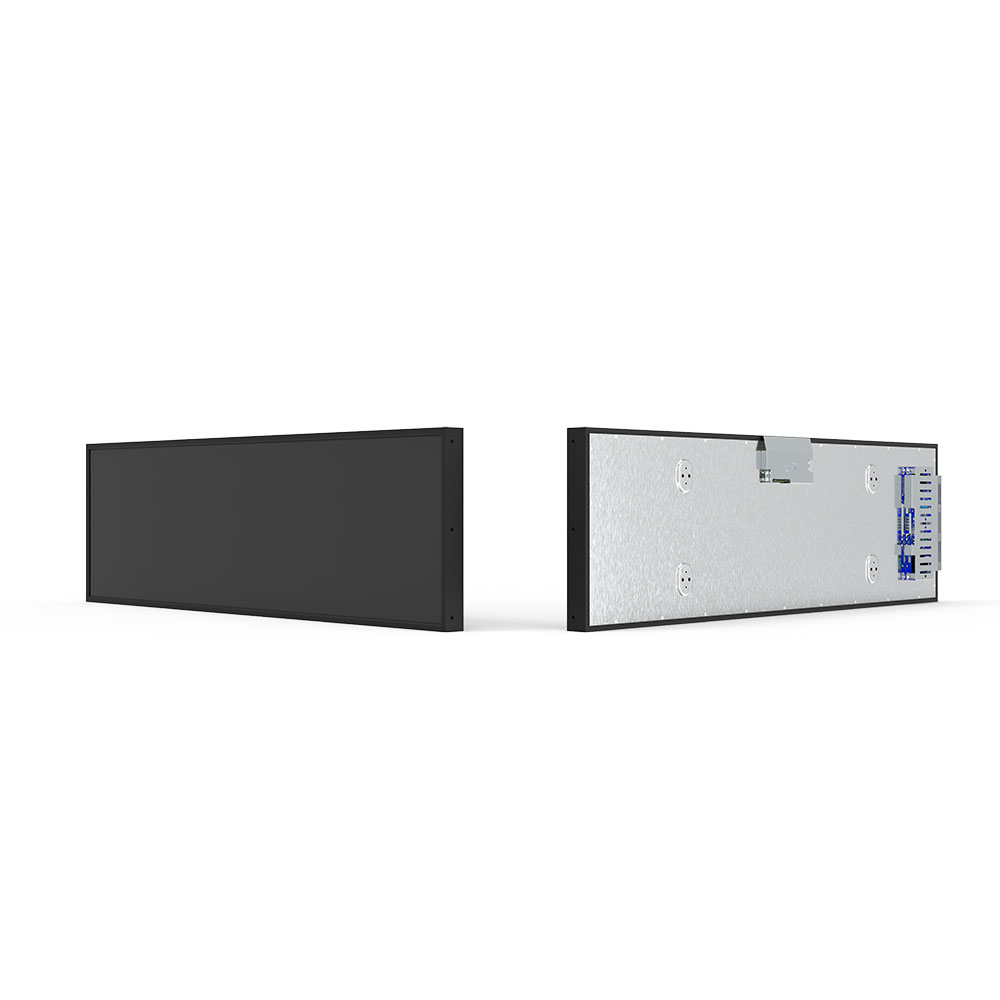
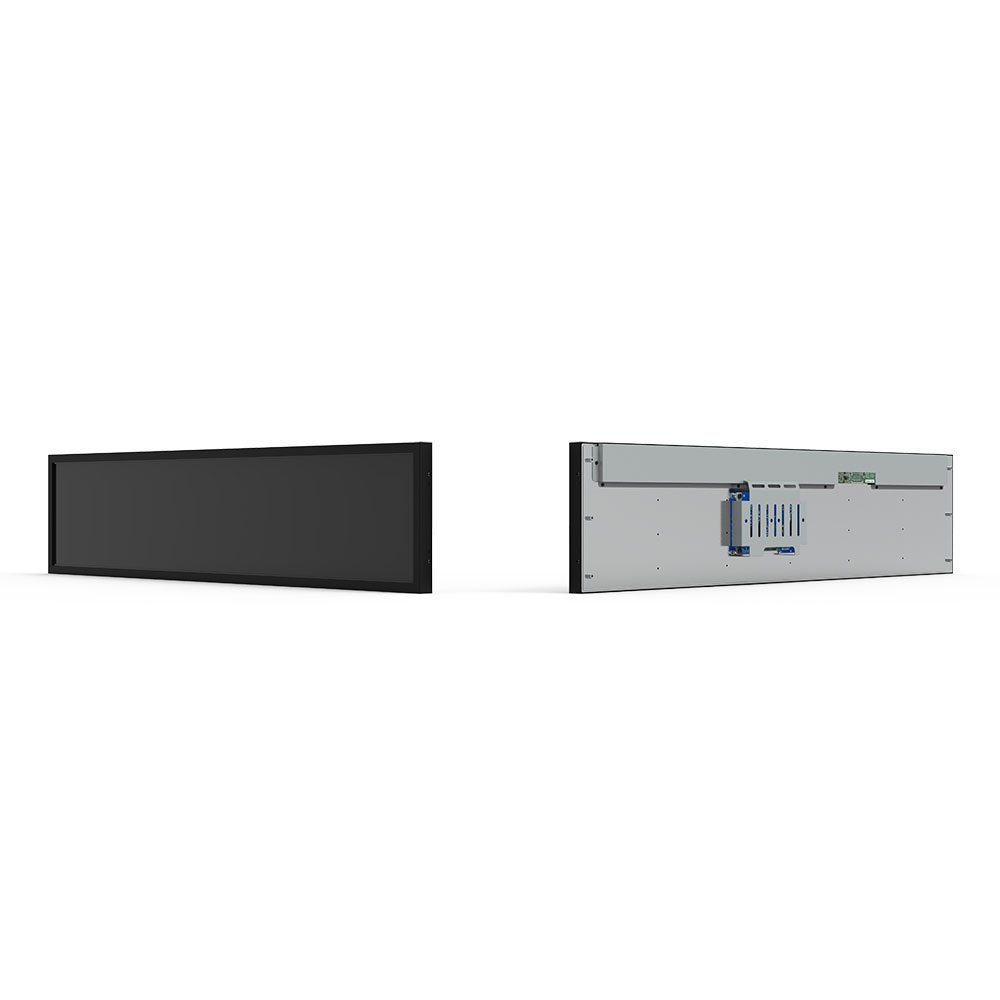
The alternative — and the approach gaining traction across European and Asian rail networks — is to take an LCD already in high-volume production and mechanically resize it. The mass-produced LCD panel is precisely cut, the driver ICs are re-bonded, and the module is repackaged into the target form factor.
This method preserves all of the original panel's technical characteristics: resolution density, color gamut, viewing angle, and backlight uniformity. What changes is the physical outline — and that is precisely what constrained transit installations require.
| Criteria | Full-Custom Photomask | Resized from Mass Production |
|---|---|---|
| Tooling Investment | $300K – $1M+ | Minimal (licensing fee only) |
| Lead Time | 6 – 12 months | 4 – 8 weeks |
| Minimum Order Volume | Typically 10,000+ units | 50 – 100 units viable |
| Optical Performance | Fully customizable | Inherits parent panel specs |
| Ideal For | High-volume OEM vehicle builds | Retrofit, low-to-mid volume transit deploys |
For system integrators working on subway retrofits, bus fleet upgrades, or station modernization projects — where volumes are measured in hundreds, not tens of thousands — resized panels represent the only economically viable path to custom-format digital signage.
The demand for non-standard passenger information LCD displays is not an edge case. It is the norm across several critical transit applications:
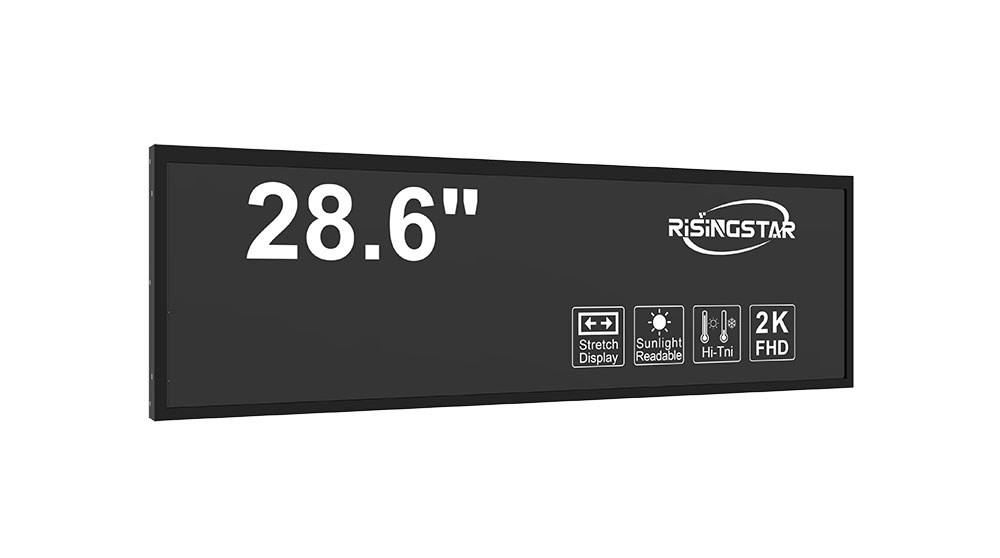
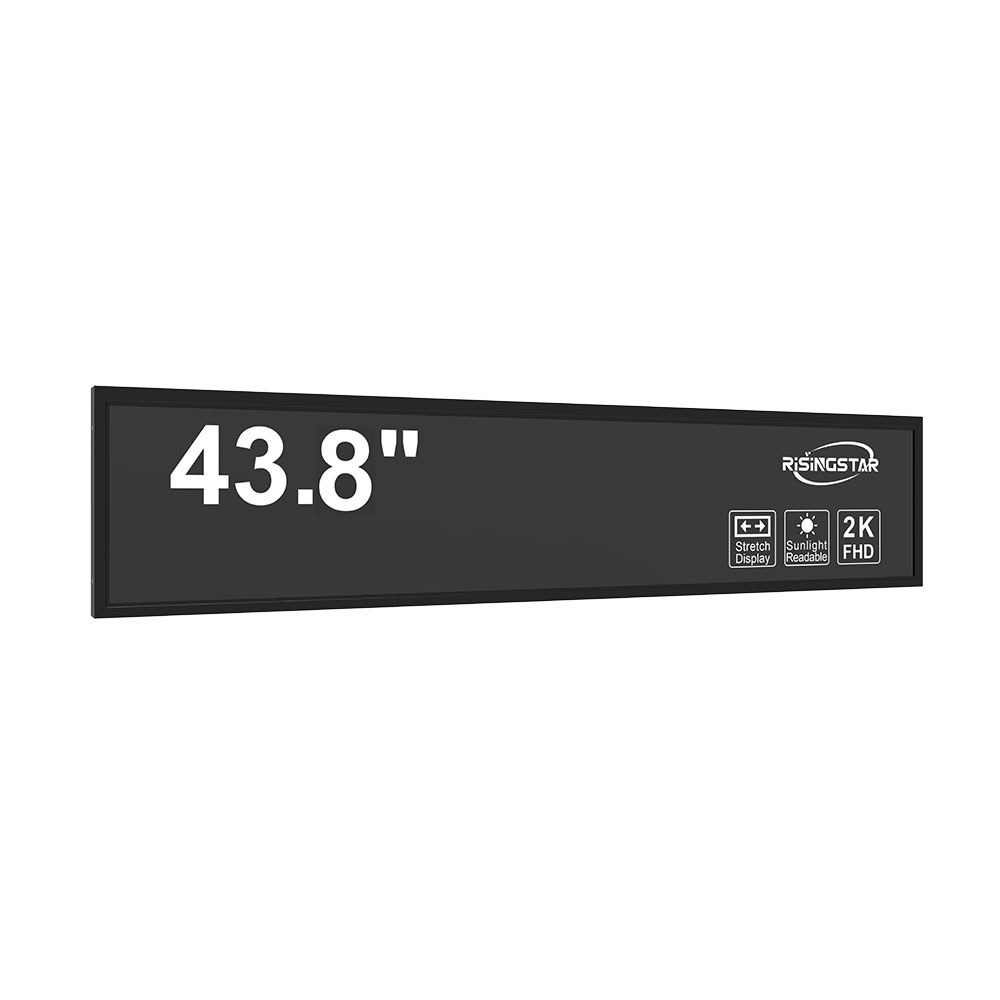
Inside rolling stock, the space between the ceiling panel and the door frame is typically 80–150mm in height. A standard 16:9 display simply cannot be mounted here without encroaching on passenger headroom. A stretched bar-format panel — for example, a 1920×360 or 3840×540 resolution module — fits precisely into this architectural niche, delivering next-station data, transfer information, and dynamic route maps directly above the doorway where every passenger's eyes naturally travel.
On narrow island platforms, mounting a deep-bezel display on the wall opposite the track creates a clearance violation with the train body envelope. Slim-profile resized panels with reduced mounting depth resolve this constraint while maintaining the brightness and contrast required for outdoor or semi-outdoor platform environments. For unshaded outdoor platforms where direct sunlight is a factor, panels must include Hi-Tni liquid crystal (clearing point ≥110°C) and optical bonding to prevent thermal blackening and internal condensation — standard features on RisingStar's transit-grade displays.
In older metro stations, round or square structural columns are the only available mounting surfaces at platform level. Mounting a display on a 300mm-wide structural pillar demands a narrow, vertically oriented panel that a standard monitor cannot provide.
Retrofitting digital signage above existing ticketing machines or fare gates requires panels that match the exact width of the machine housing — typically 400–600mm — while maintaining sufficient pixel density for legible timetable data at a 2–3 meter viewing distance.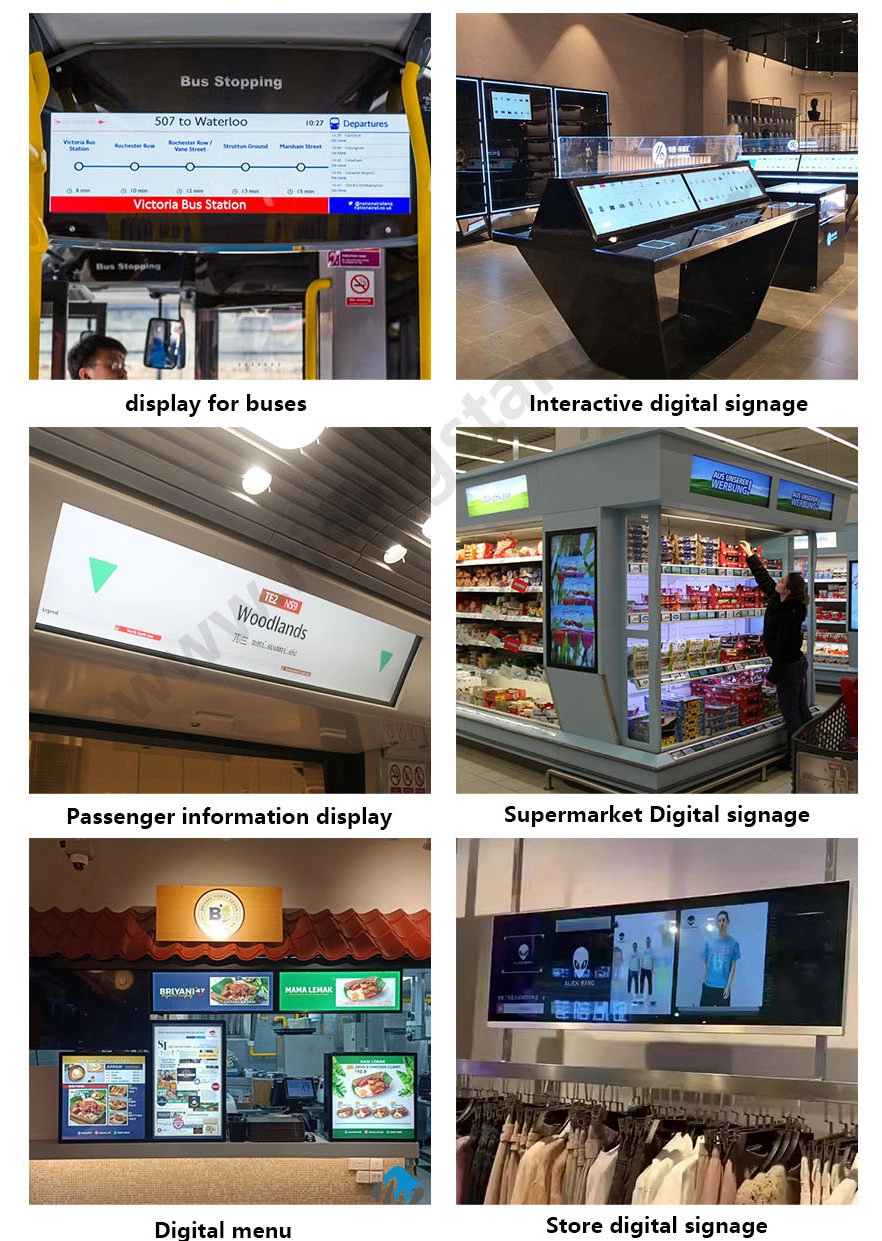
Resizing is not simply cutting glass. The process demands precision engineering to ensure the resized module meets the same environmental standards as the original panel — a non-negotiable requirement in rail applications.
| Deployment Environment | Parlaklık | Critical Technology |
|---|---|---|
| Underground tunnel / rolling stock interior | 500–700 nits | Standard panel; fanless cooling |
| Covered platform (semi-outdoor) | 700–1,500 nits | Hi-Tni panel; optical bonding |
| Open outdoor platform (direct sun) | 1,500–4,000 nits | Hi-Tni ≥110°C; optical bonding; IP66 |
| Bus shelter with glass reflection | 1,500–2,500 nits | Hi-Tni; optical bonding; AR coating |
The backlight system must be redesigned to match the new aspect ratio. Uneven backlight distribution in a resized bar display produces visible bright spots or dim zones that are immediately noticeable in a darkened subway tunnel. Quality resizing partners employ optical simulation and real-world photometric validation to ensure uniformity across the entire active area.
For large-format transit applications where visibility at distance is critical, the 56.6" ultra-high brightness stretched bar LCD display delivers 4,000 nits of calibrated luminance in a stretched format — suitable for above-track signage in mainline rail stations.
Rail environments subject equipment to continuous vibration (EN 50155 compliance), thermal cycling (-20°C to +70°C operating range), and airborne particulate from braking systems. The resized module must be repackaged into an enclosure that maintains IP65 or IP66 sealing while providing the structural rigidity to survive years of constant vibration.
For fully outdoor transit installations exposed to rain, dust, and wide temperature swings — bus shelters, open platforms, station entrances — the 43" outdoor waterproof LCD display provides an IP66-rated, high-brightness alternative in a standard 16:9 format where the enclosure cutout allows it.
After resizing, the LVDS or eDP signal routing must be re-verified. A resized panel with re-bonded driver ICs introduces new signal path lengths that can affect timing margins at high resolutions. Integration engineers should validate eye-diagram performance at the target resolution and refresh rate before committing to production.
A representative deployment scenario demonstrates how these pieces come together. A European metro operator retrofitting 120 subway cars requires next-station displays above each door pair — 240 panels total. The available mounting zone is 1200mm × 100mm.
A viable configuration using RisingStar's product line:
Form factor: 48" stretched bar LCD panel (e.g., 1920×360 resolution), resized to fit precisely within the 1200×100mm cutout. (For smaller, door-side validator integration, a 12.1" high brightness industrial LCD panel can be utilized).
Parlaklık: 700–1,000 nits (calibrated for underground platform and tunnel ambient conditions)
Enclosure: IP65-rated, fanless, conformal-coated electronics
Interface: LVDS, compatible with standard embedded Linux or Android SBCs
Compliance: EN 50155 (shock/vibration), EN 45545-2 (fire/smoke)
Thermal protection: Optical bonding prevents condensation from year-round temperature cycling inside semi-enclosed carriages
At 240 units, full-custom photomask tooling would add approximately $400K–$600K to the project cost with a 9-month lead time. A resized solution from an existing high-volume parent panel delivers the same optical performance for a fraction of the investment, with delivery in weeks rather than months.
Q1: What is the difference between a resized LCD and a custom photomask LCD?
A resized LCD starts from a mass-production mother glass panel that is mechanically cut to the target dimensions, with driver ICs re-bonded and the module repackaged. A custom photomask LCD uses entirely new mask tooling and glass substrate dimensions. Resized panels require minimal tooling investment ($0–$50K licensing) versus $300K–$1M+ for full-custom, and lead times are 4–8 weeks instead of 6–12 months.
Q2: What brightness does a transit passenger information display need?
Underground and rolling stock: 500–700 nits. Covered platforms (semi-outdoor): 700–1,500 nits. Open outdoor platforms with direct sun: 1,500–4,000 nits with Hi-Tni panel protection. Always specify based on the worst-case ambient light condition at the deployment site.
Q3: Why does a transit platform display need Hi-Tni and optical bonding?
An unshaded platform display under direct sun can reach panel temperatures above 80°C — exceeding the clearing point of standard LCD panels (70–80°C), causing TNI blackening. Hi-Tni liquid crystal (≥110°C clearing point) prevents this. Optical bonding eliminates the internal air gap where condensation forms during overnight cooling cycles — a common failure mode in semi-outdoor transit shelters.
Q4: Can resized panels meet rail certification standards?
Yes. Resized panels can be engineered to meet EN 50155 (shock/vibration) and EN 45545-2 (fire/smoke) when assembled into properly designed enclosures with conformal-coated electronics, locking connectors, and thermally managed backlight systems.
Q5: What interface do transit passenger information displays use?
LVDS is the standard for embedded transit display integration due to its EMI immunity in electrically noisy rail environments. eDP is available on select panel configurations. Match the interface to your host controller board natively to avoid adapter boards.
RisingStar operates a 4,000-square-meter ISO 9001-certified manufacturing facility with Class 10,000 cleanroom assembly, specializing in OEM and ODM LCD solutions for transportation, industrial, and commercial applications. Grade A/A+ panels are sourced directly from LG Display, AUO, BOE, Innolux, and Tianma with 3–5 year supply commitments. Every unit undergoes 100% factory inspection and a 72-hour burn-in before shipping. Samples ship in 10 working days.
For project consultations and panel specifications: ai@risinglcd.com
Source article: https://www.risinglcd.com/news/passenger-information-lcd-displays-custom-sized-panels-for-transit-integration.html