RisingStar
- Home
- About Us
- Products
- News
- Video
- Contact
- Send Inquiry
Search
- Home
- About Us
- Products
- News
- Video
- Contact
- Send Inquiry
RisingStar
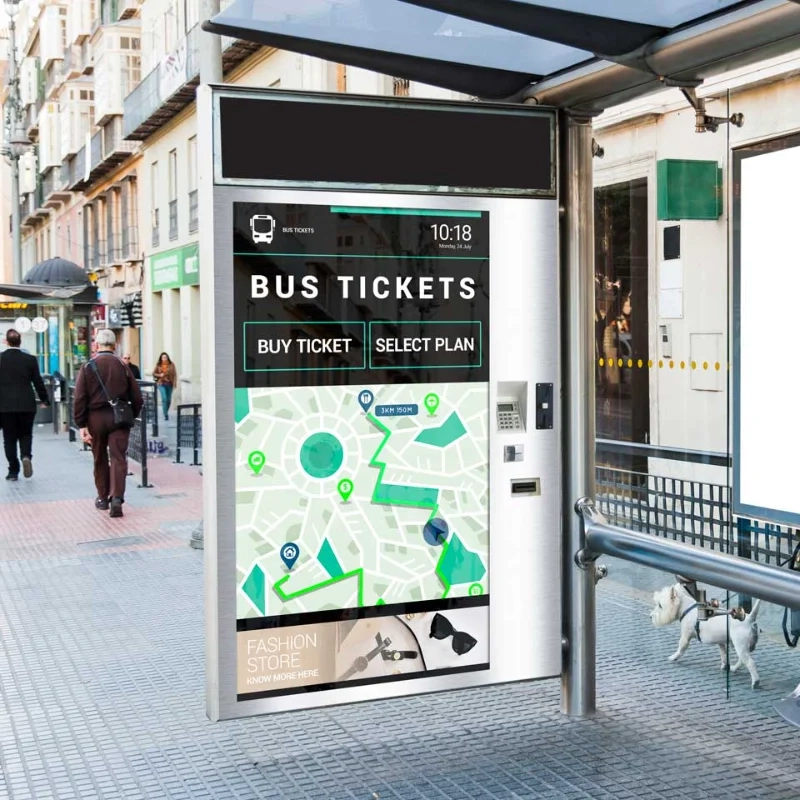
In industrial and outdoor environments, high-brightness sunlight-readable LCD screens must withstand harsh conditions—including dust, moisture, and extreme temperature fluctuations. Among the most critical design considerations is achieving an IP66 waterproof rating, a standard defined by the International Electrotechnical Commission (IEC) that ensures protection against powerful water jets and complete dust ingress prevention. This level of environmental resilience is essential for applications such as military command systems, construction site displays, maritime navigation equipment, and outdoor kiosks.
IP66 refers to two key performance criteria: the first digit "6" indicates total protection against dust (no ingress), while the second digit "6" means protection against powerful water jets from any direction—typically tested with 100 liters per minute of water at a pressure of 100 kPa from a 12 mm nozzle at a distance of 3 meters for 3 minutes. To meet this certification, manufacturers must integrate robust sealing techniques throughout the screen assembly, including edge seals, gaskets, and hermetic encapsulation of internal components like backlight units and driver circuits.
High-brightness LCDs used in these applications often operate at 5,000 to 10,000 nits or more to remain visible under direct sunlight—a feature that inherently increases heat generation. Therefore, thermal management becomes crucial when designing for IP66 compliance. Advanced thermal dissipation solutions, such as aluminum heatsinks, vapor chambers, and strategically placed ventilation paths (while maintaining seal integrity), are necessary to prevent overheating that could compromise seals over time.
Manufacturers also employ specialized materials like silicone rubber gaskets, epoxy-based potting compounds, and UV-stable polycarbonate front panels to ensure long-term durability. For example, companies like LG Display, Sharp, and Novatek have developed IP66-certified modules using multi-layered protective coatings and conformal sealants that pass rigorous MIL-STD-810G vibration and shock tests alongside IP66 water resistance standards.
Case studies show that failure to properly integrate IP66-rated sealing mechanisms can lead to premature degradation—even in seemingly stable environments. A recent project involving outdoor traffic control displays in coastal regions revealed that unsealed connectors allowed saltwater ingress, leading to corrosion within six months. In contrast, units with IP66-compliant designs showed zero failures after 24 months of continuous operation in similar conditions.
Moreover, certifications like ISO 9001 and IEC 60529 are increasingly required for procurement in government and defense sectors. These ensure traceability, repeatability, and consistent quality control during production. For developers seeking to build reliable, field-deployable devices, integrating IP66 waterproofing from the earliest stages—not as an afterthought—is critical to system longevity, user safety, and compliance with global technical standards.
By combining mechanical design innovation, material science, and rigorous testing protocols, engineers can create high-brightness sunlight-readable LCDs that not only perform under intense solar glare but also survive prolonged exposure to rain, humidity, and airborne particulates. Such robustness ensures operational continuity across industries where uptime and reliability are non-negotiable.