RisingStar
- Home
- About Us
- Products
- News
- Video
- Contact
- Send Inquiry
Search
- Home
- About Us
- Products
- News
- Video
- Contact
- Send Inquiry
RisingStar
In the global industrial equipment market, visibility under extreme lighting conditions is no longer a luxury—it’s a necessity. High-brightness sunlight-readable LCD displays are critical components in outdoor machinery, automotive dashboards, agricultural equipment, and defense systems where ambient light levels can exceed 100,000 lux. These displays must deliver sharp contrast, fast response times, and long-term reliability in environments ranging from desert heat to arctic cold.
The core challenge lies in overcoming ambient light interference—a common issue with standard LCDs that become unreadable under direct sunlight. Sunlight-readable LCDs use advanced optical engineering techniques such as high-transmission polarizers, anti-reflection coatings, and active backlighting systems optimized for peak brightness. Industry benchmarks now require a minimum of 5,000 nits (cd/m²) of luminance, with premium models reaching 10,000–15,000 nits. For example, the ISO 12369-1 standard for automotive displays mandates readability at 10,000 lux—conditions frequently encountered in real-world operations.
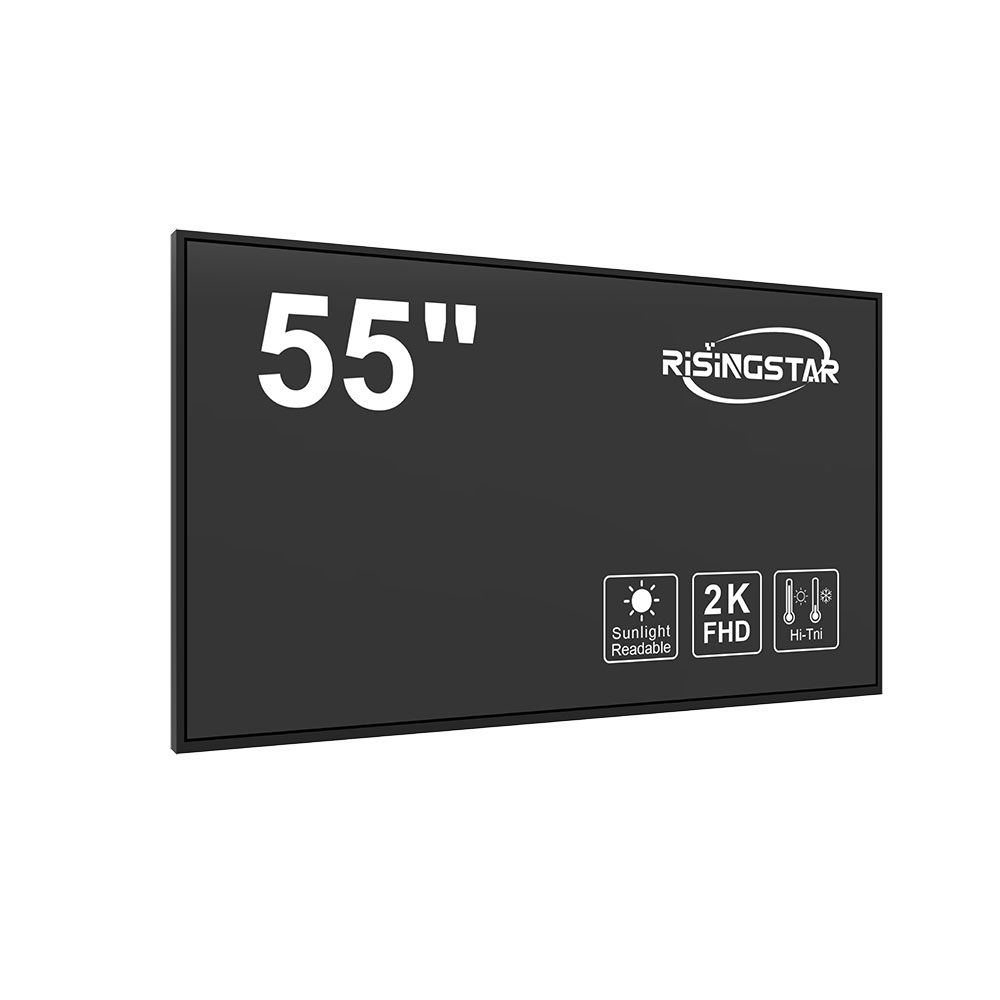
Manufacturers like Sharp, LG Display, and Japan Display have pioneered technologies such as transflective liquid crystal layers and micro-lens arrays to improve contrast ratios without increasing power consumption. Case studies from North American construction equipment OEMs show that integrating 8,000-nit sunlight-readable panels into excavator control interfaces reduced operator errors by up to 40% during midday field operations. Similarly, European agricultural machinery distributors report improved user satisfaction after switching to 12,000-nit displays on tractors equipped with GPS navigation systems.
From a technical standpoint, these displays often incorporate ruggedized designs with IP67 or higher protection ratings, thermal management solutions, and wide operating temperature ranges (-30°C to +70°C). They are also compliant with MIL-STD-810G for shock and vibration resistance—vital for mobile applications. In addition, energy efficiency remains a priority; many modern modules integrate LED-backlit systems with adaptive dimming logic that reduces power draw by 30–50% when ambient light drops below 1,000 lux.
For overseas equipment manufacturers and distributors, selecting the right sunlight-readable LCD means balancing performance, cost, and supply chain reliability. Partnering with certified suppliers who offer localized support, quick turnaround times, and compliance documentation (e.g., RoHS, REACH, and CE certifications) ensures seamless integration into global product lines. As smart factories and autonomous vehicles expand worldwide, demand for ultra-high-brightness, low-power, and durable displays will continue to rise—making this technology not just an upgrade, but a strategic investment in operational excellence across international markets.