RisingStar
- Home
- About Us
- Products
- News
- Video
- Contact
- Send Inquiry
Search
- Home
- About Us
- Products
- News
- Video
- Contact
- Send Inquiry
RisingStar
In today’s rapidly evolving industrial automation, military, transportation, and outdoor monitoring sectors, high-brightness sunlight-readable LCD displays are essential components for reliable human-machine interaction. However, their real-world performance hinges not only on brightness and contrast but also on environmental resilience—especially water resistance. The IP66 waterproof rating, defined by the International Electrotechnical Commission (IEC) standard IEC 60529, represents a critical benchmark for ensuring these displays operate reliably under harsh conditions.
IP66 stands for two key protection levels: “6” indicates total dust tightness—meaning no ingress of dust is permitted—and “6” signifies protection against powerful water jets from any direction. This level of protection makes it ideal for applications such as marine navigation systems, construction site control panels, agricultural machinery interfaces, and military-grade field equipment exposed to rain, splashing water, or even temporary submersion in shallow water.
To achieve IP66 compliance, manufacturers must implement a multi-layered design strategy that includes both mechanical sealing and advanced material science. First, the display module itself must be assembled using sealed frames and gaskets made from silicone or EPDM rubber, which offer excellent durability under UV exposure and temperature extremes. These materials prevent moisture from entering through seams, screw holes, or cable ports. Second, the backlight system—often LED-based—must be encapsulated in an epoxy or conformal coating to avoid short circuits from condensation or direct contact with water.
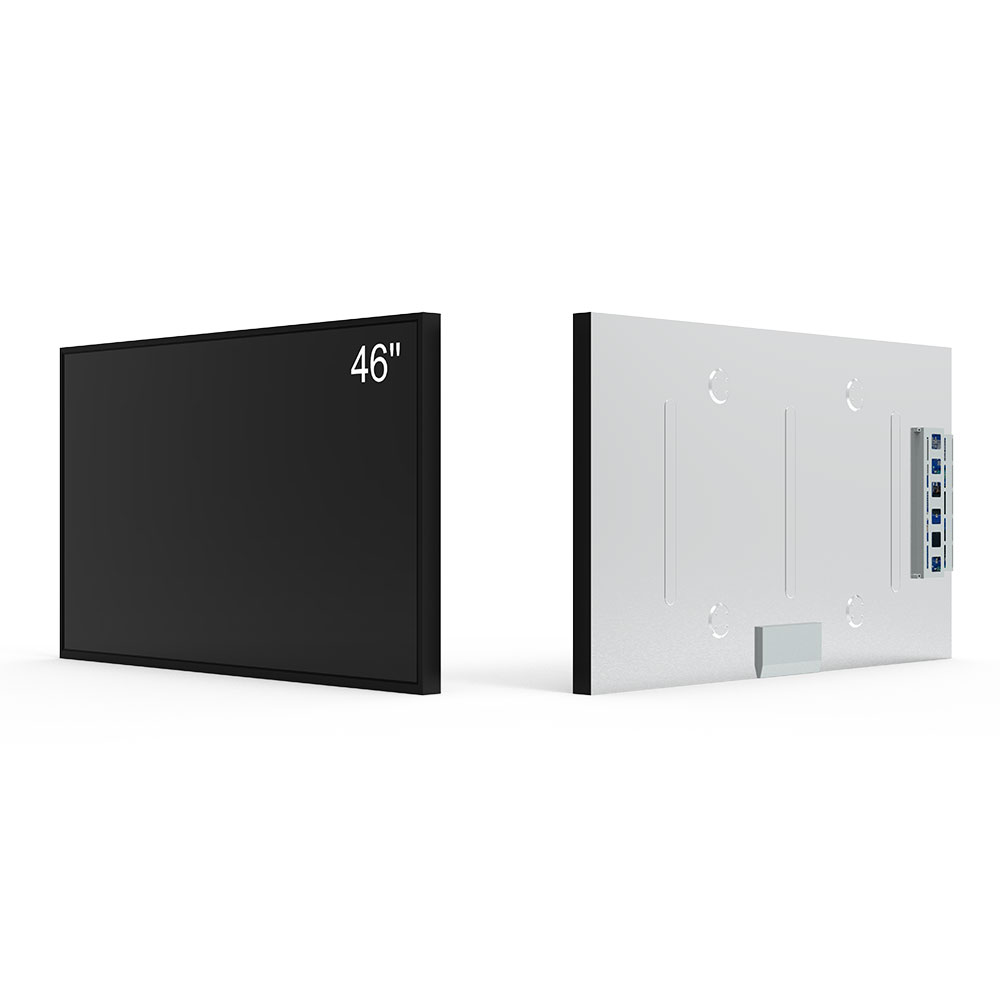
Case studies from leading manufacturers like COTC Display and LG Display highlight successful implementations. For instance, COTC’s 10.4-inch sunlight-readable LCD used in oil rig control systems passed rigorous IP66 testing at 100 kPa pressure for 3 minutes per ISO 20653 standards. Similarly, LG’s ruggedized displays deployed in European railway signaling systems maintained full functionality after being sprayed with 12 liters of water per minute at 3 meters distance for 10 minutes—a scenario far exceeding typical IP66 requirements.
Furthermore, optical bonding techniques, such as using optically clear adhesives (OCAs), not only improve sunlight readability by reducing reflection but also enhance the overall hermetic seal. When combined with edge-sealed glass laminates, this method ensures that the entire display assembly functions as a single unit resistant to moisture intrusion—an advantage over traditional air-gap designs.
It's crucial to note that achieving IP66 isn’t just about passing lab tests—it demands consistent quality control throughout production. Manufacturers must conduct leak testing using methods like helium mass spectrometry or bubble immersion tests to detect micro-level defects before shipment. Additionally, post-installation maintenance guidelines must be provided, including regular inspection of seals and cleaning protocols that avoid abrasive materials that could degrade the protective coating.
In conclusion, IP66 waterproofing in high-brightness sunlight-readable LCDs is not merely a feature—it is a fundamental engineering requirement for mission-critical systems operating outdoors or in wet environments. By integrating robust sealing solutions, durable materials, and rigorous validation processes, manufacturers can deliver displays that remain functional under extreme conditions while maintaining clarity, reliability, and longevity. As industries continue to push boundaries in IoT, smart infrastructure, and autonomous vehicles, the demand for certified IP66-compliant displays will only grow—making it a non-negotiable standard for modern embedded visual interfaces.