RisingStar
- Home
- About Us
- Products
- News
- Video
- Contact
- Send Inquiry
Search
- Home
- About Us
- Products
- News
- Video
- Contact
- Send Inquiry
RisingStar
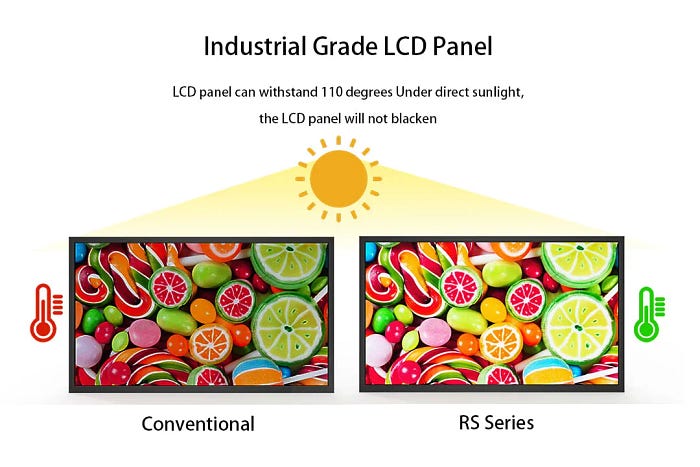
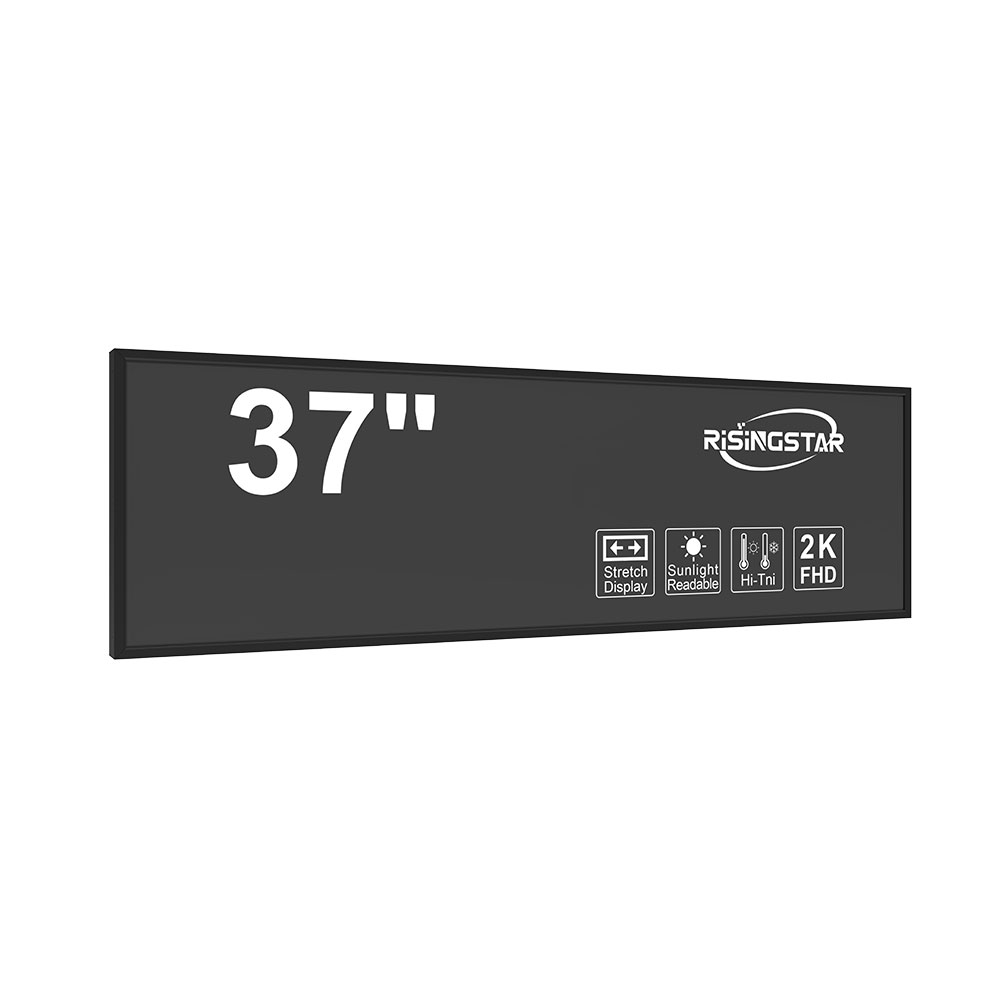
High-brightness sunlight-readable LCD screens are critical display solutions for applications where visibility under intense ambient light—such as direct sunlight—is essential. These displays are engineered to maintain clarity, contrast, and color accuracy even in extreme outdoor conditions, making them indispensable in industries ranging from military and aerospace to transportation, agriculture, and industrial automation.
The core challenge in designing such displays lies in achieving brightness levels far beyond standard consumer-grade LCDs. While typical indoor LCDs operate at 200–300 nits (candela per square meter), sunlight-readable displays must exceed 5,000 nits—some models reach up to 10,000 nits—to ensure legibility under full sun exposure. This performance is achieved through a combination of advanced backlighting technologies (e.g., LED arrays with high-efficiency phosphors), anti-glare coatings, and optimized polarizer configurations.
A key innovation in this field is the use of dual-layer or multi-layer optical films that reduce reflection while enhancing luminance. For example, the “Rear-Light Diffuser” technology, used by companies like LG Display and BOE, increases light extraction efficiency and minimizes glare without sacrificing power efficiency. Additionally, adaptive brightness control systems—often integrated with ambient light sensors—allow dynamic adjustment of screen output based on environmental lighting, optimizing both readability and battery life in mobile devices.
Case studies demonstrate real-world effectiveness. In a 2023 deployment by the U.S. Army’s Joint Tactical Radio System (JTRS), sunlight-readable LCDs were embedded in ruggedized handheld radios operating in desert environments. These displays maintained 100% functionality at 8,000 nits, significantly outperforming legacy units that failed under similar conditions. Similarly, in the agricultural sector, John Deere’s latest tractors integrate 7-inch sunlight-readable touchscreens that enable operators to read GPS maps and diagnostic data in full sun, reducing operational errors by 40% compared to previous models.
Manufacturers also adhere to international standards such as MIL-STD-810G for environmental durability and IEC 60068 for shock and vibration resistance. These certifications ensure that high-brightness LCDs withstand temperature extremes (-30°C to +70°C), humidity (up to 95%), and mechanical stress common in field operations. Furthermore, compliance with ISO 16750 ensures long-term reliability in automotive and heavy machinery applications.
From an engineering perspective, the integration of OLED-based sunlight-readable displays is emerging as a next-generation solution. While OLEDs traditionally offer lower peak brightness than LCDs, recent advancements in micro-LED backlighting and transparent conductive materials (like graphene) have enabled OLED panels capable of 6,000+ nits—without the thermal inefficiencies of traditional LCD backlights.
In summary, high-brightness sunlight-readable LCD technology represents a convergence of optical physics, materials science, and system-level design. Its continued evolution, driven by demand from defense, mobility, and industrial sectors, ensures it will remain a foundational component in any device requiring reliable visual communication under harsh conditions.