RisingStar
- Home
- About Us
- Products
- News
- Video
- Contact
- Send Inquiry
Search
- Home
- About Us
- Products
- News
- Video
- Contact
- Send Inquiry
RisingStar
In today’s rapidly evolving technological landscape, high-brightness sunlight-readable LCD screens have become indispensable in a wide range of outdoor and industrial environments. These displays are engineered to maintain visibility under extreme lighting conditions—ranging from direct sunlight at 10,000 lux to harsh indoor fluorescent lighting—and are essential for applications such as military field operations, transportation systems, medical devices, point-of-sale (POS) terminals, and smart city infrastructure. Unlike standard LCDs, which often suffer from poor readability in bright ambient light, sunlight-readable displays use advanced optical engineering, specialized materials, and intelligent backlighting strategies to ensure consistent performance regardless of environmental challenges.
The core challenge in designing these displays lies in overcoming the fundamental limitation of traditional liquid crystal technology: the contrast ratio between pixels and background drops significantly when ambient light intensity increases. This phenomenon, known as “sunlight washout,” renders most consumer-grade screens unusable outdoors without supplementary solutions like anti-glare coatings or manual brightness adjustments. High-brightness sunlight-readable LCDs address this issue by combining multiple innovations:
First, they feature ultra-high peak brightness levels—typically exceeding 5,000 nits, with some industrial models reaching up to 10,000 nits. For context, typical office LED lighting is around 300–500 lux, while direct sunlight can reach 100,000 lux. To combat this, manufacturers incorporate high-efficiency LED arrays with precise thermal management, ensuring that brightness remains stable even under prolonged exposure to heat and UV radiation.
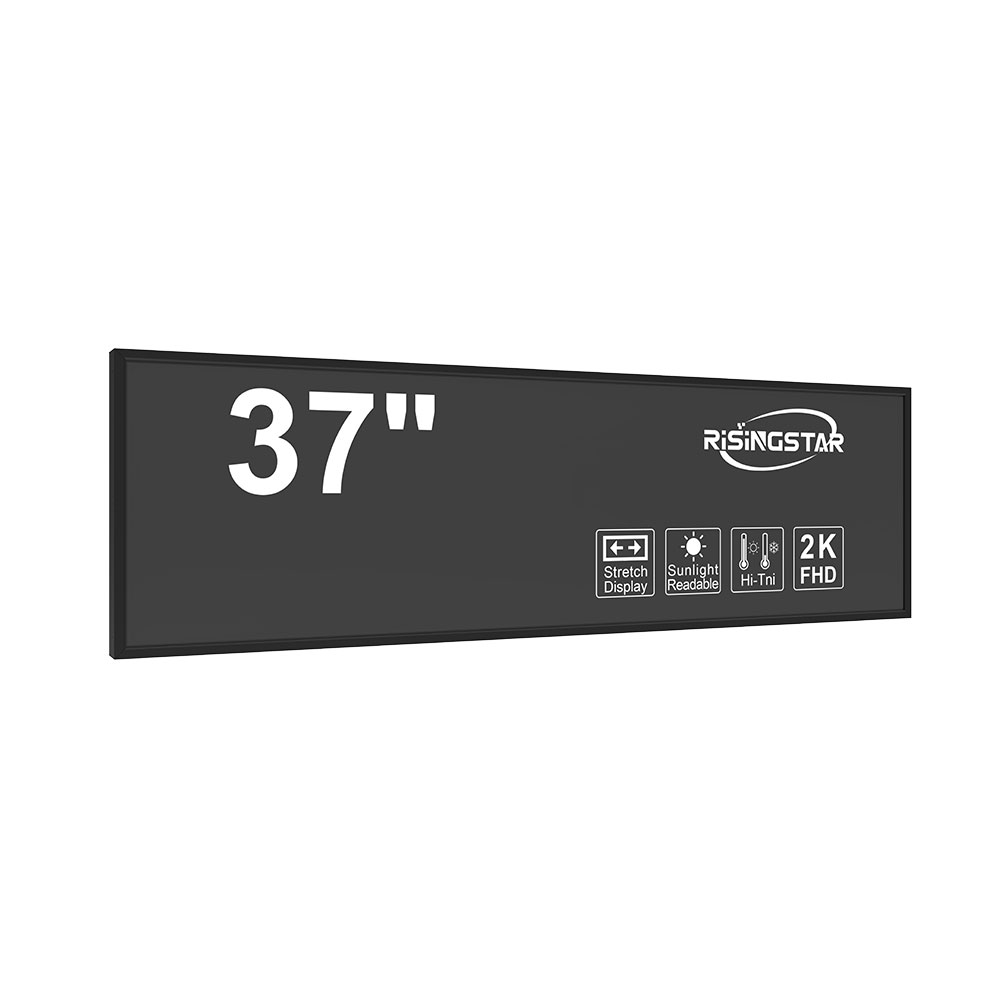
Second, these screens integrate advanced polarization techniques such as transflective liquid crystal cells, which combine reflective and transmissive modes. In reflective mode, ambient light is used to illuminate the display—ideal for low-power environments like solar-powered kiosks. In transmissive mode, internal LEDs provide illumination for nighttime use. This dual-mode capability not only improves energy efficiency but also enhances visibility across varying lighting conditions.
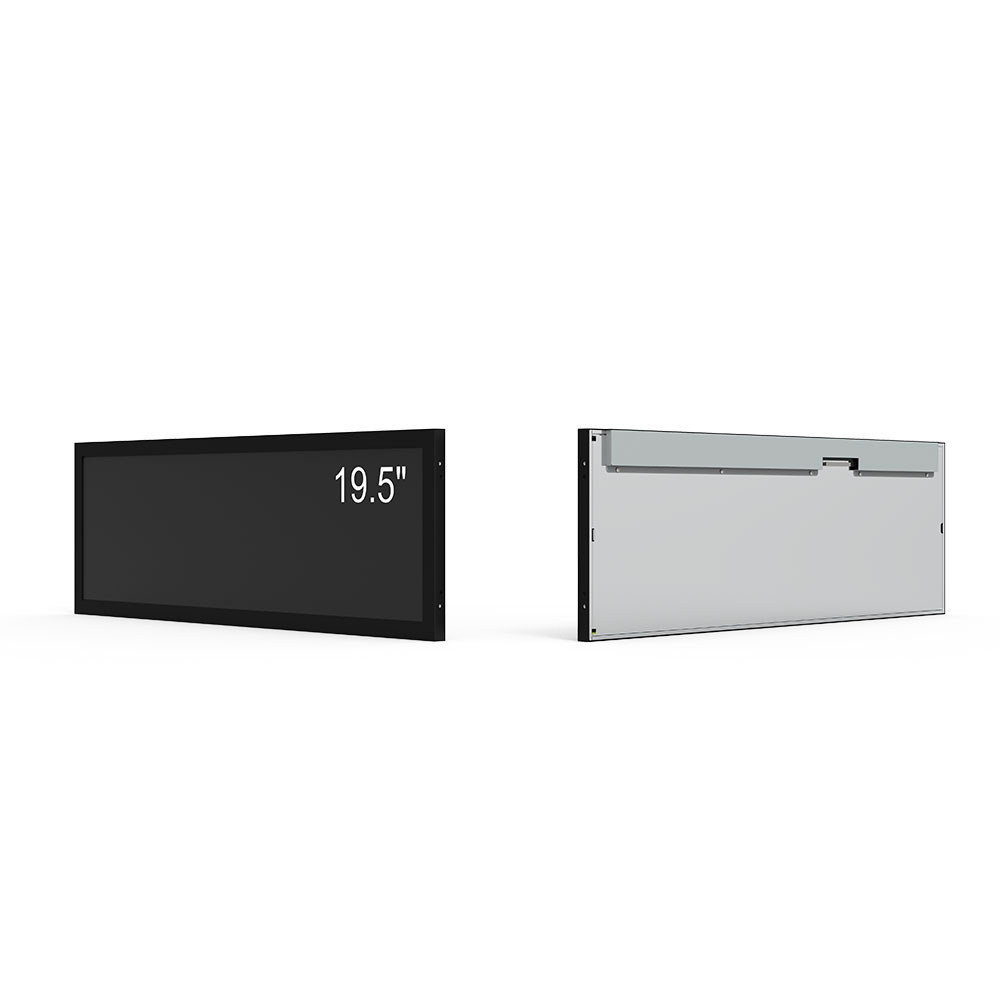
Third, optically bonded glass layers reduce glare and increase durability. Unlike air-gap interfaces common in regular LCDs, optical bonding eliminates the air layer between the cover lens and the display panel, minimizing reflections and improving mechanical robustness. This technique is especially critical for military and aerospace applications where vibration resistance and shock absorption are paramount.
Fourth, modern sunlight-readable LCDs employ intelligent brightness control algorithms powered by ambient light sensors. These sensors dynamically adjust screen brightness based on real-time lighting conditions, conserving power during dim environments while maximizing visibility in full sun. Some systems even support adaptive contrast enhancement, automatically adjusting gamma curves and color temperature to preserve image fidelity under different lighting scenarios.
A key application area is in the defense sector. The U.S. Department of Defense (DoD), for instance, mandates that all mobile command-and-control systems utilize sunlight-readable displays compliant with MIL-STD-810G standards for environmental resilience. These standards test devices across temperature extremes (-40°C to +71°C), humidity, salt fog, and shock/vibration endurance. Displays designed for military use must also meet stringent electromagnetic compatibility (EMC) requirements, ensuring reliable operation near radar systems and communication equipment.
Another growing market is automotive infotainment and driver-assist systems. Automotive OEMs such as Tesla, BMW, and Toyota increasingly adopt high-brightness LCDs in dashboards and heads-up displays (HUDs). According to a 2023 report by MarketsandMarkets, the global automotive display market is projected to grow at a CAGR of 7.3% through 2028, driven largely by demand for safer, more intuitive user interfaces in electric vehicles (EVs). In this context, sunlight-readability ensures drivers can view navigation, speed, and safety alerts clearly—even in direct sunlight—a critical factor for reducing distracted driving incidents.
In industrial automation, these displays enable efficient human-machine interaction (HMI) in manufacturing plants, oil refineries, and mining operations. Companies like Siemens, Rockwell Automation, and ABB deploy ruggedized touchscreen panels rated IP65 or higher for dust and water resistance. These screens allow operators to monitor process variables, diagnose faults, and initiate emergency shutdowns remotely—all while operating in noisy, dusty, or high-vibration environments.
Medical devices also benefit from sunlight-readable LCDs. Portable diagnostic tools such as ultrasound machines, ECG monitors, and patient vitals trackers must function reliably in both clinical settings and remote field deployments. For example, during natural disasters or humanitarian missions, healthcare workers rely on handheld devices that can operate effectively in open-air clinics or mobile units exposed to intense sunlight. The ability to read screen content accurately without additional lighting or shading is crucial for timely diagnosis and treatment.
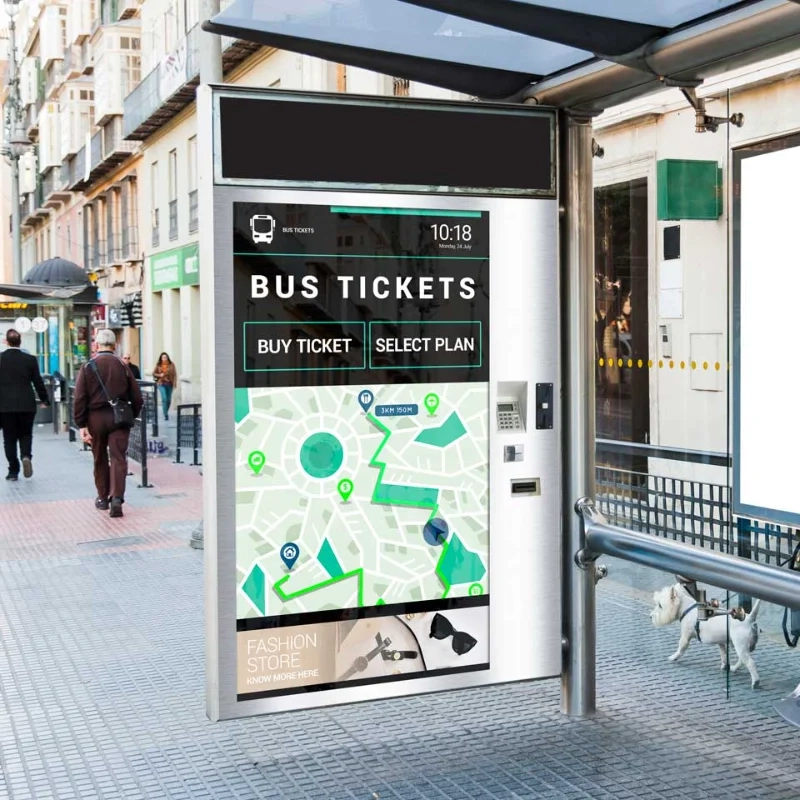
Smart city initiatives further amplify the need for durable, high-brightness displays. Public information kiosks, traffic signal controllers, digital signage in public transport hubs, and parking management systems all require long-term reliability in variable weather conditions. Cities like Singapore, Seoul, and Barcelona have adopted solar-powered LED-lit billboards equipped with sunlight-readable LCDs to deliver real-time updates to citizens, reducing reliance on printed media and improving civic engagement.
From a technical standpoint, several industry standards govern the design and testing of these displays. The International Electrotechnical Commission (IEC) publishes IEC 60068 series for environmental testing, while ISO 9241-3 defines ergonomic guidelines for visual display terminals. Additionally, the Society of Motion Picture and Television Engineers (SMPTE) has developed SMPTE RP 219-2020, which outlines methods for measuring and specifying sunlight readability using standardized lighting setups.
Manufacturers such as AU Optronics, LG Display, Sharp, and Innolux continuously innovate in this space. Recent advancements include the integration of micro-LED backlights for improved uniformity and reduced power consumption, as well as the development of flexible OLED-based solutions for curved or bendable display designs. However, true sunlight-readability still primarily relies on LCD technologies due to their superior brightness scalability, cost-effectiveness, and maturity in production processes.
One notable case study involves a collaboration between Honeywell and a major logistics company in Dubai, where high-brightness LCDs were deployed in handheld scanners used for warehouse inventory management. Prior to the upgrade, workers reported difficulty reading screen content in outdoor loading docks exposed to midday sun. After installing 7,000-nit sunlight-readable displays, operational accuracy increased by 32%, and employee fatigue related to visual strain decreased significantly—a clear testament to the practical impact of optimized display technology.
Moreover, sustainability considerations are now influencing the selection of high-brightness LCDs. Energy-efficient designs reduce carbon footprints in large-scale deployments, such as public transit advertising screens or solar-powered IoT nodes. Manufacturers are also exploring eco-friendly materials, including lead-free soldering and recyclable plastics, aligning with global green standards like RoHS and REACH.
In conclusion, high-brightness sunlight-readable LCD screens represent a convergence of optical physics, materials science, and embedded software engineering. Their importance extends beyond mere visibility—they enhance safety, productivity, and usability in environments where failure is not an option. As industries continue to digitize operations and governments invest in smart infrastructure, the demand for these robust, intelligent displays will only intensify. Future developments may include AI-driven brightness optimization, integration with AR/VR headsets for immersive field operations, and even biometric-responsive interfaces that adapt to individual user needs—marking the next frontier in human-centered display technology.