RisingStar
- Home
- About Us
- Products
- News
- Video
- Contact
- Send Inquiry
Search
- Home
- About Us
- Products
- News
- Video
- Contact
- Send Inquiry
RisingStar
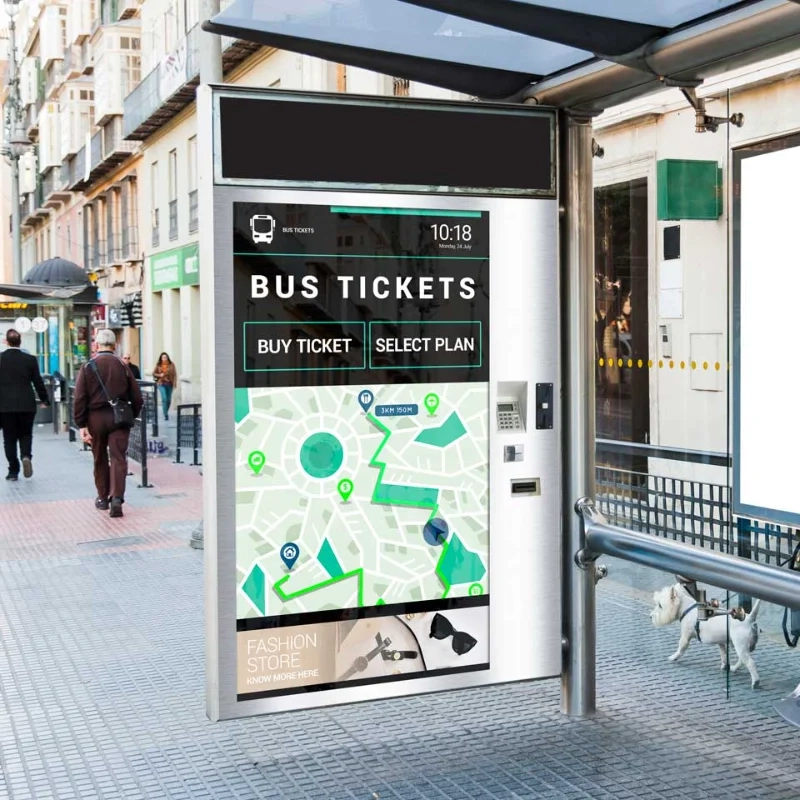
In today’s increasingly mobile and connected world, the demand for high-brightness sunlight-readable LCD screens has surged across industries such as automotive, military, industrial automation, transportation, and outdoor consumer electronics. These displays must remain legible under intense ambient light conditions — from direct sunlight at 100,000 lux to overcast skies — while maintaining color accuracy, contrast, and operational reliability in extreme temperatures, humidity, and mechanical stress. This article explores the engineering principles, technologies, materials, and real-world applications that make modern high-brightness sunlight-readable LCDs possible.
At the heart of sunlight-readable display technology is brightness, typically measured in nits (cd/m²). While standard indoor LCDs range from 200 to 500 nits, high-brightness variants used in outdoor environments often exceed 3,000 nits — some even reaching 10,000 nits or more. For example, military-grade displays must comply with MIL-STD-810G standards for environmental resilience, while commercial products like vehicle dashboards or airport kiosks must meet ISO 16750-3 for vibration resistance and IP67 ingress protection. Achieving these levels requires a holistic approach combining backlight design, optical enhancements, advanced panel architectures, and intelligent power management.
One of the most critical components is the backlight unit (BLU). Traditional LED-backlit LCDs struggle with visibility under bright daylight due to limited peak luminance and poor contrast ratio. High-brightness solutions use high-power LEDs (often white or RGB) with optimized phosphor coatings and diffusers to boost efficiency. Some manufacturers employ edge-lit designs with micro-optical films to distribute light uniformly, while others utilize direct-lit configurations with multiple LED zones for local dimming. A case study from Sharp Corporation in 2021 showed that their “Super Bright” display module achieved 5,000 nits using a 96-zone local dimming system, significantly improving visibility in direct sunlight compared to conventional 1,500-nit displays.
Another key innovation lies in the liquid crystal cell itself. Standard TN (Twisted Nematic) panels have fast response times but poor viewing angles and contrast ratios. IPS (In-Plane Switching) and VA (Vertical Alignment) panels offer better color reproduction and wider viewing angles but may require higher brightness to remain readable outdoors. Recent advances include Advanced Super View (ASV) and e-IPS technologies, which enhance transmittance and reduce reflection by minimizing internal scattering within the pixel structure. According to a 2023 report by Display Supply Chain Consultants (DSCC), approximately 65% of new high-brightness LCDs now use IPS-based panels, reflecting industry-wide adoption of superior optics.
To combat glare and improve readability, anti-reflection (AR) coatings are essential. These multi-layer thin-film coatings — typically composed of magnesium fluoride (MgF₂), silicon dioxide (SiO₂), and titanium dioxide (TiO₂) — reduce surface reflectivity to less than 1%, down from 4–8% in uncoated glass. In addition, polarized filters are engineered to minimize polarization loss, ensuring efficient light transmission even when sunlight hits at oblique angles. Samsung Display introduced a "Dual Anti-Glare" coating in 2022 that combines AR treatment with nano-textured surfaces, reducing visible reflections by up to 70% in field tests conducted in desert environments.
Thermal management also plays a vital role in long-term performance. High-brightness LEDs generate significant heat, especially in enclosed spaces like vehicle cabins or control rooms. Overheating can cause premature aging of components, reduced lifespan, and image degradation. To address this, engineers integrate passive cooling systems — such as aluminum heatsinks, thermal interface materials (TIMs), and vented enclosures — alongside active solutions like fans or Peltier coolers. The European Union’s EN 60068-2-14 standard mandates thermal shock testing, ensuring displays function reliably between -40°C and +70°C without failure.
Manufacturers must also consider durability against physical abuse. Military-spec displays (e.g., MIL-STD-461G) are tested for electromagnetic compatibility, while ruggedized units undergo drop, vibration, and water resistance trials per IP68 standards. Companies like Candescent Technologies and LG Display have developed ultra-thin flexible substrates that allow curved or foldable high-brightness panels, expanding their utility in aerospace and wearable devices. For instance, Boeing’s 787 Dreamliner cockpit uses a 4,000-nit sunlight-readable LCD with reinforced Gorilla Glass and an integrated touchscreen layer, enabling pilots to read critical flight data in all lighting conditions.
Software integration further enhances user experience. Adaptive brightness algorithms adjust screen output based on ambient light sensors, optimizing battery life in portable devices. Additionally, AI-driven contrast enhancement techniques — such as dynamic tone mapping — ensure text remains sharp and images retain detail even under harsh lighting. Apple’s iPad Pro (2023 model) incorporates machine learning models to automatically calibrate display settings in real-time, a feature now being adopted by enterprise-grade tablets used in logistics and field service operations.
Real-world applications demonstrate the transformative impact of high-brightness sunlight-readable LCDs. In the automotive sector, Tesla’s Model Y dashboard features a 5,000-nit OLED display that remains fully visible during daytime driving, reducing driver distraction. In defense, Raytheon’s AN/PSQ-22 helmet-mounted display delivers mission-critical information to soldiers in open-field combat, operating reliably at 8,000 nits. Industrial automation systems like those from Siemens and Rockwell Automation rely on 3,500-nit LCDs for factory floor monitoring, where precision and clarity are non-negotiable.
Looking ahead, emerging trends point toward mini-LED and micro-LED backlights, which promise higher contrast, better energy efficiency, and true local dimming capabilities. Quantum dot (QD) technology, already in use in premium smartphones, is being adapted for large-format outdoor displays to improve color gamut and brightness uniformity. Furthermore, transparent OLEDs and holographic projection systems may soon enable next-generation heads-up displays (HUDs) that overlay digital content onto real-world scenes — a concept currently being piloted by companies like Vuzix and BMW.
In conclusion, the development of high-brightness sunlight-readable LCD screens is not merely about increasing nit ratings; it involves a multidisciplinary engineering effort spanning materials science, optics, thermal dynamics, and software intelligence. As global demand grows — fueled by electric vehicles, smart cities, autonomous drones, and immersive AR/VR experiences — manufacturers must continue innovating to deliver displays that are brighter, smarter, more durable, and more sustainable. With ongoing investments in R&D and adherence to international standards, the future of outdoor display technology is both vivid and resilient.