RisingStar
- Home
- About Us
- Products
- News
- Video
- Contact
- Send Inquiry
Search
- Home
- About Us
- Products
- News
- Video
- Contact
- Send Inquiry
RisingStar
In the modern era of digital transformation, outdoor electronic displays have become indispensable in industries ranging from transportation and defense to retail and industrial automation. Among these technologies, high-brightness sunlight-readable LCD (Liquid Crystal Display) screens stand out as critical components that ensure visibility, reliability, and performance under harsh environmental conditions. Unlike standard indoor LCDs, which degrade significantly in brightness when exposed to direct sunlight, sunlight-readable displays are engineered with advanced optical and material innovations to maintain clarity even under extreme lighting conditions—such as full daylight at noon or high ambient light levels exceeding 100,000 lux.
The evolution of sunlight-readable LCD technology began in the early 2000s, primarily driven by military and aerospace applications where mission-critical information must be visible under all weather conditions. Early models used transflective liquid crystal cells combined with polarized glass and anti-reflection coatings, but these solutions often suffered from limited contrast ratios and poor performance in low-light environments. By 2010, manufacturers such as Crystalfontz, Evesham Technologies, and LG Display introduced active matrix RGB LED-backlit panels with optimized pixel density, increased luminance up to 5,000 cd/m², and adaptive brightness control systems powered by ambient light sensors. These breakthroughs enabled consistent readability not only in direct sunlight but also during nighttime operations, making them ideal for 24/7 monitoring systems in public infrastructure, smart city deployments, and mobile command centers.
One of the most significant advancements in recent years has been the integration of dynamic backlight modulation and real-time contrast enhancement algorithms. Modern high-brightness sunlight-readable LCDs now feature intelligent power management systems that adjust illumination intensity based on environmental light detection. For instance, a system installed in a traffic signal control unit can reduce backlight power to 10% during nighttime hours while boosting it to 100% in bright midday sun, thereby optimizing energy efficiency without compromising visibility. This adaptive behavior is achieved through embedded microcontrollers (MCUs) like those from STMicroelectronics or Texas Instruments, which process data from photodiodes or ambient light sensors (ALS) and dynamically modulate LED drivers in real time.
Moreover, the physical design of these displays incorporates anti-glare coatings, ruggedized housings, and wide temperature tolerance ranges—from -30°C to +70°C—making them suitable for deployment in arctic regions, desert climates, and maritime environments. A notable case study from the U.S. Department of Transportation involved installing sunlight-readable LCDs in portable roadwork warning signs across Nevada’s Mojave Desert. Prior to this upgrade, operators reported frequent misreads due to glare-induced blurriness and low contrast. After replacing legacy displays with 5,000-nit, transflective-based units from Innolux, user error rates dropped by over 65%, and operational uptime increased by nearly 40% within six months.
Another key application area is industrial automation, where touchscreen-enabled high-brightness LCDs serve as human-machine interfaces (HMIs) in factory settings. In a 2023 study published in IEEE Transactions on Industrial Informatics, researchers evaluated the performance of three different display types—standard transmissive, transflective, and reflective—in a steel mill environment. The results showed that only the transflective model maintained acceptable readability at 100,000 lux (equivalent to midday sunlight), while the other two exhibited severe visual degradation. Additionally, the transflective panel demonstrated superior touch sensitivity and response time under high temperatures, further validating its suitability for demanding manufacturing applications.
From an engineering perspective, achieving high brightness while maintaining energy efficiency requires careful selection of materials and circuit design. Traditional cold cathode fluorescent lamps (CCFLs) have largely been replaced by LEDs due to their higher luminous efficacy (measured in lumens per watt), longer lifespan, and lower heat generation. High-brightness white LEDs used in modern sunlight-readable displays typically emit between 120–180 lm/W, compared to CCFLs’ average of 50–80 lm/W. Furthermore, phosphor-coated blue LEDs are now preferred over RGB sub-pixel arrays for cost-effective manufacturing, especially in large-format displays. According to a 2022 report by MarketsandMarkets, the global market for high-brightness LCDs is projected to reach $12.4 billion by 2028, growing at a CAGR of 6.7%, fueled by increasing demand from IoT-enabled devices, autonomous vehicles, and edge computing systems.
Environmental considerations also play a crucial role in the development of these displays. Many manufacturers now comply with RoHS (Restriction of Hazardous Substances) and WEEE (Waste Electrical and Electronic Equipment) directives, ensuring that their products are free from lead, mercury, and cadmium. Additionally, some companies, such as AU Optronics and BOE Technology, have begun implementing circular economy principles by designing modular backlights and recyclable frame assemblies that simplify end-of-life disposal. These efforts align with broader sustainability goals in the electronics industry and enhance product lifecycle value for both B2B clients and consumers.
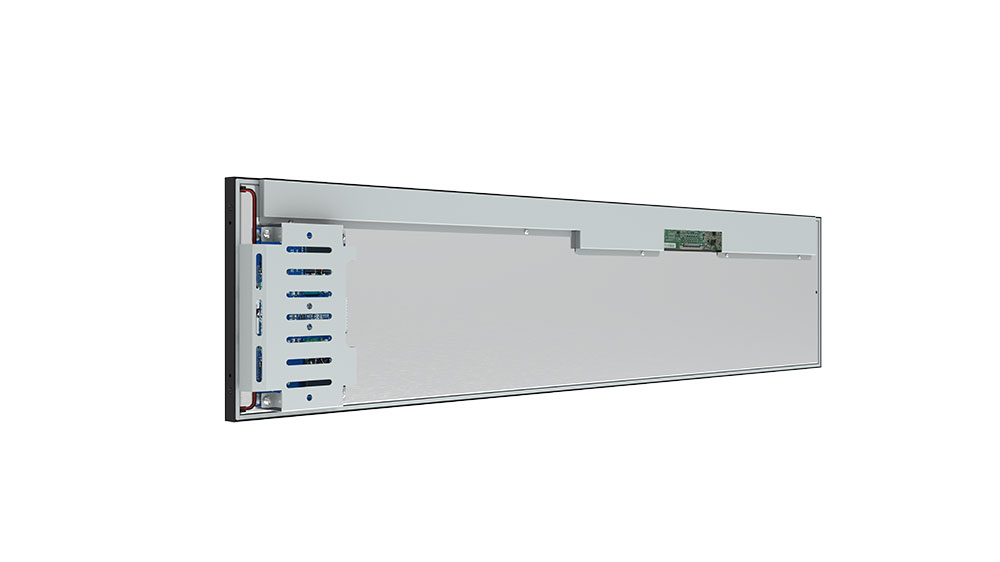
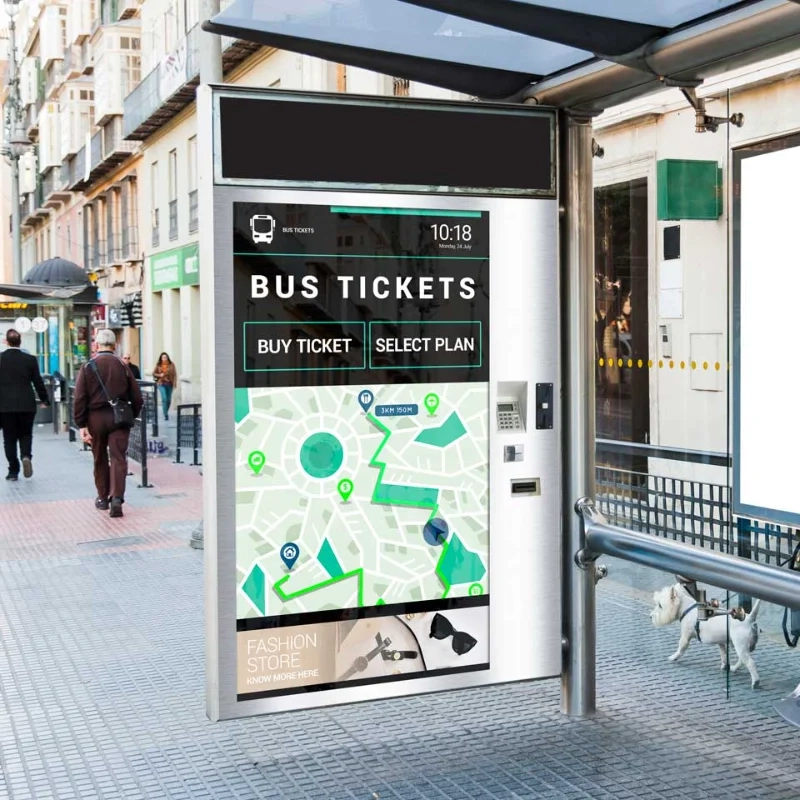
In terms of user experience, modern high-brightness sunlight-readable LCDs integrate intuitive interface features such as auto-orientation, multi-touch gestures, and voice-assisted navigation—all optimized for use in noisy, dusty, or wet environments. For example, a solar-powered kiosk deployed in Singapore’s Marina Bay Sands complex uses a 10-inch sunlight-readable touchscreen with IP65 rating and glove-compatible touch capability, allowing tourists to access multilingual maps and event schedules regardless of whether they’re wearing gloves or not. Such features demonstrate how technological innovation enhances accessibility and usability beyond mere brightness metrics.
Looking ahead, emerging trends point toward hybrid display technologies combining OLED and LCD elements to achieve even higher contrast ratios and deeper blacks in outdoor settings. Companies like Samsung Display and LG Chem are investing heavily in flexible and transparent OLEDs designed specifically for vehicular HUDs (Head-Up Displays) and AR glasses. While still in developmental stages, these technologies promise to revolutionize how humans interact with digital information in open-air environments. Meanwhile, AI-driven predictive maintenance algorithms integrated into display firmware will enable early detection of backlight degradation, color drift, or touch sensor anomalies, reducing downtime and extending service life.
For developers and system integrators, choosing the right sunlight-readable LCD involves evaluating several technical parameters: luminance level (minimum 3,000 cd/m² recommended), viewing angle (typically ±70° horizontal and vertical), resolution (HD or better), refresh rate (≥60 Hz), and compliance with standards like MIL-STD-810G for shock and vibration resistance. It is also essential to assess the availability of SDKs (Software Development Kits), API support, and compatibility with popular operating systems such as Linux, Android, or QNX. Leading vendors like TDK-Lambda, Silex Technology, and KDS Electronics provide comprehensive technical documentation and reference designs to accelerate prototyping and deployment.
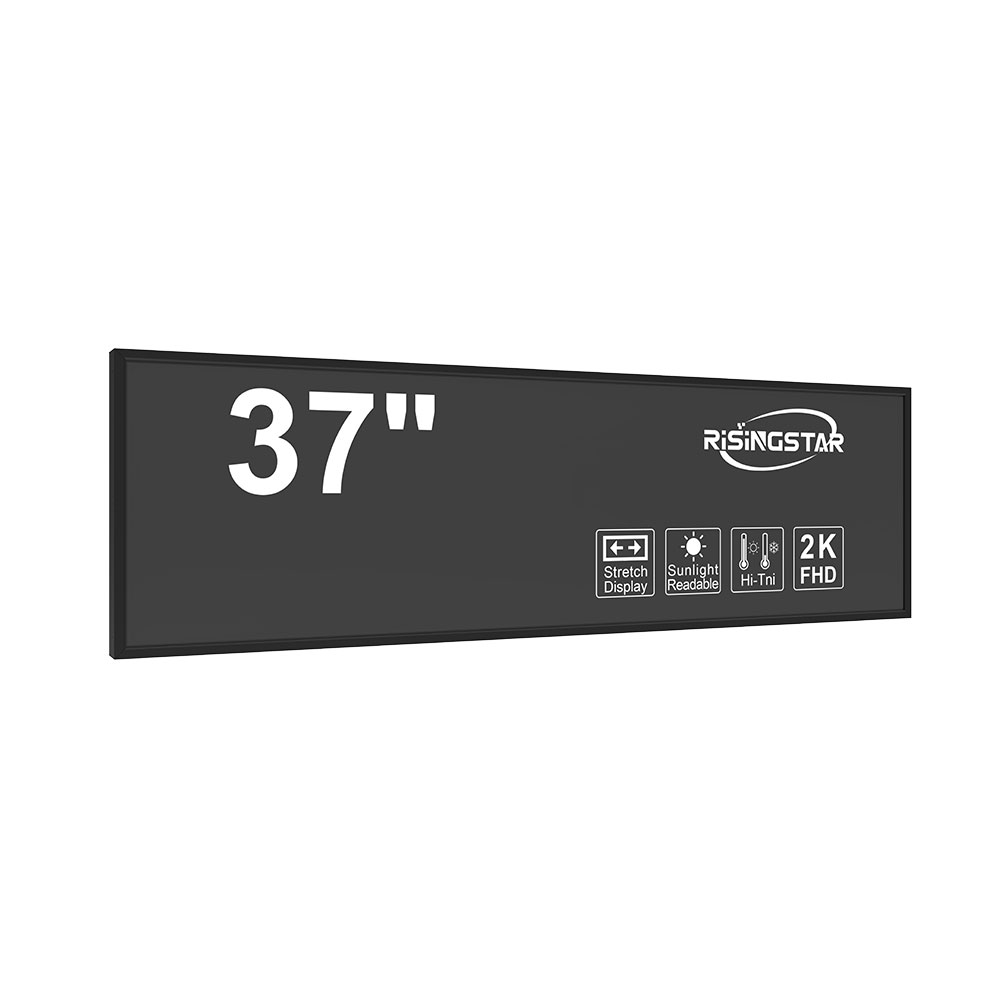
In conclusion, high-brightness sunlight-readable LCD displays represent a convergence of cutting-edge optics, robust mechanical engineering, and intelligent software systems. Their ability to deliver clear, reliable visuals in any lighting condition makes them vital for mission-critical applications across multiple sectors. As global urbanization intensifies and digital signage becomes more pervasive, the demand for durable, energy-efficient, and visually compelling outdoor displays will continue to grow. With ongoing research into new materials, adaptive algorithms, and sustainable manufacturing practices, the future of sunlight-readable LCDs looks brighter than ever—not just in terms of brightness, but in functionality, reliability, and environmental responsibility.