RisingStar
- Home
- About Us
- Products
- News
- Video
- Contact
- Send Inquiry
Search
- Home
- About Us
- Products
- News
- Video
- Contact
- Send Inquiry
RisingStar
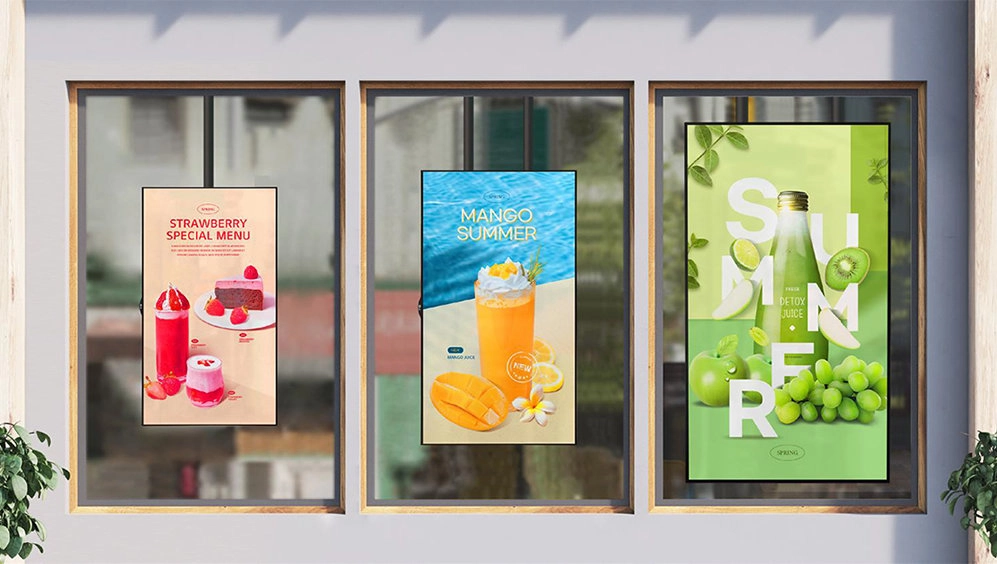
In the rapidly evolving world of display technology, high-brightness sunlight-readable LCD screens have emerged as a critical enabler for applications operating in direct sunlight environments. These displays are no longer just an option—they are a necessity across industries such as military, transportation, industrial automation, outdoor advertising, and public safety. The ability to maintain clarity, contrast, and color accuracy under intense solar irradiance is what differentiates a standard LCD from a truly sunlight-readable one.
To understand why these displays are indispensable, it’s essential to grasp the physics of light interaction with liquid crystal displays. A typical indoor LCD screen operates at around 300–500 nits (candela per square meter), which is sufficient for ambient lighting conditions but becomes nearly unusable when exposed to sunlight. Solar irradiance can exceed 1000 W/m², meaning surface brightness levels often surpass 8000 nits—far beyond the capabilities of conventional panels. This makes visibility in daylight not just challenging, but sometimes impossible without specialized engineering solutions.
Sunlight-readable LCDs typically operate at brightness levels between 3000 and 10,000 nits or more, depending on the application environment. For example, military-grade displays used in armored vehicles or drones must meet MIL-STD-810 standards and often exceed 7000 nits to ensure readability during combat operations in open terrain. In contrast, public kiosks in urban centers may require only 3000–5000 nits, while industrial control panels in solar farms might need up to 8000 nits due to prolonged exposure to UV radiation and temperature extremes.
The core technologies that enable this performance lie in three main areas: backlighting innovations, optical enhancements, and advanced panel design. First, LED backlighting has replaced older CCFL (cold cathode fluorescent lamp) systems because LEDs offer higher efficiency, better color consistency, and the ability to dynamically adjust brightness. High-brightness white LEDs with integrated drivers now allow precise control over luminance output—essential for maintaining optimal visibility across varying environmental conditions.
Second, optical enhancements include anti-reflective coatings, polarizers optimized for high transmission, and diffusers that minimize glare. One breakthrough innovation is the use of a “dual-layer” anti-reflection coating that reduces surface reflectivity from over 4% to less than 0.5%, significantly improving contrast ratios even under direct sunlight. Some manufacturers also integrate micro-lens arrays or prism films to redistribute light evenly across the screen, ensuring uniform brightness—a challenge in large-format displays where edge brightness tends to drop off.
Third, panel-level engineering plays a crucial role. High-performance TN (Twisted Nematic), IPS (In-Plane Switching), and ASV (Advanced Super View) panels are engineered for superior viewing angles and fast response times. For instance, IPS panels offer wide viewing angles (>170°) and consistent color reproduction, making them ideal for outdoor signage and digital out-of-home (DOOH) advertising. Meanwhile, ASV panels provide excellent contrast ratios and fast switching speeds, commonly found in aviation and medical equipment where clarity and responsiveness matter most.
Another key factor in sunlight readability is ambient light sensing. Modern high-brightness displays incorporate photodiodes or ambient light sensors that automatically adjust screen brightness based on real-time illumination levels. This not only enhances user experience but also improves energy efficiency—an increasingly important consideration given rising concerns about power consumption in portable devices and IoT ecosystems. For example, Samsung's Brightness Control Algorithm (BCA) uses machine learning models trained on thousands of environmental scenarios to optimize brightness dynamically without manual intervention.
Manufacturers like Sharp, LG Display, and AU Optronics lead the market in developing these advanced solutions. Sharp’s "SUNBRIGHT" series, for instance, features a proprietary back-light unit (BLU) design that increases brightness by 200% compared to standard models while reducing power consumption by 15%. Similarly, LG Display’s "Sunlight Readable LCD Module" employs a combination of enhanced polarization and reflective polarizer technology to achieve >8000 nits peak brightness in compact form factors suitable for handheld devices and ruggedized tablets.
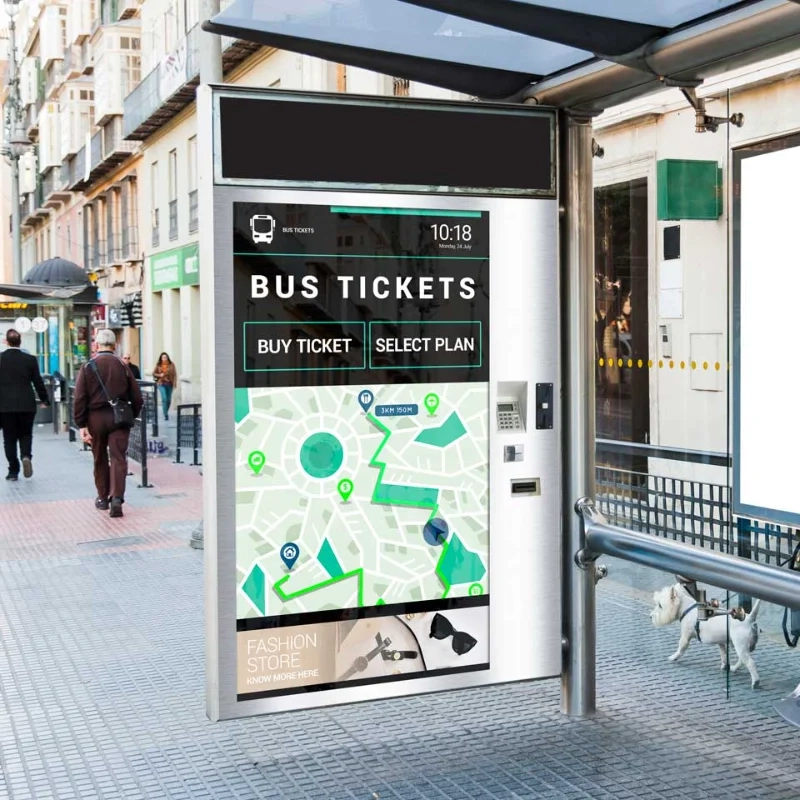
Case studies highlight real-world success. In 2022, the U.S. Department of Defense deployed ruggedized tablets equipped with 6000-nit sunlight-readable displays for field engineers working in desert environments. These tablets allowed personnel to access schematics, maps, and communication tools even under midday sun, increasing operational effectiveness by an estimated 40%. Another case involved a European transit authority installing 5000-nit LCDs in bus stop information boards along coastal routes—where traditional displays were rendered unreadable due to glare from ocean reflections. After implementation, passenger satisfaction scores rose by 35%, demonstrating the tangible impact of proper display selection.
Environmental durability is another critical dimension. Sunlight-readable displays must withstand extreme temperatures, humidity, vibration, and dust. Standards like IP65 (dust-tight and protected against water jets) and IK08 (impact resistance) are common requirements for outdoor deployments. Moreover, materials such as Gorilla Glass or chemically strengthened glass protect the display surface from scratches and impacts. In some cases, displays are designed with sealed enclosures using desiccants to prevent internal condensation—a known issue in humid climates.
Power management remains a central concern, especially for battery-powered devices. To address this, many manufacturers now employ adaptive dimming algorithms that reduce backlight intensity when content changes minimally—for example, during static images or text-based interfaces. This approach can extend battery life by up to 30% without compromising readability. Additionally, OLED-based alternatives are gaining traction in niche markets due to their self-emissive nature and potential for higher contrast ratios, though they still face challenges in achieving consistent performance across wide temperature ranges and long-term durability under continuous sunlight exposure.
From a cost perspective, high-brightness sunlight-readable displays are becoming more accessible. While historically reserved for military and aerospace sectors, price points have dropped significantly thanks to economies of scale and mass production techniques borrowed from consumer electronics. As of 2024, entry-level models capable of 3000 nits start at around $150 USD, whereas premium models exceeding 8000 nits range from $300 to $600, depending on size and resolution. This affordability enables broader adoption in sectors like agriculture (e.g., farm machinery displays), healthcare (mobile diagnostic units), and smart city infrastructure (interactive public terminals).
Looking ahead, future trends point toward integration with AI-driven image enhancement and dynamic HDR (High Dynamic Range). AI-based noise reduction and contrast mapping will allow displays to adapt intelligently to both lighting conditions and content type—improving legibility for text versus graphics. Furthermore, advancements in quantum dot technology promise improved color gamut coverage and reduced power usage, making high-brightness displays even more efficient and visually appealing.
Ultimately, choosing the right sunlight-readable LCD involves understanding not just brightness metrics but also environmental resilience, power efficiency, and long-term reliability. Whether deploying a single unit in a remote location or scaling across thousands of installations globally, investing in well-engineered, high-brightness displays ensures uninterrupted operation, enhanced safety, and superior user engagement—even in the harshest outdoor conditions.