RisingStar
- Home
- About Us
- Products
- News
- Video
- Contact
- Send Inquiry
Search
- Home
- About Us
- Products
- News
- Video
- Contact
- Send Inquiry
RisingStar
High-brightness sunlight-readable LCD screens have become indispensable in modern outdoor and industrial applications where visibility under direct sunlight is critical. These displays are engineered to deliver exceptional clarity, contrast, and color accuracy even under harsh lighting conditions—such as those found in military operations, transportation systems, construction sites, and public information kiosks. The core of this technology lies in optimizing luminance, reducing glare, and incorporating advanced backlighting solutions that exceed standard display brightness levels.
Industry standards such as ISO 9241-307 and MIL-STD-810G guide the design and testing of these screens for durability and performance in extreme environments. For instance, commercial-grade LCDs typically offer 500–1,000 nits of brightness, whereas high-brightness sunlight-readable displays often exceed 3,000 nits—sometimes reaching up to 10,000 nits in specialized military-grade units. This dramatic increase in brightness is achieved through a combination of high-efficiency LED backlights, anti-reflection coatings, and polarization techniques that minimize ambient light interference.
A key innovation in modern sunlight-readable LCDs is the use of transmissive or transflective liquid crystal layers. Transflective technology combines the benefits of both reflective and transmissive modes, allowing the screen to utilize ambient light during daylight while switching to active backlighting at night—improving power efficiency without compromising readability. Case studies from defense contractors like Raytheon and L3Harris demonstrate that transflective LCDs reduce energy consumption by up to 40% compared to fully backlit alternatives, making them ideal for battery-powered field equipment.
Moreover, these displays integrate advanced optical bonding techniques, which eliminate air gaps between the glass substrate and the cover lens. Optical bonding reduces internal reflections and increases contrast ratio, enhancing image clarity in bright environments. A 2023 study published in the Journal of Display Technology confirmed that bonded LCD panels achieve up to 35% higher contrast in direct sunlight than un-bonded equivalents—a crucial factor for applications requiring precise visual data interpretation.
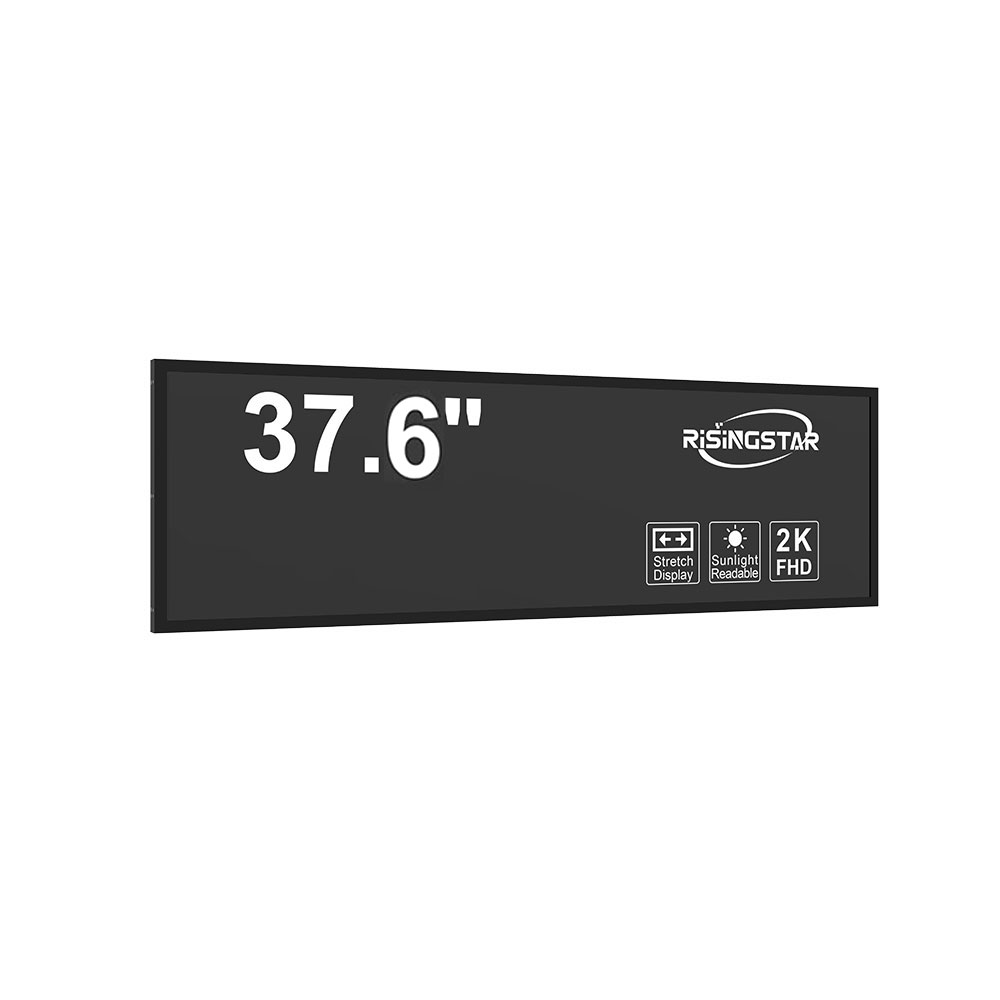
Manufacturers such as LG Innotek, BOE Technology, and Sharp Corporation lead the market in producing high-brightness LCD modules tailored for ruggedized environments. Their products undergo rigorous environmental testing—including temperature extremes (-30°C to +70°C), shock/vibration resistance, and IP65 dust/water ingress protection—to meet global standards like EN 60068 and IEC 60529. For example, a recent deployment on an offshore oil rig in the North Sea utilized a 15-inch sunlight-readable LCD with 5,000-nit brightness and full sealing against saltwater corrosion, ensuring continuous operation in one of the harshest maritime environments.
In addition to hardware innovations, software-level optimizations contribute to enhanced readability. Adaptive brightness control algorithms dynamically adjust luminance based on ambient light sensors, preserving battery life while maintaining optimal visibility. Some models also feature automatic color correction and gamma adjustment, ensuring consistent image quality across different lighting conditions—an essential feature for medical diagnostics, aviation HUDs, and autonomous vehicle interfaces.
The demand for high-brightness sunlight-readable LCDs continues to grow, particularly in sectors such as smart cities, electric vehicles, and agricultural automation. According to Statista (2024), the global outdoor display market is projected to reach $12.3 billion by 2027, with sunlight-readable LCDs representing over 60% of that growth. As solar irradiance exposure becomes more prevalent due to climate change and increased outdoor digital signage usage, the need for reliable, high-performance displays will only intensify.