RisingStar
- Home
- About Us
- Products
- News
- Video
- Contact
- Send Inquiry
Search
- Home
- About Us
- Products
- News
- Video
- Contact
- Send Inquiry
RisingStar
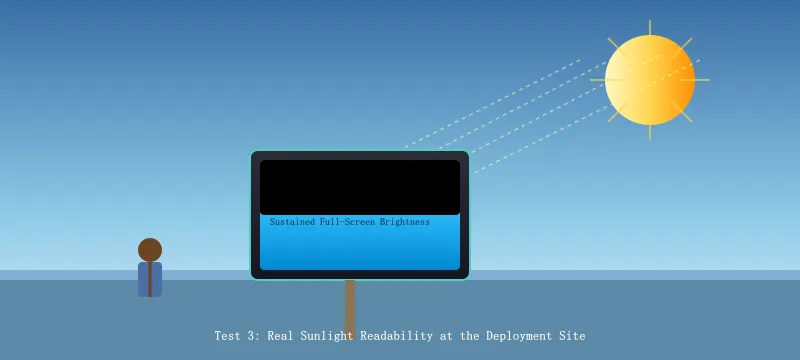
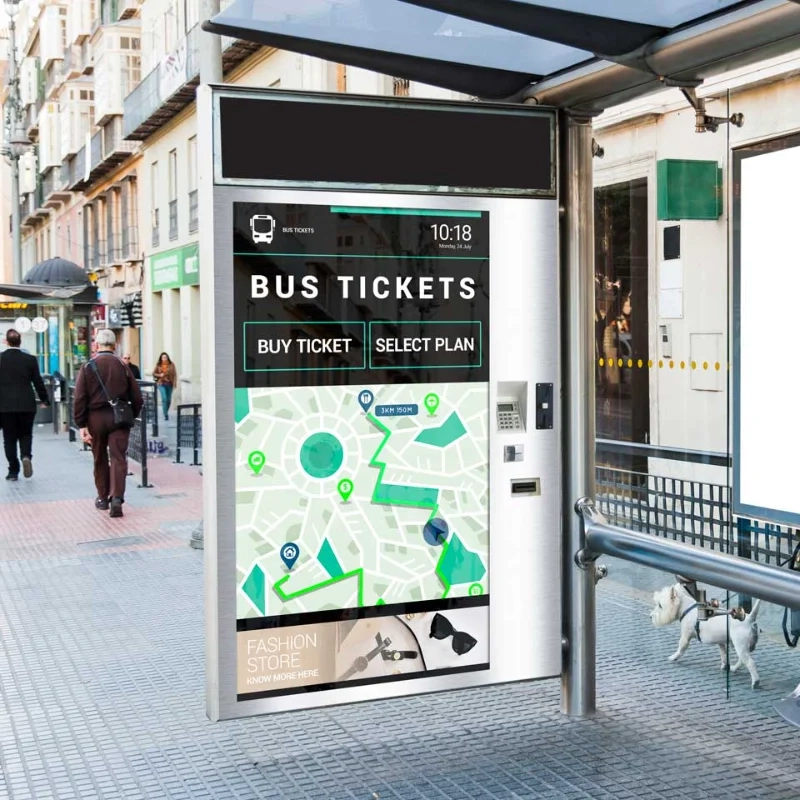
High-brightness sunlight-readable LCD displays have become essential in modern outdoor and industrial environments where visibility under direct sunlight is critical. These screens are engineered to maintain clarity, contrast, and color accuracy even in extreme lighting conditions—such as bright daylight (up to 10,000 lux or more), low-light settings, or high-temperature environments. Their applications span military command systems, automotive dashboards, medical devices, transportation control panels, and public kiosks.
One of the primary advantages of these displays lies in their ability to combine high luminance (typically 3,000–5,000 cd/m²) with advanced anti-glare coatings and polarized filters. For instance, manufacturers like ELO Touch Systems, Sharp, and LG Display have developed proprietary technologies such as transmissive backlighting with wide viewing angles and dynamic brightness adjustment (DBA). DBA automatically adjusts screen brightness based on ambient light sensors, optimizing power consumption while ensuring readability—a key feature in battery-powered field equipment.
In practical use, high-brightness LCDs are deployed in military vehicles, where operators must read navigation maps or sensor data under full sun. In industrial automation, they support real-time monitoring in factories exposed to harsh lighting and vibration. A notable case study from a leading European rail operator demonstrated that replacing standard LCDs with 4,000 cd/m² sunlight-readable displays reduced misreading incidents by over 80% during daytime operations.
However, common problems persist. Overheating remains a challenge when operating continuously in high-ambient temperatures (above 50°C). Poor thermal management can cause pixel degradation, reduced lifespan, or even permanent damage. Another issue is the limited color gamut compared to indoor OLED displays—though advancements in LED backlight technology and quantum dot integration are closing this gap. Additionally, users may experience eye strain if not properly calibrated, especially in low-light transitions.
The latest trends in this field include the integration of touch functionality with glove compatibility, making them ideal for cold environments like oil rigs or snow-covered construction sites. Manufacturers are also adopting micro-LED backlights for higher efficiency and better contrast ratios. According to a 2024 report by MarketsandMarkets, the global sunlight-readable display market is projected to grow at a CAGR of 7.6% from 2024 to 2030, driven by increased demand in autonomous vehicles, smart city infrastructure, and defense electronics.
To ensure longevity and performance, best practices include using ruggedized enclosures, implementing active cooling solutions, and selecting displays certified to MIL-STD-810G or IP65 standards. These steps significantly improve reliability in challenging environments.