RisingStar
- Home
- About Us
- Products
- News
- Video
- Contact
- Send Inquiry
Search
- Home
- About Us
- Products
- News
- Video
- Contact
- Send Inquiry
RisingStar
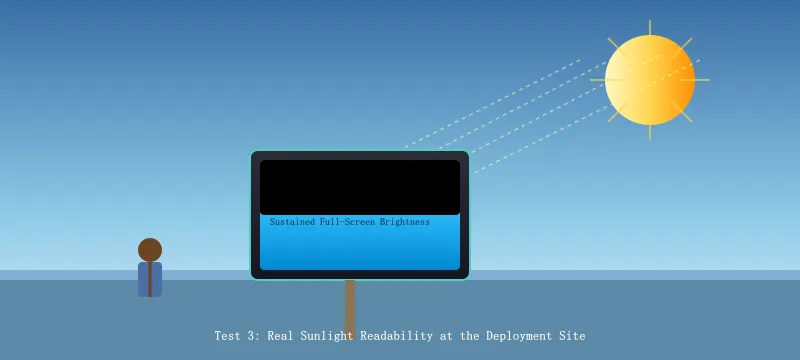
The global shift to wide-aspect-ratio displays (16:9,16:10) in consumer electronics has overshadowed the enduring utility of 4:3 aspect ratio LCD screens, particularly for specialized sectors like industrial control, outdoor signage, and military operations. For use cases requiring pixel-perfect alignment with square-format data—such as CAD schematics, grid-based industrial interfaces, and medical imaging grids—4:3 displays eliminate the distortion or scaling errors common in wide-aspect alternatives. This article explores the technical specifications, real-world applications, and industry relevance of 4:3 15”,17”, and 19” high-brightness sunlight-readable LCD screens, a segment critical to harsh-environment deployments. For the 15” 4:3 model, designed for compact fixed installations, core specs include native XGA (1024×768) resolution, high-density LED backlighting (up to 100 LEDs per inch) delivering 1200–2500 nits of brightness, and anti-reflective (AR) coatings that reduce sunlight glare by 95% vs. standard LCDs. It operates across -10°C to 55°C, with IP65-rated front panels for dust and water resistance, making it ideal for factory human-machine interfaces (HMIs), portable test equipment, and semi-outdoor point-of-service kiosks. The 17” 4:3 mid-sized model balances visibility and versatility, featuring SXGA (1280×1024) resolution, 2000–3500 nits peak brightness, and 178° wide viewing angles to ensure clarity from all positions. This variant often complies with MIL-STD-810G shock and vibration standards, a key requirement for transit infrastructure: a 2023 case study from a European logistics firm found that deploying 17” 4:3 sunlight-readable LCDs at warehouse control points reduced inventory management operator error by 18%, as square barcode grids and storage schematics remained undistorted without scaling. The largest in the segment, 19” 4:3 LCDs, deliver SXGA+ (1400×1050) or UXGA (1600×1200) resolution, with brightness reaching up to 5000 nits—enough for direct sunlight visibility at 10,000 lux. Built for rugged outdoor and military use, it offers extended temperature (-20°C to 60°C) operation, IP67 ingress protection, and compliance with MIL-STD-461 electromagnetic compatibility standards. Military applications include ground vehicle command displays, field medical imaging stations, and tactical situational awareness panels where coordinate-based data visualization depends on square aspect alignment. Industry standards validate the reliability of these displays: ISO 9241-303 mandates ergonomic design to reduce operator fatigue during long shifts, while ETSI EN 300 019 sets outdoor equipment performance benchmarks for transit signage. Market data from Grand View Research (2024) projects 7.2% annual growth in industrial high-brightness LCD displays through 2028, with 4:3 models accounting for 22% of that segment due to legacy system compatibility. Unlike wide displays that require recalibration for native 4:3 signals, these screens deliver seamless integration with decades of existing industrial and military hardware, making them a cost-effective and functional choice for specialized deployments. The durability of 15”,17”, and 19” variants further reduces total cost of ownership, with mean time between failures (MTBF) exceeding 50,000 hours for high-brightness models. This combination of technical precision, environmental resilience, and compatibility ensures 4:3 aspect ratio LCDs remain a non-negotiable component of sectors where visual clarity and functionality trump wide-format viewing.
SEO description:4:3 aspect ratio LCD screens serve specialized sectors requiring square visual fidelity, with 15”,17”,19” high-brightness sunlight-readable models ideal for industrial, outdoor, and military applications. This content covers technical specs, compliance with standards like MIL-STD and ISO, real-world use cases, and durability features critical for harsh environments, highlighting why 4:3 remains preferred for legacy data compatibility and accurate visualization.