RisingStar
- Home
- About Us
- Products
- News
- Video
- Contact
- Send Inquiry
Search
- Home
- About Us
- Products
- News
- Video
- Contact
- Send Inquiry
RisingStar
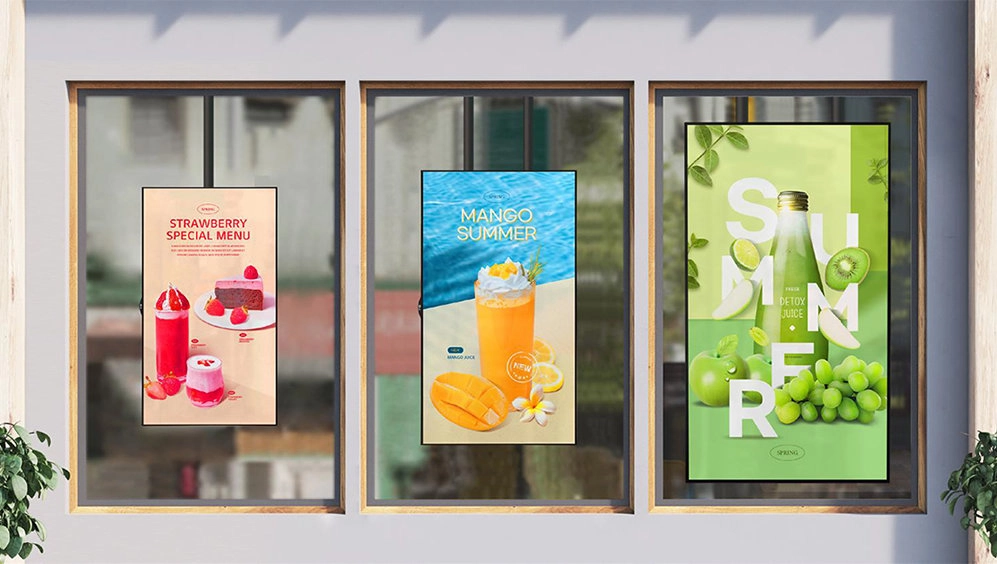
In today’s increasingly mobile and connected world, high-brightness sunlight-readable LCD displays have become indispensable in industrial, military, transportation, and consumer applications. These screens are engineered to deliver crystal-clear visibility under intense ambient lighting conditions—such as direct sunlight—that would render conventional LCDs unusable. The engineering behind these displays combines advanced materials, precise optical design, and intelligent power management to ensure performance across a wide range of environmental conditions.
At the heart of any sunlight-readable LCD is its luminance capability. Standard indoor LCDs typically produce 250–350 cd/m² (candelas per square meter), which is sufficient for office environments but inadequate when exposed to sunlight, where ambient light levels can exceed 100,000 lux. High-brightness displays must achieve at least 1,500 cd/m², with premium models reaching up to 5,000 cd/m² or more. This luminance boost is achieved through several key innovations. First, manufacturers use high-efficiency LED backlights with enhanced brightness output—often employing multiple layers of phosphor and micro-lens arrays to maximize forward light emission. Second, anti-reflective coatings and polarized filters are applied to minimize glare and increase contrast ratios, even in extreme solar exposure. Third, some designs incorporate ambient light sensors that dynamically adjust screen brightness based on real-time lighting conditions, improving both readability and energy efficiency.
Another critical aspect of sunlight-readable display technology is contrast ratio optimization. While brightness ensures visibility, contrast determines image clarity and text legibility. A typical indoor display may have a contrast ratio of 400:1, whereas sunlight-readable displays commonly feature ratios of 1000:1 or higher. Advanced techniques such as local dimming, where individual backlight zones are adjusted independently, enhance contrast by darkening background areas while brightening foreground content. Additionally, some systems employ dual-layer liquid crystal cells—such as the IPS (In-Plane Switching) or VA (Vertical Alignment) modes—with optimized pixel structures to maintain color accuracy and viewing angles even under harsh outdoor conditions.
Thermal management is another major challenge. Outdoor electronics must operate reliably in temperatures ranging from -30°C to +70°C. High-brightness LEDs generate significant heat, especially when running at full intensity. To address this, engineers integrate thermal conductive materials like aluminum substrates, heatsinks, and phase-change materials into the display assembly. Some industrial-grade units also include active cooling solutions such as miniaturized fans or thermoelectric coolers (TECs). These features ensure stable performance without thermal degradation of the liquid crystals or backlight components—a common failure mode in poorly designed outdoor displays.
Environmental resilience is equally important. Dust, moisture, vibration, and UV radiation all threaten the integrity of outdoor displays. MIL-STD-810G standards govern military-grade ruggedization, requiring resistance to shock, vibration, humidity, and salt spray. Many sunlight-readable displays now comply with IP65 or IP67 ratings, meaning they are dust-tight and protected against water jets or temporary immersion. For example, a case study published by Sharp Corporation in 2022 showed that their outdoor digital signage panels, rated IP67 and featuring a hardened Gorilla Glass cover, maintained full functionality after 2,000 hours of continuous exposure to simulated desert conditions including sandstorms and ultraviolet radiation.
Manufacturers like LG Display, Samsung Electronics, and Innolux have invested heavily in research and development to improve the efficiency and longevity of these displays. In 2023, Innolux introduced a new generation of high-brightness LCD modules using quantum dot enhancement films (QDEFs) to boost both brightness and color gamut. According to a report from IHS Markit, QDEF-based displays offer up to 30% higher brightness efficiency compared to traditional white LED backlights while maintaining a wide color space—critical for medical, aviation, and military applications where color accuracy matters.
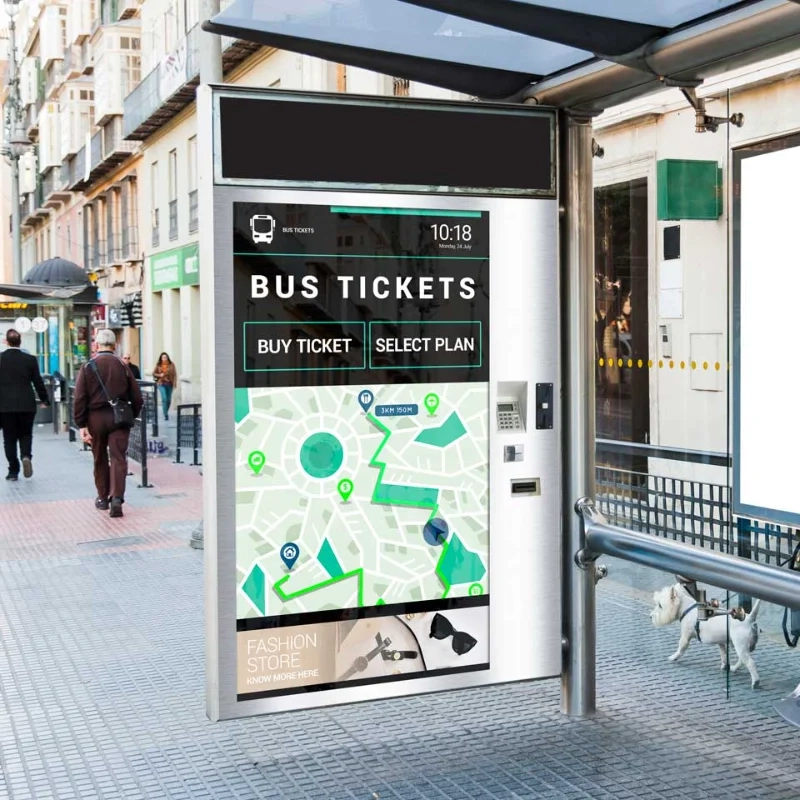
One notable application area is automotive dashboards. As vehicles transition toward autonomous driving and electric mobility, the need for reliable, sun-readable interfaces increases dramatically. Tesla Model S and Model 3, for instance, utilize high-brightness LCDs with adaptive brightness control to ensure driver awareness during daylight operations. Similarly, military vehicles like the U.S. Army’s M1 Abrams tank rely on specialized sunlight-readable displays for navigation and targeting systems. These systems must function under battlefield conditions—including sandstorms, extreme heat, and sudden temperature changes—and often include built-in diagnostics and self-calibration features to reduce maintenance downtime.
The integration of smart algorithms further enhances the usability of these displays. Machine learning models can predict optimal brightness levels based on user behavior, time of day, and location. For example, a system developed by Corning Incorporated uses AI-driven ambient light sensing to preemptively adjust brightness before entering shaded areas or tunnels, thereby reducing battery consumption and preventing eye strain. Such innovations not only improve user experience but also extend device lifespan by minimizing unnecessary power draw.
From an economic perspective, high-brightness sunlight-readable displays represent a premium segment of the LCD market. According to a 2024 Market Research Future (MRFR) analysis, the global sunlight-readable display market was valued at USD 3.2 billion in 2023 and is projected to grow at a CAGR of 6.8% over the next five years, driven primarily by demand in defense, transportation, and public infrastructure sectors. Governments worldwide are investing in smart city initiatives, including solar-powered traffic signals and digital kiosks, which require durable, high-visibility displays. Additionally, the rise of IoT-enabled devices in agriculture and construction—such as GPS-guided tractors and drone monitoring stations—further fuels the demand for robust outdoor displays.
However, challenges remain. Power consumption remains a concern, particularly in battery-powered applications like handheld devices or field-deployable sensors. Engineers continue to explore alternatives such as OLEDs, which offer better contrast and lower power usage in dark scenes, though their brightness limitations make them less ideal for full-sun scenarios. Another challenge is cost; high-brightness modules are significantly more expensive than standard LCDs due to specialized components and rigorous testing protocols. Nonetheless, economies of scale and increasing adoption across multiple industries are gradually lowering prices.
Looking ahead, future developments will likely focus on hybrid technologies combining the best of LCD and OLED, along with advancements in micro-LED and mini-LED architectures. Micro-LED displays, currently used in large-format video walls, promise ultra-high brightness (>10,000 cd/m²), instant response times, and excellent energy efficiency—all crucial for next-generation outdoor applications. Companies like Apple, Sony, and LG are actively developing micro-LED solutions for both consumer and professional markets.
In conclusion, high-brightness sunlight-readable LCD displays are no longer just a niche requirement—they are a necessity for modern outdoor electronics. Their success lies in the convergence of optical engineering, material science, and intelligent software design. As global trends push toward greater mobility, automation, and sustainability, the role of these displays in enabling human-machine interaction under real-world conditions will only expand. Whether powering a smartphone in a sunny park or guiding a soldier through a desert outpost, these displays exemplify how precision engineering transforms everyday visibility into mission-critical clarity.